
Chinese Businesspeople Target Indonesia’s Digital Economy
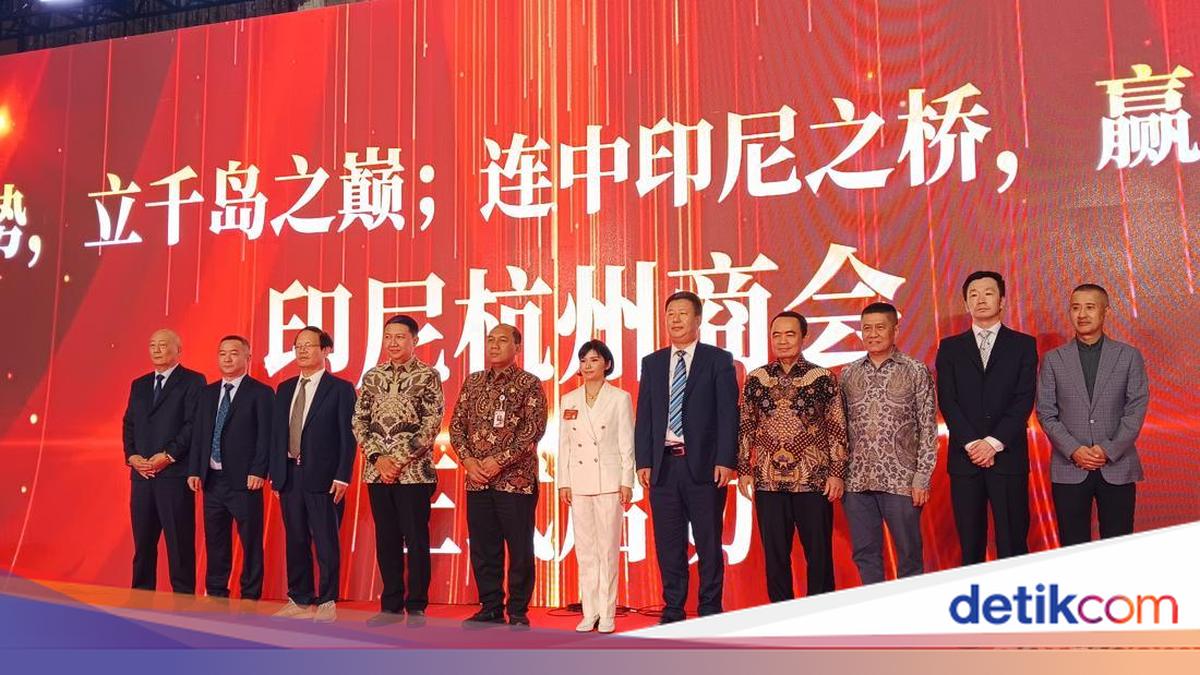
The Hangzhou Chamber of Commerce arrived in Indonesia on Thursday (5 November), marking what organisers called a historic moment. Its inauguration coincided with a business gathering bringing together businesspeople from Hangzhou, China, and strategic stakeholders in Indonesia.
The gathering was initiated by PT Halimun Reka Mandiri, a national company focused on business partnerships with China. Its areas of activity include technology-based industries, defence, manufacturing, trade, investment, shipping, mining and hospitality.
Ye Daifeng, president of the Hangzhou Entrepreneurs Association in Indonesia, said the association had been established as a strategic bridge linking Hangzhou’s industrial potential and entrepreneurial spirit with the Indonesian market.
The move underscores Jakarta’s position as a gateway for national investment and Hangzhou’s standing as one of China’s centres for innovation, technology and advanced industry.
“Hangzhou is a city with an extraordinary spirit of innovation. We want to connect Hangzhou’s strengths in technology, industry and entrepreneurship with Indonesia’s resource potential and market. Compliance with Indonesian law is not an obstacle, but the strongest foundation for sustainable business,” Ye said at the Indonesia-Hangzhou Chambers of Commerce business gathering in Central Jakarta on Thursday (5 November 2026).
He said the Hangzhou Chamber of Commerce in Indonesia was more than a symbolic presence; it was an official bridge directly connecting the business ecosystems of the two countries.
The chamber could open market access, making it easier for Indonesian businesses to enter Hangzhou and build strategic partnerships there and in southern China.
It could also facilitate technology transfer by promoting the exchange of knowledge and advanced technology, as well as strengthening the capacity of local human resources.
The initiative is also intended to promote economic growth in both countries by encouraging productive investment that could create jobs across a range of industries.
The chamber would also act as a bridge on permits in both countries. The central and regional governments were ready to facilitate investment and business partnerships transparently and fairly, including through easier investment procedures and exit permits for relevant talent, the article said.
“Our hope is that Hangzhou’s entrepreneurial spirit and values will take root in Indonesia, grow and ultimately deliver tangible benefits and success for both sides,” Ye said.
At the same event, Sudrajat, chairman of the Indonesia-China Economic, Social and Cultural Cooperation Institute, welcomed the inauguration of the association representing businesspeople from the capital of Zhejiang province.
Sudrajat said his organisation was initiated in 1980 and formally inaugurated in 1987. He is its second leader, succeeding former vice-president Sudharmono, who served as chairman of the Indonesian Chamber of Commerce and Industry (Kadin) from 1988 to 1993.
According to Sudrajat, Indonesia and China had severed diplomatic relations in 1967 following the 30 September Movement and the ensuing political crisis. Amid the political impasse, trade diplomacy began to be proposed.
“At the time, Mr Sudharmono reported to President Soeharto: ‘Sir, we have not had relations with China since 1967. What if we start by reopening trade?’” Sudrajat said, recounting the history.
He added that bilateral cooperation had expanded considerably from the foundations of trade laid in the past and had become far more modern.
Whereas trade in the early years was worth only tens of billions of dollars, Indonesia-China trade has now reached US$168 billion and continues to rise significantly.
“If in 2006 our trade was still in the tens of billions of dollars, it has now passed US$168 billion. We are targeting US$200 billion soon,” he said.
Sudrajat also highlighted Hangzhou’s role as a centre for China’s digital economy and technological innovation.
The association is expected to promote not only investment in the real economy and small and medium-sized enterprises (SMEs), but also collaboration in the digital intelligence economy, technology transfer and scholarship programmes for young people in both countries.
“It should be a driving force for job creation, technology transfer and SMEs—not just those selling meatballs and the like, but SMEs making car carburettors, telephone PCBs and all sorts of things. Indonesian SMEs can go digital and learn from Hangzhou, while Chinese SMEs can grow alongside them in Indonesia,” Sudrajat said.
Source: jawawa.id (https://jawawa.id/newsitem/chinese-businesspeople-target-indonesias-digital-economy-1793904640)
Originally published by finance.detik.com (https://finance.detik.com/berita-ekonomi-bisnis/d-8740435/pengusaha-china-bidik-pasar-indonesia-incar-ekonomi-digital/amp), translated from Indonesian