
Chinese 3D Printers Bring Manufacturing to Living Rooms
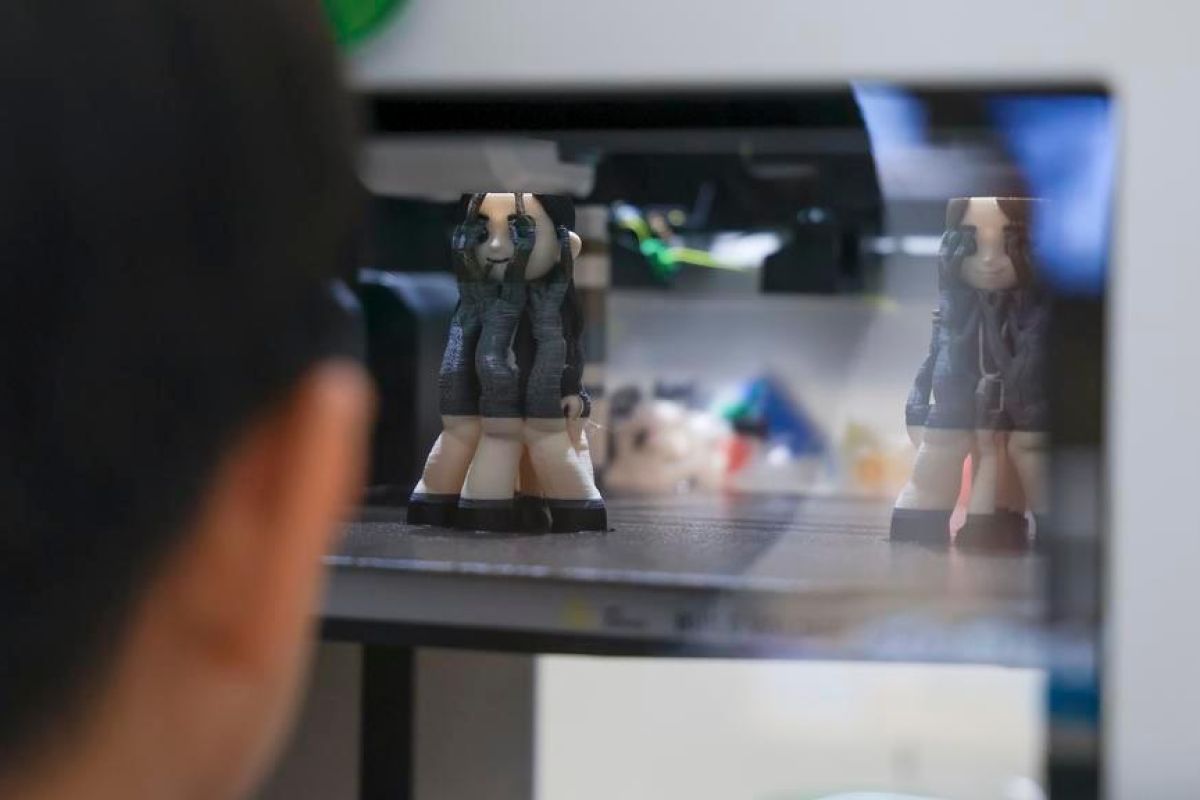
Shenzhen (ANTARA) - Chinese-made three-dimensional (3D) printers have evolved beyond the confines of expensive industrial laboratories and are now entering living rooms around the world, ushering in a new form of on-demand manufacturing.
This situation is quietly transforming supply chains and hobbyist culture.
For example, a hand-shaped plastic sun hat accessory produced by 3D printing can protect the wearer’s face from the harsh sun. Although it recently went viral on TikTok and Instagram, the accessory is more than just an internet sensation trend.
3D printing technology has shed its reputation as a tool only for enthusiasts. Thanks to affordable 3D printers from manufacturers in Shenzhen, southern China, the technology is now accessible to everyone. Starting at $300 (one US dollar is approximately Rp17,227), hardware enthusiasts can now print various ready-to-use creative gadgets in just a few hours.
Shenzhen, the famous consumer electronics hub known for producing the world’s bestselling products like drones and robot vacuum cleaners, continues to break boundaries in smart hardware innovation.
Its origins can be traced to markets in countries where supply chains are still underdeveloped. For instance, when a basic drone part breaks, there is often no quick way to obtain a replacement, creating a need for users to print their own parts using 3D printing technology.
Innovators in Shenzhen seized this opportunity. Last year, TIME magazine included the H2D printer from Shenzhen-based startup Bambu Lab in its Best Inventions list for that year. Since then, the H2D has grown popular on shopping platforms like Amazon. Bambu Lab’s founders were previously employees of China’s drone giant, DJI.
Statistical data shows that the “Four Little Dragons” of Shenzhen’s consumer 3D printing industry—Bambu Lab, Creality, Anycubic, and Elegoo—control 94% of the global market share for machines priced under $2,500.
“Because they lack strong manufacturing, e-commerce, and logistics networks like in China, they cannot get same-day or next-day part deliveries. For them, consumer-grade 3D printers remain the best tool to meet urgent needs,” said Elegoo Vice President Chen Bo.
In the first quarter (Q1), China’s 3D printer exports surged 119% year-on-year. In Guangdong Province in southern China, where Shenzhen is located, the increase was even sharper at nearly 137%, with Guangdong contributing 88.2% of China’s total national exports.
The spread of 3D printers is also expanding the reach of the creative industry. Chen Guo, a seller of creative products in Yiwu, known as China’s “ornaments centre,” noticed the popularity of the viral hand-shaped sun hat. He immediately tasked his designers to produce new versions in just a few hours.
Those models were immediately sent to 3D printers. The next day, Chen was recording samples of the printed results for clients, then channelling orders to 3D printing farms based on client feedback and demands.
Bambu Lab has established a global community for creators, where enthusiasts and professionals can upload their 3D designs. The community now has over 300,000 active creators and nearly 2 million quality models, with numbers increasing by around 100,000 each month, said Bai Xi, product consultant at Bambu Lab.
Shenzhen’s complete supply chain has led to rapid growth in this specialised industry. Bai Xue, secretary general of the Shenzhen 3D Printing Association, stated that the city and surrounding areas form a strong “two-hour supply chain circle.”
“About 80% of core components are available through local procurement, including key components like stepper motors and main control boards, all within a procurement radius of just a few dozen kilometres, significantly improving efficiency and reducing costs,” said Bai.