
China's Wealthy in Panic, Contacting Lawyers and Selling Assets Amid New Offshore Trust Tax
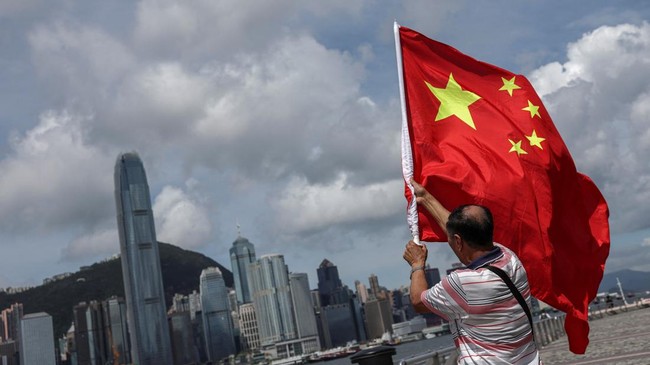
The Chinese government has thrown the country’s wealthiest individuals into disarray after issuing new rules that impose taxes on assets placed in offshore trusts. The policy has prompted tycoons to rush to contact lawyers and private banks, and even consider selling assets to pay tax bills.
Citing CNBC International, on Wednesday (5/8/2026), China’s Ministry of Finance together with the tax authorities on 24 July issued rules that for the first time clearly regulate taxation of offshore trusts, which for decades have been a favourite instrument of Chinese tycoons for storing wealth abroad.
Under the rules, the government will impose a 20% tax on almost all stages of a trust’s life cycle, from establishment and distribution of profits to its dissolution.
In addition, families that have moved assets into trusts since early 2023 are required to report and settle their tax obligations by 22 October 2026 at the latest. Late reporting or payment may incur additional sanctions.
The policy has immediately sparked panic among wealthy Chinese families, especially those using Hong Kong, Singapore, the British Virgin Islands and the Cayman Islands as asset storage locations.
“Many clients, trustees and advisers are still in a state of shock,” said Clifford Ng, a partner at Zhong Lun law firm in Hong Kong.
Echoing Zhong Lun, Kia Meng Loh, Chief Operating Officer of Dentons Rodyk Singapore, said his office has been flooded with inquiries from wealthy families, trust companies, private banks and insurance companies wanting to know whether they are affected and how much tax must be paid. According to him, some clients have even begun considering selling assets to have cash on hand to meet tax obligations before the deadline expires.
KPMG data shows assets managed through trusts in Hong Kong reached around HK5.2trillion, orapproximatelyRp12, 006trillion(atanexchangerateofRp17, 800/US), in 2023. More than half of the investments held in these trusts originate from mainland China and Hong Kong.
The new policy comes as the Chinese government is seeking new sources of state revenue amid a sluggish property sector, which for years has been the main contributor to local government income. Citigroup economist Xiangrong Yu warned that the obligation to pay taxes within just 90 days could force some trust owners to sell shares or other assets to obtain cash.
Shares on the Hong Kong Stock Exchange are expected to be among the assets most at risk of being offloaded because they are relatively easy to liquidate compared with holdings in private companies, property or pre-IPO investments. Nevertheless, a number of analysts assess that selling pressure is likely to be only temporary and will not trigger a major collapse in the Hong Kong stock market.
Legal experts also emphasise that holding a foreign passport does not automatically exempt someone from tax obligations in China if their main economic interests remain in the country. With these new rules, offshore trusts are still considered useful for asset protection and family estate planning, but are no longer effective as a means of reducing tax burdens.
Source: jawawa.id (https://jawawa.id/newsitem/chinas-wealthy-in-panic-contacting-lawyers-and-selling-assets-amid-new-offshore-trust-tax-1785945195)
Originally published by CNBC Indonesia (https://www.cnbcindonesia.com/news/20260805161432-4-756833/orang-orang-kaya-china-kini-kalang-kabut-hubungi-pengacara-jual-aset), translated from Indonesian