
China's Tech Giant Huawei's Glory Begins to Crumble in 2026, Here's the Proof
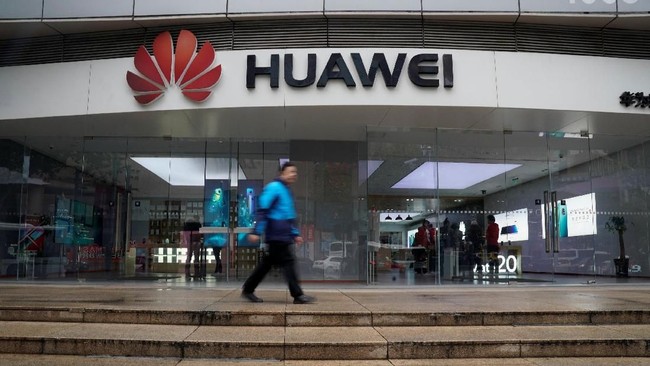
Jakarta, CNBC Indonesia - Huawei is touted as one of China’s ‘pillars’ to break dependence on artificial intelligence (AI) chips made by Nvidia from the United States (US). When Nvidia chips are strictly banned in China, Huawei is expected to seize a major opportunity through its Ascend AI chip products. This is also supported by government encouragement for Chinese companies to switch from US-made chips to domestic ones. However, Huawei’s success is not as robust as has been proclaimed. Huawei is still struggling to compete with Nvidia in the AI chip sector. In the latest report, the company’s revenue has not shown an increase like its competitors, including domestic ones. Revenue from external customer cloud computing fell 3.5% to 32.16 billion yuan (Rp 79.3 trillion) in 2025, cited from CNBC International, Wednesday (1/4/2026). The company’s main ICT infrastructure segment experienced slowing revenue growth, from 4.9% in 2024 to 2.6% last year. Total ICT revenue in 2025 reached 375.01 billion yuan (Rp 925.5 trillion). CNBC International notes that this segment includes the self-developed Ascend AI chip solutions by Huawei. That unit should be able to compete with Nvidia. Meanwhile, overall cloud revenue, including for internal customers, increased 4.8% to 72.8 billion yuan (Rp 179.7 trillion). This revenue decline occurs as ByteDance secures rapid growth for its AI cloud business. Yet, the TikTok parent company started from a small base. Gradually, ByteDance has been aggressively advancing AI development for its company. One report indicates it is increasing access to high-end Nvidia chips for data centres built in Malaysia. Additionally, Reuters reported the company is collaborating with Alibaba to order new Huawei AI chips. ByteDance itself declined to comment. Poor relations between the US and China have led each country to implement its own rules for chips. The US restricts access to Nvidia chips for Chinese companies, while Beijing urges local technological independence. AI capabilities in both countries continue to compete. However, AI devices developed in the US are still considered the most capable in the world.