
China's Sudden Demand Slump Sends Global Coal Prices Tumbling
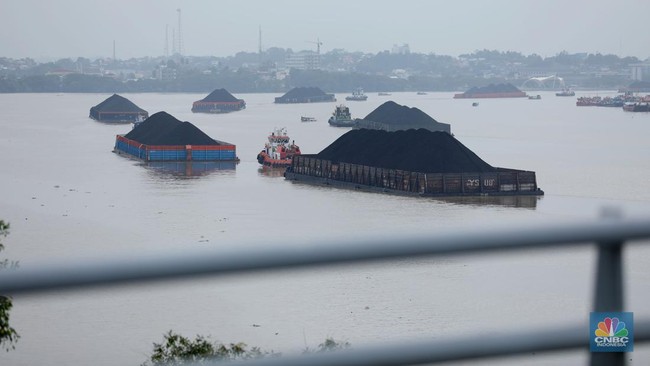
Global coal prices weakened throughout the second week of July 2026, influenced by falling demand from China, the world’s primary coal importer. According to Refinitiv data, the Newcastle benchmark coal price for September delivery fell 2.2% to US$128.75 per ton in the final trading session on Friday (10/7/2026). This decline weighed on the weekly performance, which closed down 0.19% from the previous week. The drop in global coal prices was haunted by weakening demand from China, which has been the main pillar supporting coal prices in the region. The weakness, which initially occurred only in China’s domestic market, has now spread to the seaborne coal market, dragging down the Australian Newcastle benchmark price, Indonesia’s FOB price, and imported coal prices in India. Market conditions have now reversed compared to May and early June, when supply concerns, uncertainty over Indonesian exports, and seasonal demand had supported prices. Currently, coal stocks at power plants across Asia are at comfortable levels, industrial activity is weakening, domestic coal supply in China and India is abundant, and the arrival of the monsoon season in India is further reducing purchasing activity. China’s domestic coal market has weakened rapidly over the past two weeks, eliminating one of the main factors that had been supporting Asian coal prices. Concerns regarding mine inspections, supply disruptions, and Indonesian export restrictions have begun to ease. Instead, the market is now facing rising inventories and slowing consumption. Power plants in China have sufficient stockpiles. Inventories at northern ports continue to grow, terminals in South China are nearly full, and vessels carrying imported coal are beginning to experience unloading delays. High rainfall has increased hydroelectric power generation, thereby reducing coal consumption. Meanwhile, industrial consumers such as cement plants and chemical producers are only purchasing coal for short-term needs. Mine-mouth coal prices fell by around 5-20 yuan per ton in several production areas as buyers became more cautious. Domestic coal freight rates also dropped sharply. Shipping rates from Qinhuangdao to Shanghai plummeted from US$7.09 per ton in mid-June to just US$3.12 per ton in early July, reflecting a slowdown in coal distribution along China’s coast. However, coal prices did not sink further due to expectations that metallurgical coal prices will remain stable until 2031 and exports will increase. According to a quarterly outlook report from Australia’s Department of Industry, Science and Resources, Australia remains the world’s largest exporter of metallurgical coal in 2025-2026, with exports reaching 147 million metric tonnes, of which more than 95% of production is shipped to overseas markets. Metallurgical coal prices are expected to remain relatively stable in real terms until 2031. Meanwhile, export volumes are projected to increase as production from major mines grows. However, export revenues are expected to decline gradually over the period despite relatively stable prices. The report also noted that the conflict in the Middle East has had only a limited impact on metallurgical coal supply, although rising insurance, shipping, and diesel costs have increased trade expenses. Global seaborne imports of metallurgical coal remain in the range of 25-30 million metric tonnes per month. Steel production using basic oxygen furnaces (BOF) still dominates, although the use of electric arc furnaces (EAF) has been increasing since 2020. Longer shipping routes, particularly between the Atlantic and Asia, have increased freight costs, thereby boosting the relative competitiveness of Australian suppliers. Although a global economic slowdown due to the Middle East conflict could affect demand, Australia expects global metallurgical coal trade to remain stable as long as no additional disruptions occur. India and Southeast Asia are expected to be the main sources of demand growth as steel production gradually shifts away from China. On the other hand, the increasing use of EAF technology is expected to reduce the share of BOF-based steel production, which is more coal-intensive, thus limiting long-term growth in metallurgical coal demand.