
China’s Solar Boom Is Transforming the World
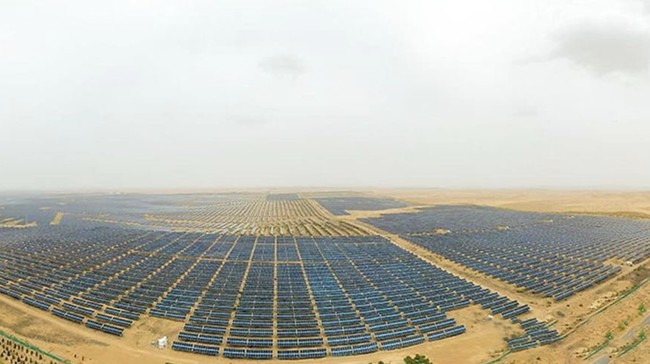
Jakarta, CNBC Indonesia – An unexpected change is under way in the global energy landscape. By the end of 2026, solar power is expected to officially surpass nuclear power as the world’s second-largest source of electricity. The boom in solar power plants is being led by China, and its impact is changing how countries view energy.
Solar power’s growth has been extraordinary. Over the past 26 years, capacity has increased 2,700-fold. By contrast, nuclear power’s share of electricity generation has barely changed over several decades. By the end of this year, solar power is expected to account for around 10 per cent of the world’s electricity, overtaking nuclear, whose share is now below that level.
This major shift is being driven by China. The country is building factories and installing solar panels on an unprecedented scale, causing manufacturing costs to fall sharply. As a result, other countries can now build solar power plants far more cheaply than nuclear reactors or coal-fired power stations.
Meanwhile, plans to build new nuclear reactors in various developed countries are being held back. Construction costs continue to rise, making nuclear power less competitive with increasingly affordable solar energy.
“Solar is now the main engine of the global energy transition,” said Jan Rosenow, an energy policy expert at the University of Oxford.
The challenge is no longer finding alternative energy sources, but adapting electricity grids so they can accommodate this abundant supply.
For developing countries, including Indonesia, solar power offers both a solution and an opportunity. They no longer have to depend on imported fuels with volatile prices, and can instead build energy independence from the sunlight available every day.
This is particularly advantageous for Indonesia, which lies on the equator and receives sunshine throughout the year. Cheap solar electricity could lower household costs and curb inflation. Remote areas not yet connected to the electricity grid could be equipped with standalone solar panels, without having to wait for power lines to be extended from generation centres. Indonesia could also move away from dependence on increasingly expensive and polluting fuels and become an exporter of clean energy.
Indonesia’s current installed solar capacity is only 1.49 GW, a small fraction of its theoretical solar energy potential of 3,294 GW.
The government has set an ambitious target to build solar power plants with a total capacity of 100 GW over the next decade, in line with its direction to promote the cleanest forms of energy. If this large-scale target is achieved, Indonesia is projected to rise sharply in the global solar power rankings, from 69th to fourth.