
China's Secret Weapon That Western Nations Lack
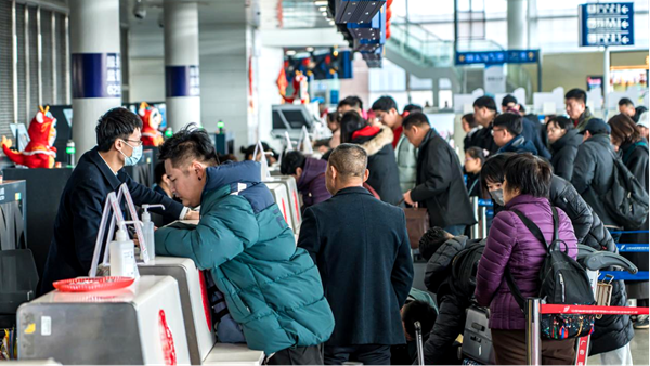
Amidst economic slowdowns and major shifts in the global labour market, China retains a distinct advantage over many Western nations: a high rate of labour force participation.
According to the latest time-use surveys in China, more than 75% of the population aged 18 to 59 is involved in various forms of paid employment. This figure is substantially higher than that of the United States, which recorded a participation rate of approximately 56% for the comparable age group.
These findings suggest that the primary difference between China and Western countries lies not in the length of working hours, but in the sheer number of people remaining active in the workforce.
In recent years, millions of construction workers in China have lost their jobs due to the downturn in the property sector. Simultaneously, office workers face uncertainty driven by the advancement of artificial intelligence (AI). Nevertheless, the level of societal engagement in the workforce remains high.
The survey also indicates that working hours in China tend to decrease as the nation’s prosperity increases. In a 2018 survey, the average Chinese worker spent 7 hours and 8 minutes per day on permanent jobs or family businesses. In the most recent survey, this figure dropped to 6 hours and 23 minutes per day.
In fact, these average working hours are not significantly different from those reported by workers in the US and Germany.
A similar phenomenon is visible across various provinces in China. Wealthier regions generally exhibit shorter working hours compared to lower-income areas. Beijing and Shanghai, for instance, recorded lower average working hours than many other regions in China. As the two wealthiest cities in the country, both enjoy greater leisure time compared to developing areas.
One exception is Zhejiang province, home to the city of Wenzhou and the technology hub of Hangzhou. Despite being prosperous, workers in this region still record relatively long working hours.
This high labour participation is also reflected in the labour award system routinely presented by the Chinese government each year. Through labour medals, the government honours workers deemed to have contributed significantly to national development. However, the system has also faced scrutiny for not fully reflecting China’s modern labour market structure.
The list of award recipients is still dominated by engineers, technicians, and party officials. Meanwhile, service sector workers and those in the gig economy, who are increasingly absorbing the workforce, are relatively underrepresented.
Nonetheless, the Chinese government continues to encourage a national work ethic and productivity. In the announcement of the awards, the trade union federation called on workers to follow the example of the medal recipients by demonstrating greater dedication to work and national development.
Amidst various economic challenges, the high number of actively working citizens remains one of the factors distinguishing China from many Western nations today.