
China's New Breakthrough: America No Longer Needed
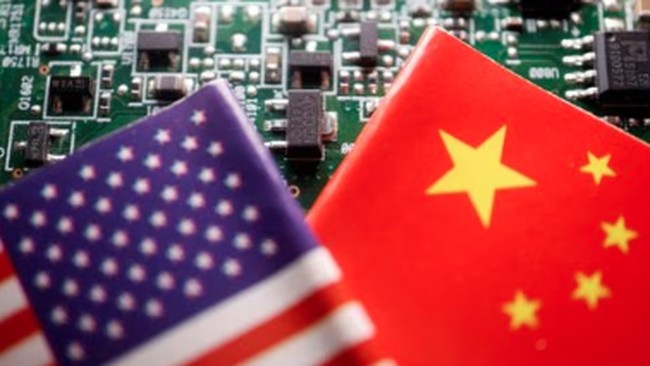
Jakarta, CNBC Indonesia - Chinese technology company Zhipu AI claims to have reduced its dependence on United States (US) technology by accelerating the use of domestically produced chips.
Zhipu AI CEO Zhang Peng revealed that the surge in computing demand since February has forced the company to optimise the utilisation of domestic chips. As a result, their technology’s performance is now claimed to rival world-class chips.
Not only from a technological standpoint, the company’s business performance has also soared sharply. Zhipu recorded revenue growth of up to 132% throughout 2025.
This spin-off from Tsinghua University has attracted attention in Silicon Valley thanks to its latest model, GLM-5, which is claimed to match US competitors on several performance metrics.
“Deep optimisation has enabled the GLM series models to achieve inference efficiency on domestic chips that can rival the world’s best foreign chips,” said Zhang, quoted from Reuters, Wednesday (1/4/2026).
Amid exploding demand, Zhipu also raised API service prices by up to 83% in the first quarter. The volume of service usage even surged by 400%, reflecting the high market need for AI solutions.
The company’s main business, installing AI systems on local client servers, also recorded significant growth. Revenue from this segment more than doubled, while cloud-based services skyrocketed nearly threefold.
Nevertheless, the company still recorded a massive loss of 4.72 billion yuan in 2025. However, management is optimistic about soon turning a profit with improved efficiency and business expansion.
Competition in China’s AI industry is heating up. Zhipu must contend with strong players like MiniMax, DeepSeek, and tech giants such as Alibaba and ByteDance.
Zhipu is also continuing to expand overseas, particularly in Southeast Asia, although China remains its primary market.