
China's NEVs deliver global benefits through 'full-chain' expansion
At major ports along China’s southeastern coast, Chinese-made electric vehicles are being loaded one by one onto car carriers bound for all corners of the world. However, for China’s new energy vehicle industry, exporting vehicles is no longer the end goal, but merely the first step.
As the world’s largest NEV exporter, China is rapidly reshaping its global strategy, shifting from product exports to localised, ecosystem-based global development. For many countries, this shift means more than just affordable electric cars. It brings new investment, local jobs, and a faster path towards their own green transition.
Official data from the China Association of Automobile Manufacturers shows that China exported 2.615 million NEVs in 2025, a 103.7 per cent year-on-year increase from 1.284 million units in 2024. In the first half of 2026, exports reached 2.355 million units, up 120 per cent year-on-year. NEVs, in particular, have become a major driver of China’s export growth.
Chinese EVs are no longer seen as cheap alternatives. They compete fiercely on performance, smart features, and design.
XPENG Motors stands out as a frontrunner. In 2025, the company shipped over 45,000 vehicles overseas, a 96 per cent year-on-year increase. Europe accounted for nearly half of the total, whilst the Asia-Pacific region recorded strong growth. An operational hub in Egypt serves as a primary base for the Middle East and Africa markets. In March 2026, XPENG announced a three-year plan to expand its reach into Latin America by 2028, with Mexico as the first step.
This momentum is also demonstrated by GAC Group, which views overseas markets as a key growth driver in its transformation process. In the first half of 2026, GAC Group exported 121,500 vehicles under its own brands, soaring 132 per cent year-on-year.
In the Middle East, models such as GAC Trumpchi and GAC HYPTEC have been well received by local consumers thanks to reliable quality and advanced technology. In Southeast Asia, its knockdown assembly plants support local market production and sales, whilst in Europe, the company is targeting high-end intelligent NEVs.
“Overseas markets are one of the main growth drivers for us. Our goal is to bring GAC products to a much wider global market,” said Chen Jiacai, deputy general manager of GAC Group, targeting exports of 250,000 units in 2026 and 1 million units by 2030, with a presence in 120 countries and regions.
For leading Chinese automotive manufacturers like BYD, GAC, and XPENG, their ambitions extend far beyond mere volume. These manufacturers are now shifting from product exports to technology licensing, local manufacturing, and deep brand development, creating a more sustainable and integrated model for global expansion.
Della Hernita, a university staff member in Jakarta, and her husband recently ordered a BYD electric car. “Initially we considered daily travel costs, but then we found that maintenance costs are also lower, and the difference will become clear in the long term,” said Della. “Of course, we also want to choose a more environmentally friendly way of travelling.”
From Jakarta to Surabaya, Chinese-made NEVs are increasingly popular among Indonesian families. This rising demand has driven Chinese carmakers to transform their global strategies, moving towards building factories abroad, licensing core technology, and shaping global standards.
For example, BYD has licensed its e-platform 3.0 to Toyota and its blade battery technology to Hyundai. Meanwhile, seven ASEAN countries have also adopted its EV charging standards. These technology-sharing arrangements help global carmakers accelerate their own EV development, whilst spreading common standards that benefit entire regional markets.
In another example, XPENG has supplied its second-generation autonomous driving system and self-developed Turing AI chip to Volkswagen for global application. The technology was first validated in China before being rolled out to European and Southeast Asian markets.
“This collaboration demonstrates mutual trust and a shared commitment to innovation in core smart EV technology,” said He Xiaopeng, chairman and CEO of XPENG.
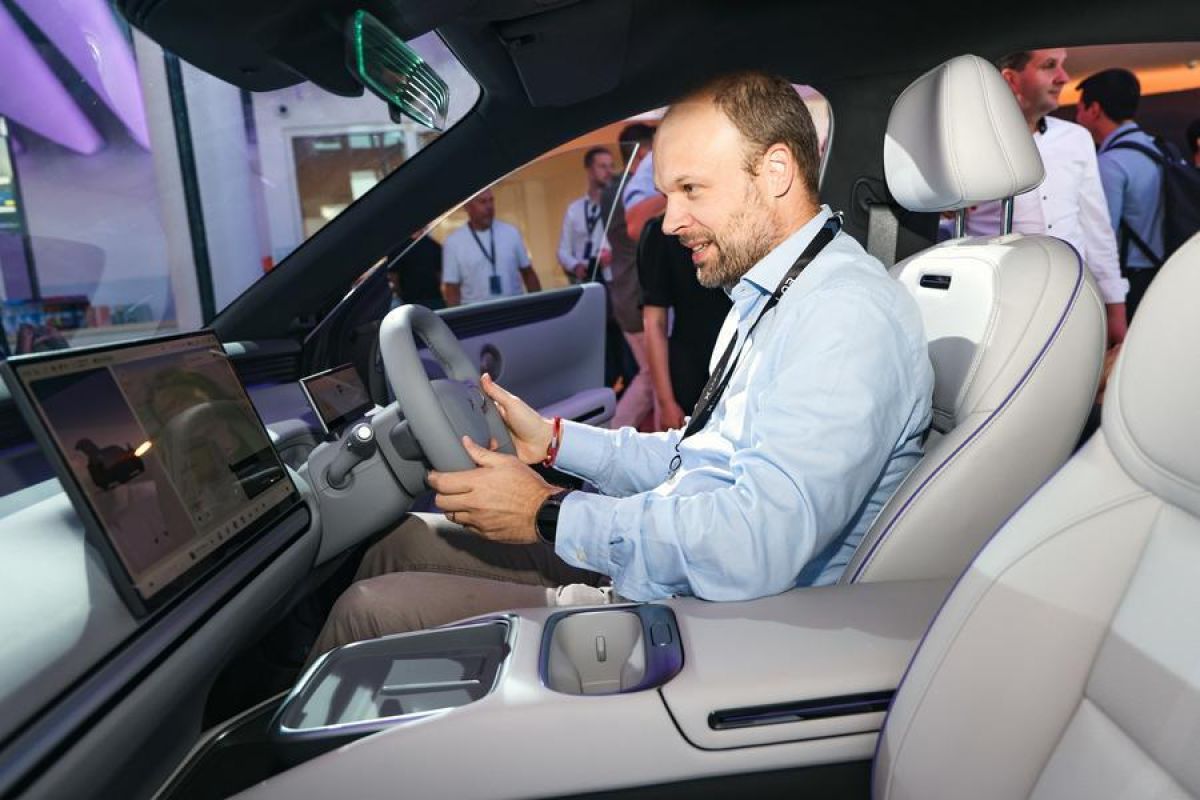
Today, modern brand experience centres from BYD, GAC, and XPENG are spread across commercial districts in Europe, Southeast Asia, and the Middle East. With immersive displays and professional local staff, these centres have changed the old perception that Chinese cars are “cheap and low-spec.”
In terms of service, BYD and XPENG have established service centres across Europe, the Middle East, and Latin America, providing car purchase and after-sales services.