
China's NEV Sales Hit Record 60.6 Percent
Beijing (ANTARA) - The dominant position of New Energy Vehicles (NEVs) in the Chinese automotive market strengthened further in August 2026, with NEV sales recording a record 60.6 per cent of total monthly new car sales, according to industry data released on Thursday (10/9).
In August 2026, NEV output and sales reached more than 1.65 million and 1.64 million units respectively, a year-on-year (yoy) increase of nearly 20 per cent, according to data from the China Association of Automobile Manufacturers (CAAM).
Overall, automotive output and sales in August 2026 were recorded at 2.68 million and 2.71 million units respectively. CAAM Deputy Secretary-General Chen Shihua attributed this monthly growth in automotive production and sales primarily to ongoing automotive consumption subsidies.
The latest round of enhanced automotive consumption subsidy policies has been rolled out in several cities, focusing on simplifying application procedures, increasing subsidy values, and expanding the range of eligible vehicles.
Analysts state that the increase in subsidy policies, supported by tangible financial backing, has lowered the barriers for current car owners to trade in and upgrade their vehicles. These measures have boosted consumer confidence and converted market hesitation into actual orders, revitalising the automotive market.
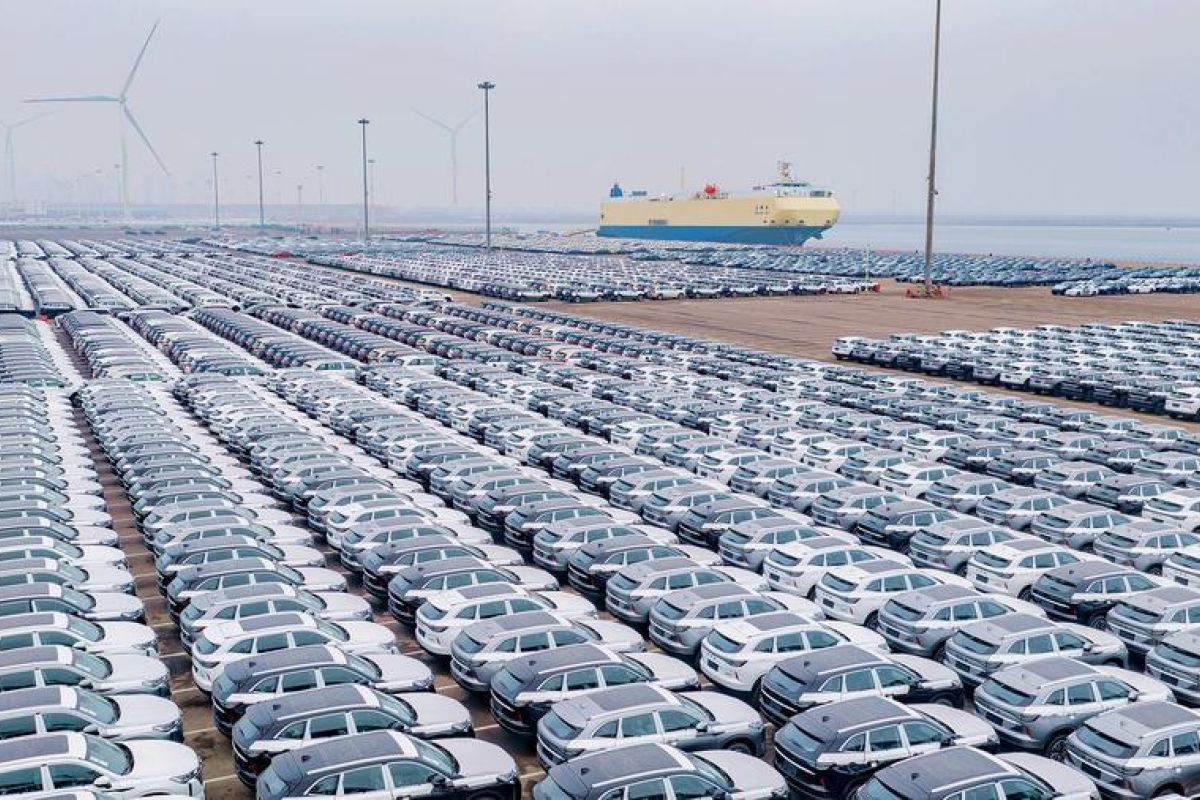
Chinese vehicle exports continue to grow rapidly, with monthly export volumes exceeding 1 million units for three consecutive months.
In August 2026, vehicle exports reached 1.01 million units, up 65.3 per cent (yoy). Notably, NEV exports during the month surged 1.3 times to 526,000 units.
In the first eight months of 2026, total automotive exports reached 7.15 million units, up 66.7 per cent (yoy), including 3.44 million NEV units, marking a 1.2-fold increase.
NEVs have accounted for more than 50 per cent of China’s total automotive exports for three consecutive months, meaning one in every two exported vehicles is an NEV.
This fundamental shift in export structure indicates that China’s automotive exports are transitioning towards an NEV-driven model and opening global markets through electrification technology, said Chen.
Behind the strong sales and export figures, the Chinese automotive industry is undergoing a deeper transformation driven by a series of policy measures aimed at directing the sector towards high-quality development.
In early September 2026, China issued a circular regarding the regulation of supplier payments and the optimisation of account period management for automotive companies, aiming to better regulate competition within the NEV industry and foster fair, reasonable, honest, and mutually beneficial cooperation between vehicle manufacturers and parts suppliers.
The circular urges automakers to settle payments to small and medium-sized supplier companies within 30 days of receipt of goods, with a maximum limit of 60 days, and encourages cash payments.
Separately, China released guidelines to regulate the overseas competitive practices of automakers and strengthen compliance, in order to promote the healthy and orderly global expansion of the country’s automotive industry.
The guidelines focus on overseas marketing and include compliance in production safety, quality management, labour protection, and data security, encouraging cost-based pricing that aligns with international market supply and demand.
A Chinese Ministry of Commerce official stated that the guidelines emphasise legal compliance, healthy competition, and mutually beneficial cooperation, thereby helping Chinese automakers fulfil their social responsibilities abroad and integrate into host countries.
China’s automotive exports are entering a phase where quality, rather than mere volume, must be the priority, said Chen.
The outline of the 15th Five-Year Plan (2026-2030) calls for the accelerated development of strategic emerging industries, such as intelligent connected NEVs. China also aims to increase the share of NEVs in the total vehicle fleet to 30 per cent by 2030, according to an action plan for achieving carbon peaks during that period.