
China's National Medical Imaging AI Competition Invites ASEAN Innovation
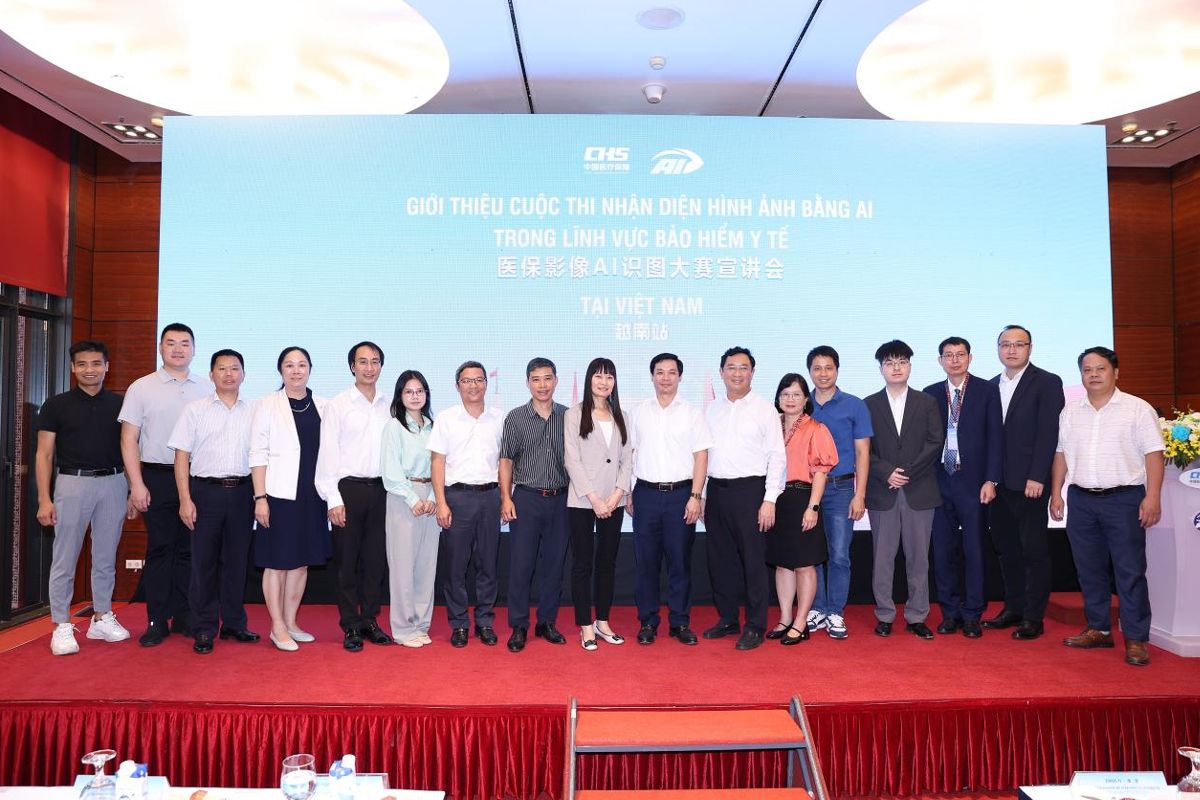
Following a successful seminar in Malaysia in May, the China Medical Insurance Imaging AI Competition arrived in Vietnam on 10 June, facilitating in-depth exchanges with Vietnamese government authorities, including health, social security, and science and technology departments, as well as local medical institutions and enterprises. Launched in China, a global AI innovation hub, this competition is the country’s first national-level professional contest focused on ‘AI + image recognition’. Jointly organised by China’s National Healthcare Security Administration and the People’s Government of Guangxi Zhuang Autonomous Region, the competition invites teams from around the world to participate and exchange experiences, offering strong technical support and assistance in participation, implementation, and commercialisation of results. Guangxi borders ASEAN countries, and the China-ASEAN Expo is held annually in Nanning, the region’s capital. The competition will take place in Guangxi from August to October 2026. It features eight professional tracks covering disease diagnosis scenarios such as lung cancer, breast cancer, glioma, kidney cancer, and thyroid cancer, involving multimodal medical imaging like CT, MRI, CTA, X-ray, and ultrasound. Designed based on real clinical pathway data, the competition highlights the clinical feasibility and practical value of AI solutions. For each track, organisers will provide medical imaging datasets reviewed and annotated by medical expert teams. These datasets include both positive and negative cases and will be used for model training, validation, and evaluation. All data has undergone standardised anonymisation and privacy protection procedures to ensure data security and patient privacy. With the theme ‘Intelligent Imaging, Smart Future’, the promotional event in Vietnam targeted medical institutions, university research teams, and related enterprises in Vietnam and across ASEAN. The event introduced competition rules, the technical platform, and registration procedures, while facilitating in-depth discussions on medical imaging AI trends, clinical application scenarios, and regional cooperation opportunities. The event attracted widespread attention from the ASEAN medical and technology community. In Hanoi, the organising committee provided detailed explanations on the competition format, registration process, and participation guidelines for ASEAN teams. Representatives from several Vietnamese government departments delivered speeches, while Vietnamese medical institutions and experts shared their insights on the development of medical imaging AI. At the previous promotional event in Malaysia, several Malaysian universities, research institutions, and medical companies expressed their intention to actively form teams to participate. They also voiced hopes that the competition would become a platform to deepen cooperation with China in the field of medical imaging AI and promote the application of related technologies in ASEAN healthcare systems. As the forefront of China’s openness and cooperation with ASEAN, Guangxi possesses clear advantages in location, platforms, and industrial coordination. The region hosts cross-border cooperation platforms such as the China-ASEAN Information Harbour and the Fangchenggang International Medical Open Pilot Zone, and has obtained approval to implement pilot programmes for cross-border data flow. This provides favourable conditions for the research and development, standard formulation, commercialisation, and cross-border application of medical imaging AI technologies. AI development in Guangxi has also been incorporated into China’s national planning, with approval to establish two national-level AI cooperation centres. According to organisers, Guangxi will allocate 45 billion yuan over the next three years to support the development of new quality productive forces led by artificial intelligence. Guangxi will also establish an AI industry fund worth 10 billion yuan and continue to implement various policies, such as opening application scenarios and issuing computing power vouchers. Winning projects of the competition will receive special funding support and be placed on a priority review and approval track for Class II medical devices. Industrialisation projects involving core key technologies may receive up to 20 million yuan in support, further strengthening the industrial ecosystem encompassing research and development, integration, commercialisation, and application. Guangxi also has experience in hosting large-scale professional competitions. Previously, the region hosted the ‘AI Super League’, a competition designed to empower industries through artificial intelligence, which attracted over 10,000 teams and provided strong organisational support for the upcoming event. The competition is open to teams from both China and abroad, with free online registration. It consists of two stages: the preliminary round and the final. The preliminary round will be held online from 1 August to 30 September, where participating teams will conduct model training and evaluation on a unified cloud computing platform. The final is scheduled to take place in Nanning in mid-October, where qualifying teams will compete through live presentations and defence sessions. Registration closes at 24:00 on 15 July 2026. Teams can register via the competition’s official website.