
China's Missile Test Fuels Anxiety Among Pacific Nations
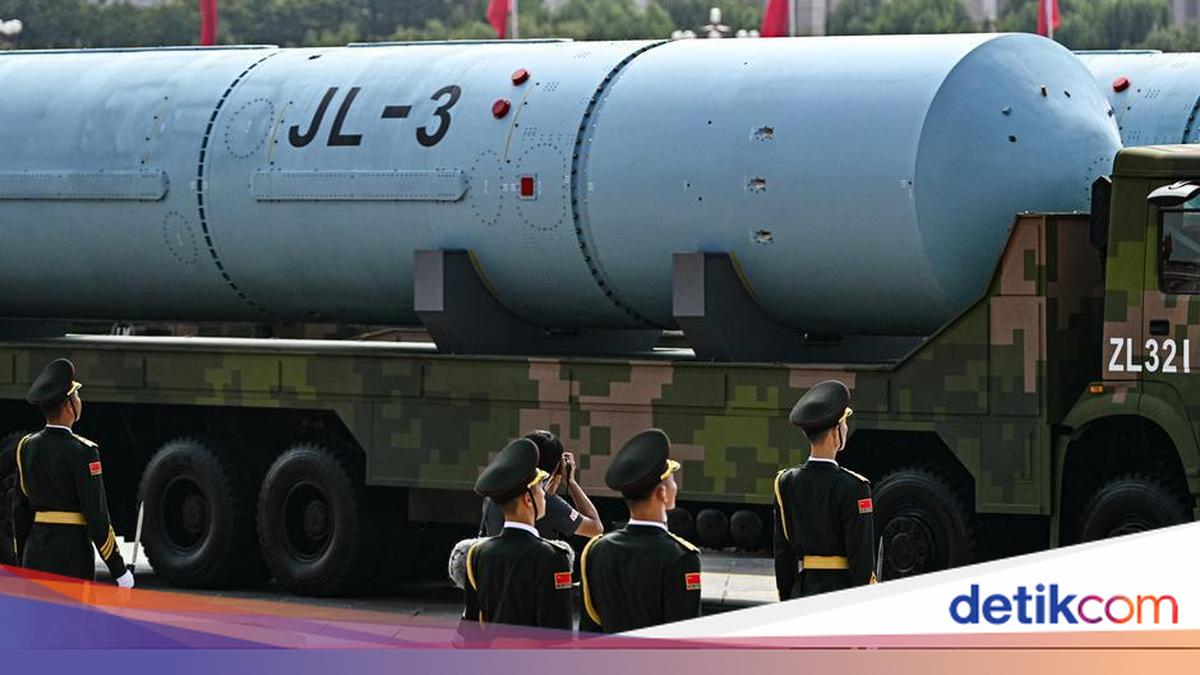
The Chinese Navy conducted a missile test in the South Pacific on Monday (06/07), prompting immediate concern from regional neighbours. Chinese state media reported that a nuclear-powered submarine fired a missile carrying a dummy warhead into international waters.
The test drew sharp criticism from United States allies in the Pacific. Australian Foreign Minister Penny Wong stated that China’s test disrupted regional security stability, while Japan urged Beijing to reconsider its actions. New Zealand also voiced its objection, with Foreign Minister Winston Peters saying in Wellington, “We are deeply concerned by China’s test of a weapon capable of carrying a nuclear warhead in the South Pacific.”
During the Cold War, the United States conducted numerous nuclear weapons tests around Bikini Atoll in the South Pacific, now part of the Marshall Islands. Since World War II, the US has dominated the post-war security architecture of the Pacific region.
China’s growing military power is now challenging this established security order. Although no official statement has provided full details of the test, nationalist military experts on Chinese social media have speculated about the missile’s capabilities. Lieutenant Colonel Zhang Junshe, a researcher at the People’s Liberation Army Naval Military Academic Research Institute, wrote that the missile was a submarine-launched intercontinental ballistic missile designated Julang-3 (JL-3).
The Julang-3, meaning “Giant Wave-3”, is still under development. It reportedly has a maximum range of around 12,000 kilometres and can carry multiple nuclear warheads. Three successful tests were reported between 2018 and 2019. Zhang wrote in his blog that the missile’s targets are not frontline combat forces but strategic objectives such as command centres, military bases, or energy infrastructure. The JL-3 is believed to be launched from the Type 094 Jin-class nuclear-powered submarine. With a crew of about 120 sailors, the 135-metre-long submarine can operate underwater for at least 70 days. The Chinese Navy currently has six active Type 094 submarines. However, Zhang noted the possibility that a modified submarine version was involved in the launch.
According to the Washington-based Nuclear Threat Initiative (NTI), China also operates around 59 nuclear-powered attack submarines in addition to the Jin-class fleet. Zhang added that the weapon is designed as a comprehensive nuclear deterrent. “Even if all other military weapon systems are disabled, Chinese submarines retain the full capability to launch a nuclear counter-strike,” he wrote.
In September 2024, China launched an intercontinental ballistic missile carrying a dummy warhead from the mainland into the South Pacific. The missile reportedly landed in the targeted area in French Polynesia. That launch was China’s first long-range missile test traversing international waters in over 40 years. As in 2024, Chinese authorities reiterated that all neighbouring countries had been notified in advance and that the exercise was not directed at any specific country or target.
However, China is intent on bringing change to the Pacific region. The strong military presence of the US and its allies near China’s periphery has long been a concern for Beijing. The Chinese Communist Party (CCP) wants to ensure the country can retaliate against any military attack and deliver a response Beijing deems appropriate. At the same time, as a nuclear-weapon state, China maintains its stated commitment to a no-first-use policy.
“China is now aggressively challenging the US-led regional security architecture at various levels,” Felix Heiduk, Head of the Asia Research Division at the German Institute for International and Security Affairs (SWP) in Berlin, wrote in 2024. At that time, the German military participated in US-led military exercises in the Pacific. Over five weeks in July and August 2024, 29 countries with 40 warships conducted exercises around the US military base at Pearl Harbor.
Heiduk wrote in 2024 that China seeks to achieve its strategic goals by promoting an alternative regional order initiated “by and for Asian countries”, with China as its leader. Meanwhile, Beijing portrays the US-led security system as a “Cold War relic”. This strategy includes modernising and strengthening the People’s Liberation Army (PLA), expanding bilateral security partnerships, and militarising large parts of the South China Sea.
Security concerns are also rising in the South Pacific. “The PLA Rocket Force is China’s most effective means of launching long-range strikes against Australia,” Sam Roggeveen and David Vallance of the Australian think tank Lowy Institute wrote in a June 2026 study. “In the event of a major regional conflict, bases in northern Australia would be targeted by the PLA.” Just last month, Australian researchers had still not found definitive open-source evidence that Chinese missiles launched from the mainland could reach major Australian cities.