
China's Massive Yangtze River Rescue Sees Recovery, but Fishermen Pay the Price
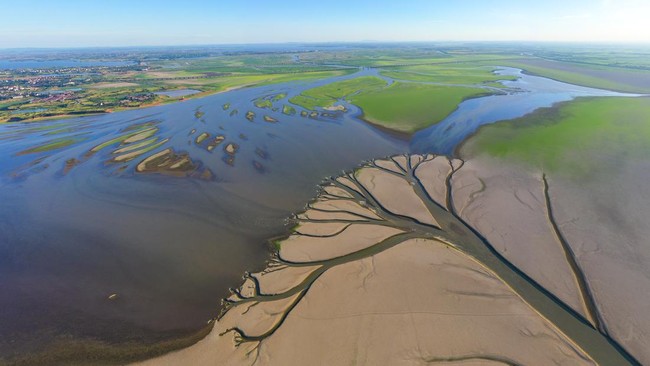
The Yangtze River, the longest river in Asia, is showing a remarkable recovery after decades of damage from pollution, overfishing and dam construction.
However, that success has come at a high price. The fishing ban has left around 230,000 fishermen without work, and their boats have been seized or destroyed.
Fish biomass in the Yangtze has surged by more than 200% since 2021, after declining continuously for roughly seven decades. At the same time, the population of the finless porpoise has risen to more than 1,400, up from around 1,000 in 2017.
These findings follow a massive conservation programme China has carried out on the Yangtze since 2021, ranging from a ten-year ban on commercial fishing and the closure of thousands of chemical plants, to river monitoring through patrols, drones and cameras.
The results are indeed visible. Yet that success also raises another question: how great is the social and environmental cost that must be paid to save Asia’s longest river?
A Large-Scale Conservation Operation
The recovery did not happen naturally. The Chinese government implemented the largest environmental protection package ever applied to the Yangtze River basin.
The central policy is a ten-year ban on commercial fishing, which took effect in 2021. The ban covers the main stem of the Yangtze, the major rivers connected to it, and the lakes within the river basin.
The decision was taken after fish catches continued to shrink. In the 1950s, catches in the Yangtze still exceeded 400,000 tonnes per year. By the time the policy was introduced, the figure had fallen to under 100,000 tonnes.
The government then tightened oversight through river patrols, drones, surveillance cameras and heavier sanctions for violators. President Xi Jinping has made protecting the Yangtze one of his priority agendas — environmental performance is even one of the indicators used in evaluating the promotion of regional officials.
Although illegal fishing has not been completely eliminated, its scale is considered to be shrinking. Last year, the number of criminal cases related to the practice fell by 40% compared with 2024.
The government’s measures did not stop at the fisheries sector. Thousands of chemical factories along the riverbanks have been closed or relocated, upstream areas have been rehabilitated through forest planting, whilst cities across the basin have built green spaces, artificial wetlands and porous surfaces to improve rainwater absorption while reducing polluted runoff into the river.
According to Wang Limin, a senior conservationist in China, the Yangtze’s recovery demonstrates the Chinese government’s ability to concentrate national resources to solve an environmental problem in a relatively short time.
He regards the rise in the finless porpoise population as the most encouraging development. As an apex predator and indicator species, the mammal reflects the overall health of the river ecosystem.
Fishermen Lose Their River
Behind the ecological recovery, the social costs involved are far from small.
Around 230,000 fishermen lost their jobs after the fishing ban came into force. Their boats were destroyed or seized so they could no longer be used.
Chinese state media say the fishermen received compensation, job training, and that some have found new work with better incomes. However, conditions on the ground do not always match that narrative.
In Jinxian County, on the banks of Junshan Lake south of the Yangtze’s main stem, residents say only a small proportion of fishermen received compensation, and the amounts were judged to be far below what they earned when they were still fishing.
Most eventually left their home villages to work as migrant labourers in big cities.
“No one listens to the common people. The government decided everything. You can’t argue with them,” said a former fisherwoman who now runs a restaurant.
Not far from that spot, a former fisherman named Zhang pointed to the jetty where his boat used to moor. The site is now overgrown with grass.
At the government’s urging, Zhang switched to farming swamp eel, one of the area’s local delicacies. But he says the farming venture requires far more capital than fishing did, and profits depend heavily on market demand.
“Everyone’s losing money this year,” he said.
Dams Remain a Point of Contention
The success in restoring the Yangtze has not resolved every problem.
Since the 1950s, China has built at least a dozen large dams on the Yangtze, including the Three Gorges Dam — the world’s largest hydroelectric dam — along with thousands of smaller dams across the river basin.
Many researchers consider dam construction to have had a major impact on biodiversity by blocking fish migration to spawning grounds.
Steven Cooke of Carleton University in Ottawa, one of the authors of the February study, believes the hydropower sector has not received the same scrutiny as other sectors in conservation efforts.
“The hydropower industry has really gotten a pass. Everybody else has stepped up, and nothing has changed with respect to hydropower,” he said.
According to Cooke, the Yangtze’s recovery will remain limited as long as the dams are not modified or fitted with fish migration passages.
The Next Test
The debate has now shifted to Poyang Lake, China’s largest freshwater lake, which is connected to the Yangtze.
The government plans to build a dam about 3 kilometres long between Poyang Lake and the Yangtze to control water levels during the dry season. The project officially received approval early this year.
The government says the project is needed to safeguard water availability. However, many environmentalists worry the dam could instead disturb the habitat of migratory birds and the finless porpoise, whose population has only just begun to recover.
The Yangtze’s recovery shows that ecosystem damage can be slowed, and even reversed, when a state mobilises resources on a massive scale. Yet China’s experience also demonstrates that conservation success does not always go hand in hand with protecting people’s livelihoods or with every environmental interest.
Source: jawawa.id (https://jawawa.id/newsitem/chinas-massive-yangtze-river-rescue-sees-recovery-but-fishermen-pay-the-price-1785235937)
Originally published by CNBC Indonesia (https://www.cnbcindonesia.com/research/20260728160953-128-754474/operasi-besar-china-selamatkan-sungai-yangtze-nelayan-jadi-tumbal), translated from Indonesian