
China's Massive Tree-Planting Efforts Completely Transform the Nation
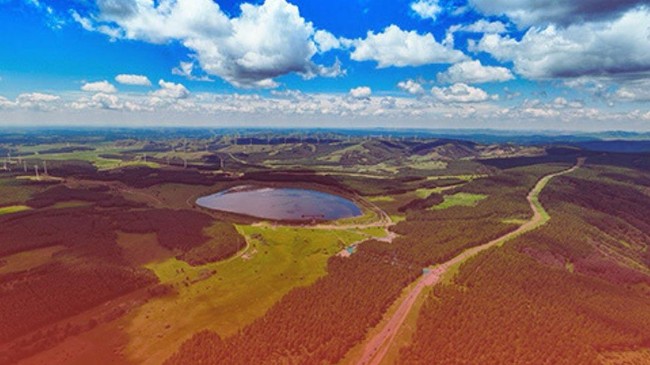
China’s massive government obsession with restoring nature through large-scale green ambitions has brought about two simultaneous impacts. On one hand, the mega-project has successfully transformed barren lands into fertile, green landscapes.
However, a scientific study has uncovered a dark side that warrants attention. This environmental mega-project has triggered an extreme shift in the water cycle and has the potential to create a national clean water crisis.
For decades, the ‘Celestial Empire’ has been known for its colossal afforestation programmes. Notable examples include the Great Green Wall project, launched in 1978, which successfully boosted national forest cover to over 25%.
Furthermore, subsequent programmes such as ‘Grain for Green’ and ‘Natural Forest Protection’ aggressively forced the conversion of productive agricultural land into forest areas and completely halted illegal logging activities.
However, a study published in the scientific journal Earth’s Future reveals shocking facts behind the brilliance of these green ambitions. These giant afforestation projects have been proven to drastically alter the distribution of freshwater across the country.
Sacrificing Densely Populated Regions for Greenery
Based on high-resolution data analysis regarding land-use changes, precipitation, and evapotranspiration (the process of water evaporation from soil and plant transpiration) between 2001 and 2020, researchers found significant anomalies.
The massive expansion of vegetation cover has been proven to reduce the availability of clean water in the eastern monsoon regions and the arid north-western areas. This is particularly concerning as these two strategic regions cover up to 74% of China’s total landmass and serve as the nation’s population centres, economic hubs, and food granaries.
Conversely, the surge in water availability is concentrated in the Tibetan Plateau, triggered by increased evaporation processes due to massive tree planting and grassland restoration.