
China's Massive Tree-Planting Efforts Are Radically Altering Global Water Distribution
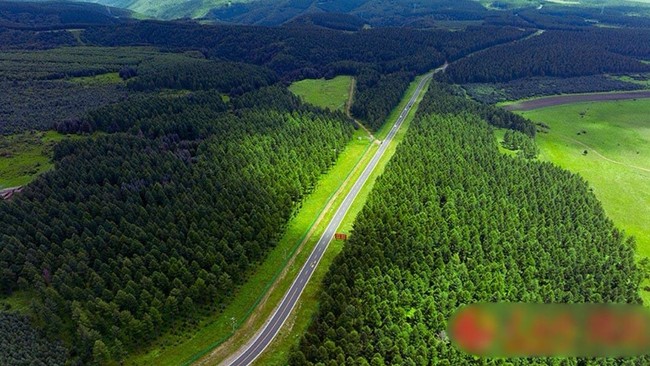
China has been diligently implementing afforestation programmes across the country, ranging from tree planting to grassland restoration. Notable initiatives include the Great Green Wall (initiated in 1978), which has increased China’s forest cover to over 25%, as well as the ‘Grain for Green’ and ‘Natural Forest Protection’ programmes, which encourage the conversion of farmland into green zones and halt deforestation.
A study published in the journal Earth’s Future reveals that China’s afforestation projects are altering freshwater distribution. Researchers found significant changes in vegetation cover between 2001 and 2020, which has reduced water availability for the eastern monsoon and north-western arid regions. These areas encompass 74% of China’s landmass and serve as primary locations for development, agriculture, and major population centres.
Conversely, water availability has increased in the Tibetan Plateau. This is due to an increase in evapotranspiration—the process of evaporation and plant transpiration—resulting from expanded forest and grassland cover.
“China has undertaken massive re-greening over the last few decades. They are actively restoring ecosystems that are flourishing again, particularly in the Loess Plateau. This has also reactivated the water cycle,” explained Arie Staal, one of the study’s authors, as cited by Live Science.
Researchers analysed high-resolution data regarding evapotranspiration, precipitation, and land-use changes from various sources, alongside atmospheric water vapour tracking models. The results showed that evapotranspiration increased more significantly than precipitation, meaning a portion of the water is being lost to the atmosphere.
However, this trend is not uniform across China, as wind can transport water vapour up to 7,000 kilometres from its source. The increase in evapotranspiration was specifically recorded in the expanding forests of the eastern monsoon regions and grassland restoration areas. Meanwhile, precipitation only increased in the Tibetan Plateau, meaning this trend is causing a decline in water availability in other regions.
“Although the water cycle has become more active, on a local scale, more water is being lost than before,” said Staal.
Water distribution in China is already described as uneven; for instance, regions containing 46% of the population and 60% of the landholdings possess only 20% of the water. While local governments are attempting to address this, there are concerns that efforts may fail because the redistribution of water caused by afforestation has not been adequately accounted for.