
China's Massive Tree-Planting Campaign Completely Transforms the Nation
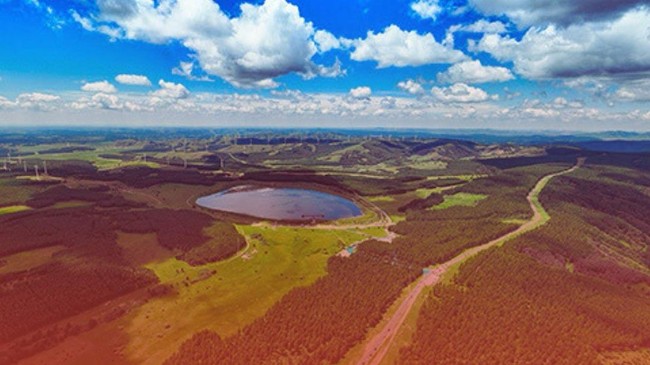
The Chinese government’s massive reforestation efforts over recent decades have proven to totally transform the nation’s landscape. This ambitious environmental project has successfully converted arid regions into man-made forests; however, it has also begun to trigger unexpected side effects regarding the national distribution of freshwater.
Based on scientific studies observing changes in vegetation cover between 2001 and 2020, Beijing’s ambition to restore ecosystems through tree planting and grassland restoration has altered the hydrological cycle within its borders. Monumental projects such as the ‘Great Green Wall’, initiated in 1978, alongside the ‘Grain for Green’ and ‘Natural Forest Protection’ programmes, have successfully boosted China’s forest cover to over 25%. A notable success is the Saihanba region in Chengde, Hebei Province, which has transformed into the world’s largest man-made forest, spanning 76,700 hectares with a green cover rate of 82%.
Despite receiving global praise for conservation, this massive tree-planting initiative has had a significant impact on freshwater availability in the country. Researchers conducting high-resolution data analysis on evapotranspiration patterns and precipitation found that water availability is actually shrinking in the eastern monsoon regions and the arid northwest. These two regions, which cover approximately 74% of China’s landmass, serve as the primary hubs for economic development, agriculture, and population density.
This phenomenon occurs because the planted trees absorb massive amounts of groundwater and release it into the atmosphere through evapotranspiration. The rate of evaporation has been recorded as significantly higher than the intensity of rainfall returning to these areas, causing much of the water reserves to be lost to the atmosphere. Conversely, water availability for the Tibetan Plateau has seen an increase. Evapotranspiration, the process of water evaporation and plant transpiration due to increased forest and grassland cover, was reported to have risen there.
“China has undertaken massive re-greening on a large scale over the last few decades. They are actively restoring ecosystems that are flourishing again, particularly in the Loess Plateau. This has also reactivated the water cycle,” explained Arie Staal, one of the study’s authors, as cited by Live Science.