
China's Guizhou Province Sees Surge in Cave-Based 'Experience Economy'
Guiyang (ANTARA) - Inside the Swallow Cave in the Guiding region of southwest Guizhou Province, China, the digital world vanishes. Mobile signals disappear just 100 metres after entry, leaving only the rhythmic sound of dripping water and the heavy breathing of explorers.
After 30 minutes of crawling and climbing along slippery rock walls, explorers reach a temporary resting point. With backs pressed against cold stone and strange stalactics hanging overhead, they find themselves facing ancient fossils embedded in the rock.
This ‘underground disconnection’ is exactly what an increasing number of young Chinese tourists are seeking. Guizhou, a province renowned for its karst landscapes, is witnessing its tourism industry delve deeper, literally moving from traditional activities at famous landmarks to immersive adventures in remote rural areas.
The recorded figures show rapid growth. During an eight-day trial period around this year’s May Day holiday, Swallow Cave welcomed over 300 explorers.
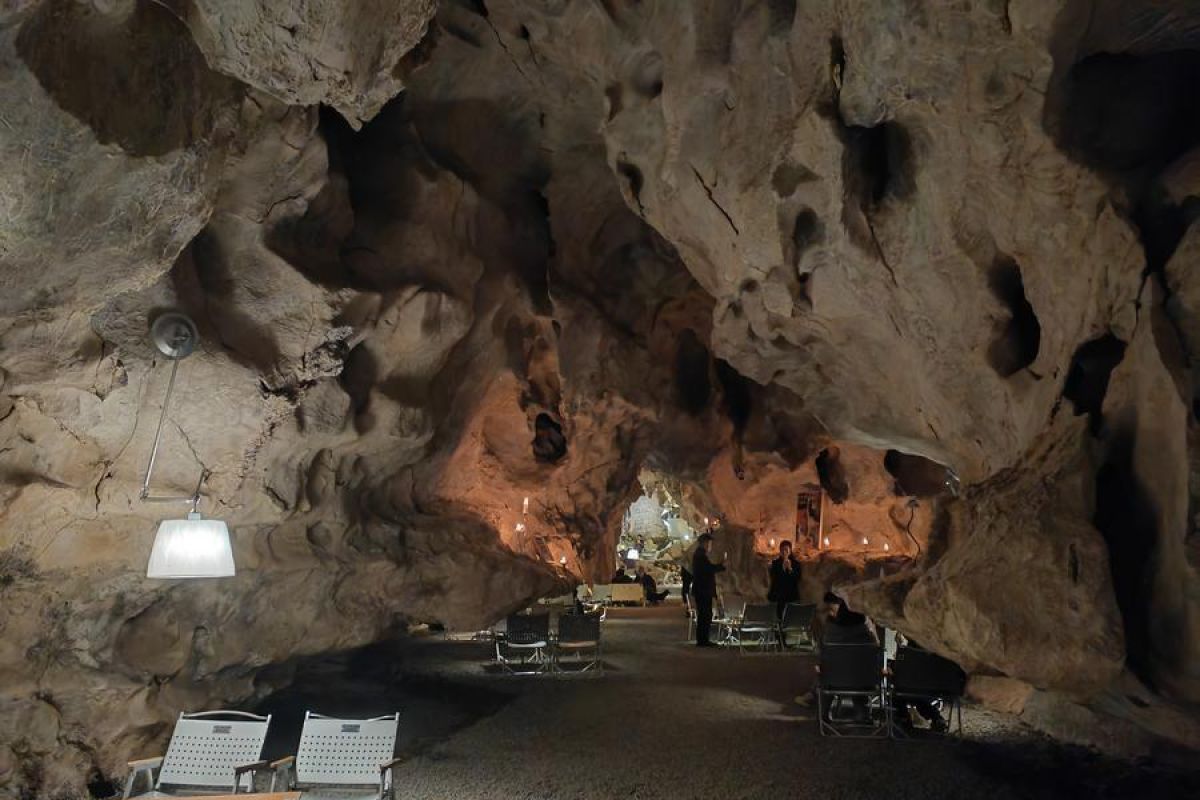
Notably, a ‘cave cafe’ in the Xixiu District of Anshun City recorded revenues of over 3 million yuan (1 yuan = Rp2,576), or approximately $438,500 USD (1 USD = Rp17,496), in just three months following its opening, while attracting more than 9,000 visitors during the May Day holiday.
Guizhou’s unique geological profile provides the perfect stage for the ‘experience economy’. A 2025 survey by the provincial-level natural resources department identified 42,800 cave entrances across the province. Guizhou is also home to the Shuanghedong (Twin Rivers) Cave, the longest cave in Asia at 437.1 km, which attracts scientists from around the world annually.
‘When I began leading cave expeditions in 2018, interest among tourists was relatively small,’ said Song Yuanqiao, head of the Swallow Cave development project. He revealed that the volume of information requests has surged since 2023.
The Shilongdong Cave in Qingzhen, Guiyang, which officially opened in August 2024, offers paddleboarding activities on underground rivers. With a ticket price of 1,280 yuan, the project received over 13,000 visitors in 2025, generating revenue exceeding 10 million yuan.
The team behind Shilongdong Cave replicated their model at Huangheying Cave in Anshun this May. The cave features a rare underground river 2.5 kilometres long that is navigable.
‘Many tourists come specifically for the underground rafting experience,’ said Ning Jie, project manager at Huangheting Cave.
To ensure the safety of these experiences, developers such as Song and technical director Zhao Fei, both veterans of cave rescue, have travelled abroad to study route design and safety standards. The newly developed Swallow Cave is now equipped with standardised climbing aids, ziplines, and steel bridges.
‘Every step is an adventure into something new. It is thrilling and truly worth it,’ said Chang Ting, a tourist from Xi’an in northwest China, who undertook a two-day portion of a three-day trip to Guizhou specifically for the cave exploration after seeing it shared on social media.
For those who prefer less intense adventures, ‘light’ cave experiences are beginning to emerge. Approximately a two-and-a-half-hour drive west of Swallow Cave, a coffee shop beside a waterfall offers a different atmosphere.
Located within five natural caves on the side of a large rock cliff, Umber Coffee uses warm primary lighting to trace the contours of the rocks. The venue also features a cave restaurant that hosts string instrument concerts.
‘It feels very cosy drinking coffee and watching a waterfall inside a cave,’ said Danila, a young Russian national working in Guiyang, Guizhou, who drove over an hour with friends to visit the site.
‘Tourists are no longer satisfied with just ’seeing’ caves. They want new, participatory experiences,’ said Zhao.