
China's Growing Appetite: Nearly One-Third of Global Energy Consumed
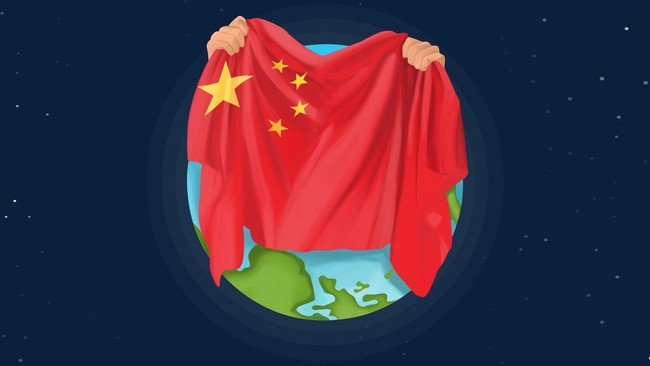
The global energy consumption landscape has changed drastically over the last four decades. China, which absorbed only about 7% of global energy in 1980, has now emerged as the world’s largest energy consumer.
According to data from the U.S. Energy Information Administration (EIA) compiled by Visual Capitalist, China’s energy consumption reached 171 quadrillion British thermal units (BTU) in 202ability. This figure is equivalent to approximately 28%, or nearly one-third, of the total global energy consumption, which reached 606 quadrillion BTU.
By comparison, in 1980, China consumed only about 19 quadrillion BTU, or 7% of total global energy demand. This means China’s share of world energy consumption has increased approximately fourfold in over four decades.
This surge has occurred alongside China’s transformation into the world’s manufacturing hub, rapid urbanisation, infrastructure development, and rising public incomes. All these developments require energy supplies on a massive scale.
Developing nations are now dominating energy consumption.
This change is not limited to China. Developing nations are now taking the largest share of global energy consumption. In 1980, this group of countries consumed about 105 quadrillion BTU, equivalent to 37% of world energy consumption. By 2024, that figure jumped to 394 quadrillion BTU, or approximately 65% of the global total.
Even if China were excluded from the calculation, other developing nations would still consume about 223 quadrillion BTU in 2024. The growth in global energy needs is increasingly originating from countries still undergoing the processes of industrialisation and urbanisation, particularly in Asia.
Conversely, energy consumption in developed nations has begun to plateau. Total consumption for this group increased from approximately 176 quadrillion BTU in 1980 to 212 quadrillion BTU in 2024. This much slower growth means the share of developed nations in world energy consumption continues to decline.
The scale of China’s increase is even more evident when compared to other developed nations. In 2024, China’s energy consumption of 171 quadrillion BTU was even higher than the combined total of all developed nations outside the United States, which stood at approximately 118 quadrillion BTU.
These changes indicate that the centre of global energy demand has shifted. If four decades ago developed nations absorbed nearly two-thirds of global energy, today nearly two-thirds is consumed by developing nations.
Indonesia is also contributing to the rise in energy consumption.
The shift in energy consumption towards developing nations is also visible in Indonesia. U.S. Energy Information Administration (EIA) data shows that Indonesia’s primary energy consumption increased from 7.42 quadrillion BTU in 2020 to 11.38 quadrillion BTU in 2024.
The largest increase came from coal. Its consumption rose from 2.64 quadrillion BTU in 2020 to 5.99 quadrillion BTU in 2024, more than doubling in four years. During the same period, the consumption of oil and other liquids increased from 2.74 to 3.18 quadrillion BTU, while natural gas rose from 1.76 to 1.92 quadrillion BTU.
With this achievement, coal accounted for approximately 53% of Indonesia’s total primary energy consumption in 2024, making it the largest energy source. Meanwhile, renewable energy and other sources were recorded at approximately 0.29 quadrillion BTU.
This data shows that Indonesia reflects the global shift in energy consumption towards developing nations. However, the rise in domestic energy consumption is still largely supported by fossil fuels, particularly coal, meaning the challenges of the energy transition are also increasing.
Source: jawawa.id (https://jawawa.id/newsitem/chinas-growing-appetite-nearly-one-third-of-global-energy-consumed-1789394307)
Originally published by CNBC Indonesia (https://www.cnbcindonesia.com/research/20260914142401-128-767764/china-makin-rakus-hampir-sepertiga-energi-dunia-dilahap), translated from Indonesian