
China's Great Green Wall: 66 Billion Trees Growing Faster Than Natural Forests
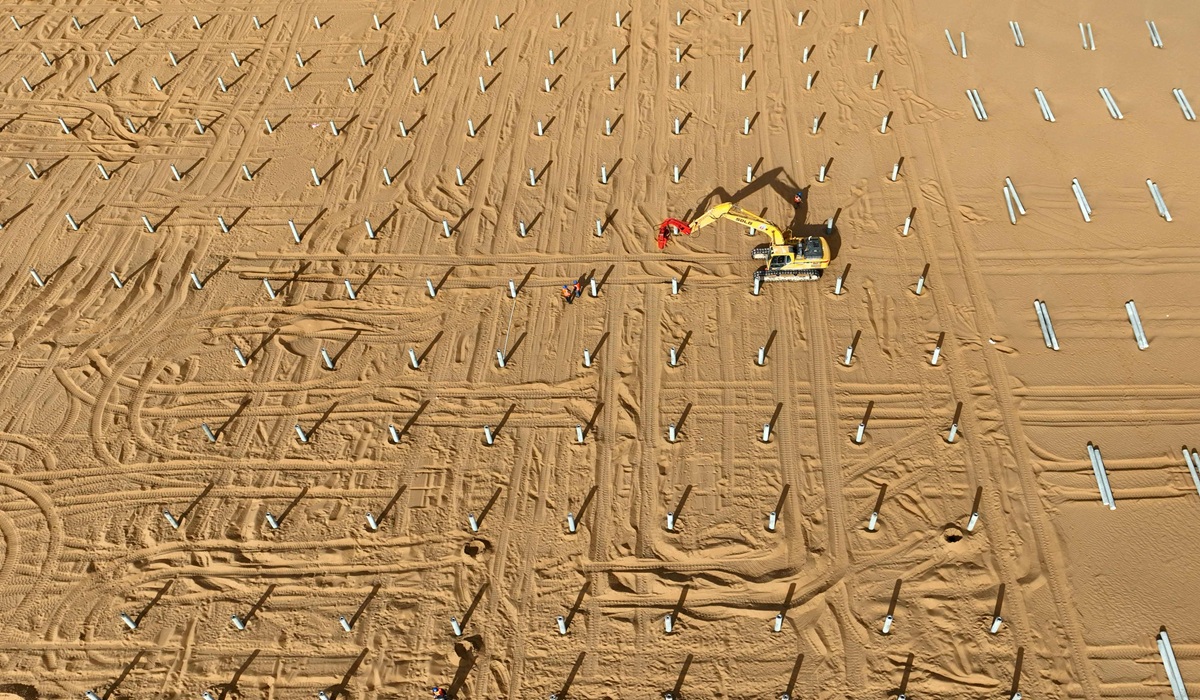
China’s ambitious project to combat desertification, known as the ‘Great Green Wall’, has recorded a significant achievement. According to the latest data, 66 billion trees have been planted along the northern region of the country to halt the expansion of the Gobi Desert. Interesting findings have emerged from satellite observations and field studies showing that trees in this artificial forest area are growing faster compared to natural forests in the surrounding regions. This phenomenon has triggered new discussions among scientists regarding the effectiveness of human intervention in large-scale ecosystem restoration. The project, which began in the late 1970s, aims to create a green belt spanning 4,500 kilometres. Although initially widely doubted due to the risks of monoculture and low seedling survival rates, data shows that the vegetation which successfully adapted now demonstrates high productivity. Several factors identified as supporting this rapid growth include species selection, soil preparation, and targeted irrigation. Although this rapid growth appears to be a technical success, environmental experts still provide critical notes. Forests that grow faster than natural forests often require greater water consumption. In naturally arid regions, this raises concerns that it could lower groundwater levels in the long term. Furthermore, growth speed does not always correlate directly with overall ecosystem health. Natural forests possess a more complex biodiversity structure compared to plantation forests. Therefore, the next challenge for China is to ensure that this ‘wall’ is not only visually green, but also ecologically stable. China’s success in planting 66 billion trees serves as a reference for similar projects in other parts of the world, such as the Great Green Wall in Africa. This achievement proves that with political commitment and massive resources, the restoration of critical land on a continental scale is not impossible, although it still requires adjustments to local water carrying capacity.