
China's Gen Z 'Stan' Anthropology Professor Who Bravely Discusses Anxiety
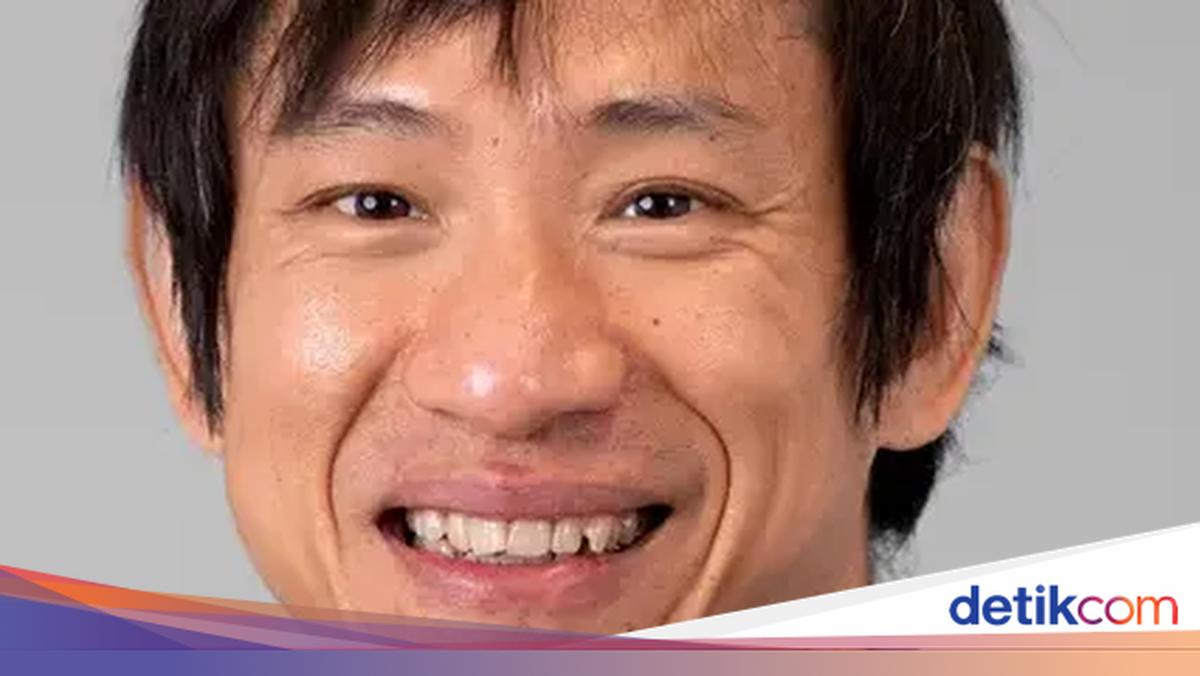
A new phenomenon is emerging in China. The younger generation, or Gen Z, is ‘stanning’—a slang term used by K-pop fans to denote intense admiration—an anthropology professor considered brave enough to discuss their anxieties.
This new idol, Professor Biao Xiang, has become a subject of widespread discussion due to his courage in tackling the themes of anxiety and how to cope with it. According to the BBC, Chinese youth such as Zihan Han view Professor Xiang as a ‘star sent from the heavens’. The 54-year-old anthropologist has become an unexpected figure for a generation feeling disillusioned and directionless.
He has gained popularity because of his focus on ‘anxiety and how to face it’. While China is experiencing rapid economic and technological development, many aspects of this progress cause anxiety for Gen Z, ranging from employment issues and romantic relationships to the heavy pressure to remain competitive in a fast-paced era.
Xiang has been interviewed by various major Chinese media outlets and has toured several prestigious universities to deliver lectures, including at his alma mater, Peking University. One session earlier this year was even broadcast live because the campus auditorium was overcrowded. Chinese media reports that a new phrase has emerged: ‘If in doubt, just ask Blaus Xiang’. Xiang also recently spoke in Singapore, where hundreds of young people, mostly of the Chinese diaspora, attended his lecture. Following the event, attendees queued to take photos with him, with young graduates describing it as an ‘academic-style fan meeting’.
In his lectures, Xiang observes that Chinese youth often seek validation from various systems, such as competitive examinations and jobs that guarantee stability, using such validation as a measure of self-worth. He considers this pattern to be both exhausting and mentally damaging. He suggests it is much healthier to seek meaning and understanding from others and to use that as a means to better understand oneself, though he warns this is not an instant solution.
While the issue of youth anxiety may seem common, in a country where dissatisfaction can become a sensitive and heavily censored political issue, Xiang is a rare public figure brave enough to discuss what he calls the ‘pain points of this era’. ‘Everyone knows where the problem lies, but they are reluctant to look at it. Sometimes reality is too painful to face, or they do not know how,’ he stated in Singapore. ‘However, for an academic, it is not frightening if we can describe it—because by doing so, we can analyse and manage it,’ he added.
Xiang currently resides in Germany, serving as the director of the Max Planck Institute for Social Anthropology, where he researches social change in China and other parts of Asia. He believes Chinese society is at a ‘turning point’, where people are searching for the meaning of life while attempting to understand rapid social and economic shifts. He observes a contradiction between a generation feeling unsteady amidst a powerful and assertive nation and a sense of disappointment despite rapid progress. He believes it is his duty to unravel the factors triggering this.
Xiang has created compelling terms to describe the causes of this phenomenon. First, there is the term ‘Floating’ to describe those who work relentlessly just to survive, likening them to hummingbirds that must constantly flap their wings to stay airborne. Second, he discusses the ‘Immediate Environment’, referring to things directly surrounding us. Xiang argues that Chinese youth are too preoccupied with things that are ‘very close’ and ‘very far’, while the space in between—the ‘immediate environment’—is neglected. This, he believes, makes them feel disconnected from their surroundings.
One user on the RedNote platform wrote, ‘He consistently views various issues from the perspective of vulnerable groups, linking personal pressures to macro-scale factors, and encouraging people to live actively—it is truly extraordinary.’ Another remarked, ‘He never offers empty sweet words just to soothe the heart; instead, he engages directly with the dilemmas of real life alongside us.’
Zihan Han noted that the key lies in Xiang’s willingness to speak openly. ‘Those who have said similar things are not as great as Mr. Xiang, while those as great as him never say such things,’ he said.
Born in 1972, Xiang grew up during China’s rise from the Mao Zedong era to its era of global trade. He witnessed massive urbanisation as ordinary citizens transitioned into entrepreneurs and the business world expanded rapidly in the communist nation. Growing up in Wenzhou, he saw the city transform into an industrial port. ‘At that time, the environment was filled with small business owners. Most people did not care much about education; the focus was on practical matters—specifically, how to make money,’ Xiang said. He noted that many of them succeeded.
Source: jawawa.id (https://jawawa.id/newsitem/chinas-gen-z-stan-anthropology-professor-who-bravely-discusses-anxiety-1790560560)
Originally published by detikcom (https://news.detik.com/internasional/d-8681995/saat-para-gen-z-di-china-nge-stan-profesor-yang-berani-bahas-anxiety), translated from Indonesian