
China's foreign trade maintains solid growth momentum in May
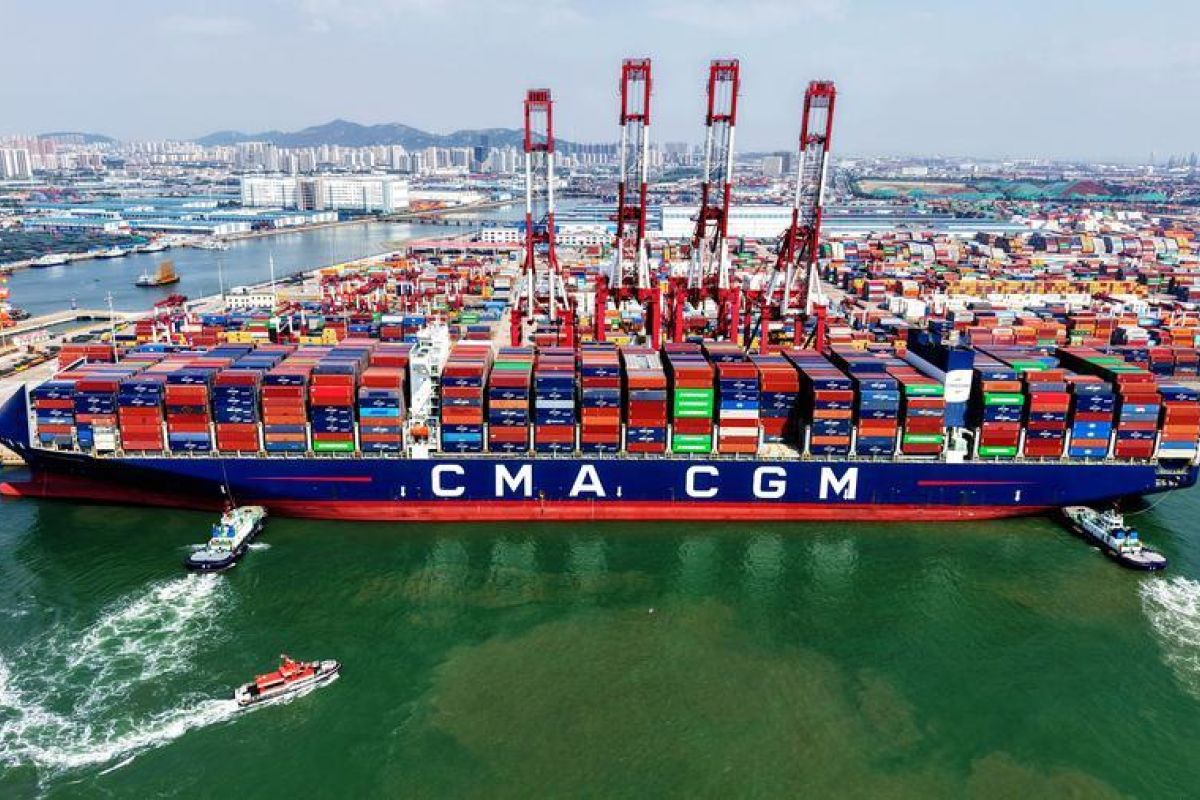
China’s foreign trade maintained solid growth momentum in May 2026, underscoring broader economic resilience and the country’s deepening integration with global markets. The General Administration of Customs (GAC) released the latest data on Tuesday, showing the total value of goods imports and exports in yuan terms rose 16.9 per cent year-on-year to reach 4.45 trillion yuan last month, staying above the four trillion yuan mark for three consecutive months. Chinese exports climbed 13.8 per cent from the same period last year, while imports surged 21.5 per cent, GAC data showed. China’s total foreign trade during the first five months of the year reached 20.68 trillion yuan, a growth of 15.3 per cent year-on-year. Lyu Daliang, director of the GAC’s Statistics and Analysis Department, said China’s foreign trade has consistently sustained solid momentum this year. “China is actively deepening practical cooperation with global trading partners, thus providing a stabilising force for international trade,” Lyu said. The data also indicated that trade ties with China’s major trading partners remained robust. In the first five months of the year, trade value with ASEAN member countries rose by 16.6 per cent year-on-year. Trade with the European Union grew by 10.3 per cent, while trade with countries participating in the Belt and Road Initiative increased by 13.6 per cent. In contrast, trade with the United States dropped by 6.6 per cent. “Emerging markets have become new growth engines for China’s foreign trade,” said Chen Xi, a researcher at the Chinese Academy of Macroeconomic Research under the National Development and Reform Commission. Chen added that the high-standard opening-up policies consistently pursued by China, including BRI cooperation and the implementation of the Regional Comprehensive Economic Partnership, have enhanced trade connectivity and facilitated cross-border business activities. In May, China began implementing an expanded zero-tariff policy on imported products from all 53 African countries that have diplomatic relations with the country. As a result, China’s imports from Africa that month reached 95.13 billion yuan, an increase of 15 per cent year-on-year. During the first five months, China-Africa trade value surpassed the one trillion yuan mark for the first time in this period. Consumer choices in China are also expanding as market access broadens, with various products from tropical fruits and coffee beans to handicrafts arriving from BRI countries. “As China’s economy advances and living standards rise, the country’s import expansion will open broader market opportunities for other nations,” said Liao Zhengrong, a researcher at the Chinese Academy of Social Sciences. Beyond trade volume growth, the structure of China’s foreign trade is also undergoing transformation. The country is shifting from exporting traditional labour-intensive goods towards high-value-added and technology-intensive products, such as electric vehicles and solar panels. Currently, mechanical and electronic products account for more than 60 per cent of China’s total exports, with significantly higher added value. In the first five months, exports of these products rose by 18.4 per cent, while imports increased by 25.3 per cent. Conversely, exports of labour-intensive products declined by 3.1 per cent year-on-year during the period. “The robust growth in the mechanical and electronic products sector reflects the extensive interconnection between China and global upstream and downstream industries, thus creating better conditions for coordination across the entire international supply chain network,” said Zhou Mi, a researcher at the Chinese Academy of International Trade and Economic Cooperation under the Ministry of Commerce. Liao added that China’s integration into global industrial chains continues to deepen, thereby reinforcing the country’s competitive advantages. Although international industrial and supply chains face mounting pressure amid global volatility, experts said China’s commitment to high-level openness, supported by a comprehensive industrial system and continuously improving product and service quality, has helped sustain foreign trade growth at a relatively high level and inject stability and certainty into the global economy.