
China's Elite Aging, Market for Xi Jinping's Successors Heats Up
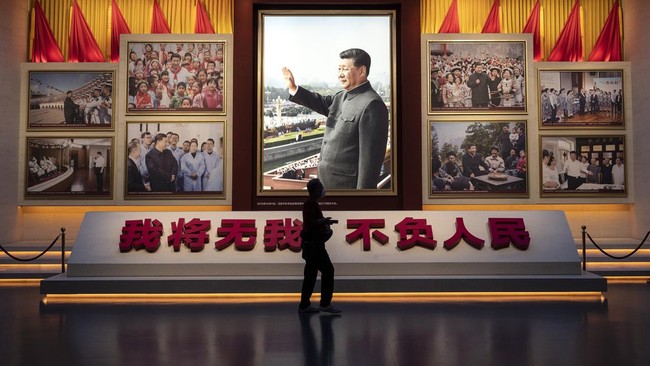
Next year, the Chinese Communist Party will hold a congress to determine which officials will lead the country until 2032. While Xi Jinping’s position is expected to remain secure, hundreds of important positions beneath him will be contested.
This transition is drawing attention as many senior Chinese officials approach retirement age. Behind them, a group of much younger politicians is emerging, having grown up during the era when China began opening itself to the world.
Discussions regarding the next leadership lineup will take place in the coming months. One of the nearest agendas is the meeting of the Central Committee of the Chinese Communist Party in Beijing on 26-29 October 2026. Officially, the meeting will discuss oversight and discipline within the party.
Amidst these preparations, attention is turning to officials known as the seventh generation. They were generally born between the late 1960s and the 1970s. Unlike Xi, who is 73 years old, most of them have few memories of the Mao Zedong era.
Growing Up During China’s Opening
The youth of the seventh generation took place in the 1980s. At that time, China began opening its economy, establishing more connections with the outside world, and allowing space for debates that were previously difficult to conduct.
Their experiences also differ from older generations of officials in terms of education. They did not experience the educational disruptions faced by their predecessors during the Cultural Revolution (196 and 1976). Many subsequently studied at prestigious universities, including fields such as engineering, economics, and finance.
Some have even studied or worked outside mainland China. Yin Yong, the current Mayor of Beijing, holds a master’s degree from Harvard University. Guo Ningning, an official whose career is rising in Fujian Province, previously worked for state-owned banks in Hong Kong and Singapore.
Another name gaining attention is Zhu Zhongming, who was appointed as the acting mayor of Shanghai last August. Others include Liu Jie, Governor of Zhejiang Province, and A Dong, leader of the Communist Party’s youth organisation.
Their backgrounds raise questions about China’s future direction. Will officials who grew up when the country was more open lead differently than Xi?
The answer is not certain. To achieve high office, they have undergone a long process within the party. Their connection to the outside world or higher education does not automatically mean they will change China’s political direction. So far, there are no signs that Xi is preparing a transfer of power to any of them.
Xi Has Not Appointed a Successor
Xi belongs to the fifth generation of Chinese leaders, most of whom were born in the 1950s. According to the pattern of leadership succession following the Deng Xiaoping era, he should have handed over power to officials from the next generation after approximately a decade of leading.
This did not happen. Xi remains in power, while his anti-corruption campaign has caused numerous sixth-generation officials to lose their positions or be sidelined from political competition.
The purge is still ongoing. On 21 September, Zhang Youxia and Liu Zhenli, two high-ranking Chinese military officials, were expelled from the Communist Party and the military service on allegations of violating discipline and the law.
As some old officials are sidelined and others approach retirement age, space for the seventh generation is opening up.
Citing The Economist, their share in the Central Committee is currently estimated at only about 8%. This figure has the potential to rise to more than 40% after next year’s congress if many senior officials retire in accordance with party custom.
Nevertheless, the influx of more young officials does not necessarily mean Xi will soon choose his successor. Appointing someone too early could cause that official to be viewed as the next leader candidate, while Xi has not yet shown a desire to relinquish control.
The issue may become harder to delay approaching the next congress in 2032, when Xi will be 79 years old. At that time, officials of the seventh generation will be at an age more suitable for taking over leadership.
For now, one thing appears clearer than who Xi’s successor will be. New faces will increasingly appear at the peak of Chinese politics, but whether they bring a new way of thinking can only be known once they truly hold power.
Source: jawawa.id (https://jawawa.id/newsitem/chinas-elite-aging-market-for-xi-jinpings-successors-heats-up-1790171526)
Originally published by CNBC Indonesia (https://www.cnbcindonesia.com/research/20260923151424-128-770271/elite-china-menua-bursa-penerus-xi-jinping-memanas), translated from Indonesian