
China's Electric Vehicle Sales Decline in Domestic Market
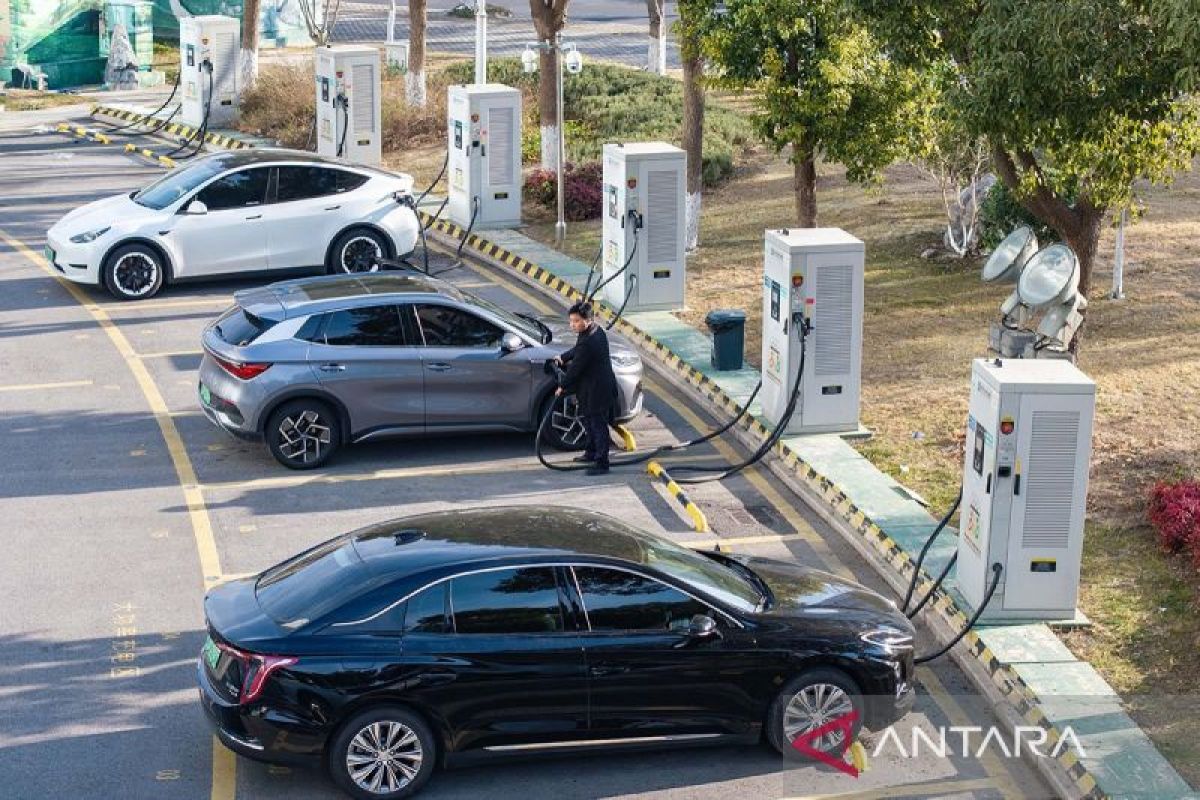
China (ANTARA) - Although it remains the world’s largest market for new energy vehicles, electric car sales in China have begun to decline, prompting domestic manufacturers to shift their focus to overseas markets. Preliminary data from the China Passenger Car Association, cited by Carscoops on Tuesday (7/7), showed that sales of battery electric vehicles (BEV) and plug-in hybrid electric vehicles (PHEV) in China reached 1.04 million units in June 2026, seven per cent lower than sales in June 2025. Sales of BEVs and PHEVs in China during the first half of 2026 reportedly plunged 13 per cent compared to the same period the previous year, to 4.73 million units. Factors influencing the decline in electric vehicle sales in the country include reduced government support for new energy vehicles and unstable economic conditions, which have encouraged many consumers to wait for prices to fall. According to the South China Morning Post, Beijing adjusted its subsidy policy earlier this year and began gradually phasing out sales tax breaks for electric vehicle manufacturers. The annual vehicle tax deductions available for battery electric vehicles, PHEVs, range-extender hybrids, and hydrogen fuel cell commercial vehicles will be reduced starting 1 January 2027. The tax relief can save buyers approximately 360 yuan (around Rp950,000) to 660 yuan (around Rp1.7 million) per year. According to AlixPartners, only about four other companies are likely to reach the break-even point by 2030, while many weaker firms are expected to go bankrupt or be acquired by larger brands. As profitability becomes increasingly difficult, automotive companies are now turning their attention to overseas markets. Analysts believe Chinese manufacturers could end 2026 with exports of around 10 million vehicles, an increase of up to 41 per cent compared to the previous year.