
China’s Dominance of the Global Gaming Industry Raises Concerns over Tightening Government Censorship
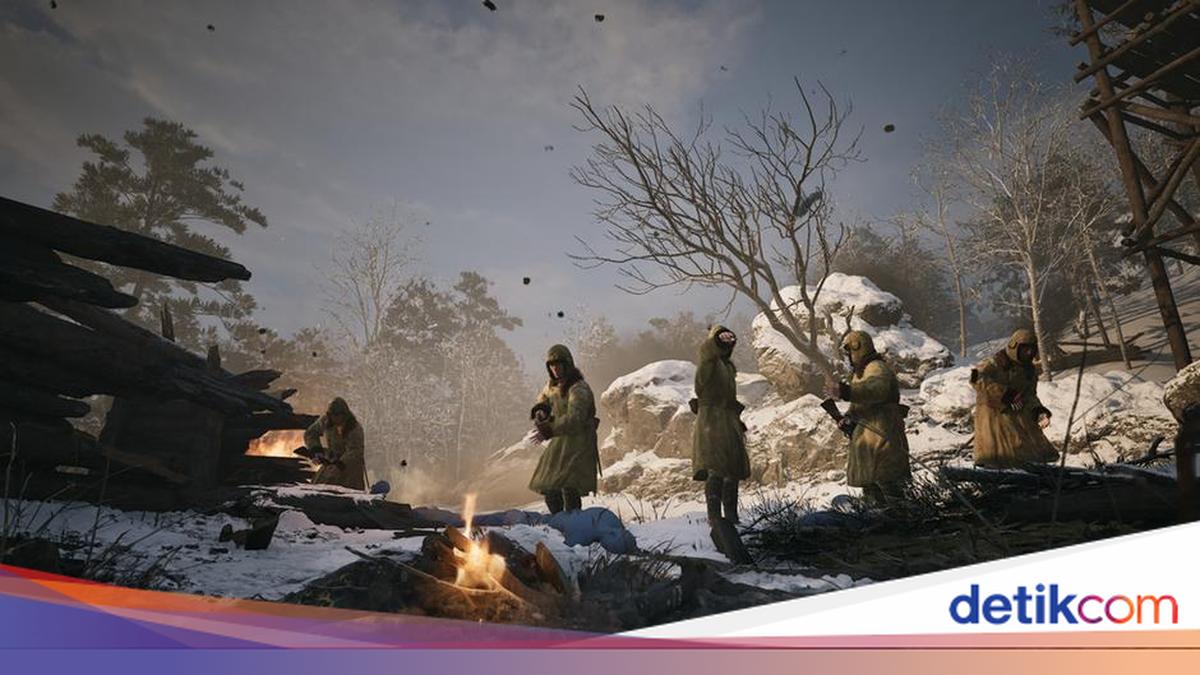
In a dark underground hideout, dim light spills from several oil lamps. A comrade is busy tinkering with a rifle. A red flag hangs on one of the rough stone walls, bearing a hammer and sickle beneath a white star — the symbol of the Chinese Workers’ and Peasants’ Red Army. Weapons are scattered across the ground. One is picked up, and the scene quickly shifts to a snow-covered forest, where gunfire breaks the silence among the trees.
A scene like this might suit the latest instalment of Call of Duty, the popular first-person shooter series that takes players to battlefields of the past, present and future. But it is actually from The Defiant, a game being developed by the Chinese studio Hoothanes Technology, based in Hangzhou. Its story follows Chinese troops fighting Japanese forces in the 1930s and 1940s.
Connor Xu, a developer on the game, told DW that the weapons featured in The Defiant have a distinctive character. He said they were used only in Asia and are therefore unfamiliar to many players in Western countries. The same is true of the game’s story, which Xu said has not previously been portrayed in a video game.
The Defiant is also designed to appeal to international players. In recent years, China has emerged as a major player in the global gaming industry, despite strict regulation, censorship and a ban on the sale of gaming consoles that was in place for many years.
Gaming is part of everyday life in China
More than 700 million people in China regularly play video games. According to market research firm Newzoo, most consider gaming an important part of their lives. Many also use games to stay connected with friends.
“Games make life more interesting,” Xu said. “I can try out different roles, stories and characters. We only have one life, but we can play a part in other stories. I think that is very appealing to users in China.”
People in China mainly play games on personal computers and smartphones, while consoles are far less popular. This has historical roots.
In the early 2000s, while players in Europe and North America debated whether the PlayStation or Xbox was the better console, neither device was officially sold in China. The ban lasted from 2000 to 2014. The Chinese government said the restrictions were intended to protect children and young people from gaming addiction.
Limits on playing time and close monitoring
Children under 18 in China are currently allowed to play online games for a maximum of three hours a week. There are no similar restrictions for adults, but gaming activity remains under close scrutiny.
Anyone wishing to play must register using their real name and personal identity number. In practice, this system allows the state to track who is playing, which games they play, when they play and whom they communicate with.
There are, however, grey areas that the Chinese government appears to tolerate. Some players use virtual private networks (VPNs) to access games that are not officially available in the country. Some underage players also use their parents’ accounts to get around time limits.
Despite its strict monitoring of underage players, China is becoming more open to the gaming industry in general, recognising the sector’s considerable economic potential.
In its early development, games released for the Chinese market often looked like copies of Western titles. At the same time, Chinese technology companies such as Tencent and NetEase began investing in Western gaming firms.
Games cannot be sold in China without a licence
One distinctive feature of China’s gaming market is its licensing system. “Unlike many other major gaming markets around the world, China has an officially regulated games market that operates on the basis of a licensing system,” George E. Osborn told DW.
The journalist advises non-governmental organisations and governments on video games. He also speaks at the Gamescom convention. In his book Power Play, Osborn examines how authoritarian states use video games to pursue political goals.
The rule for all games in China is simple: without a licence, they cannot be sold.
“The system essentially forces developers who want to release their games to pass through several layers of approval from China’s Ministry of Propaganda and Ministry of Culture,” Osborn said.
Strict criteria for video games
Games are prohibited from featuring material deemed to threaten China’s unity, sovereignty or territorial integrity, among other restrictions. Pornography and gambling are also banned. Games must not incite criminal acts that threaten national security or spread information that the authorities consider capable of disrupting public order.
“The key point about these criteria is that they are deliberately vague,” Osborn said.
Whether a game breaches the rules depends on interpretation. Games are sometimes even changed after release.
In the 2025 action role-playing game Wuchang: Fallen Feathers, for example, enemies inspired by famous figures from the Ming dynasty suddenly became impossible to kill. Instead, they collapse from exhaustion.
Chinese culture succeeds in capturing global attention
The Chinese action role-playing game Black Myth: Wukong achieved unexpected international success in 2024. Its success made clear that Chinese developers are not only capable of meeting domestic demand, but can also create games that attract players around the world.
The game is inspired by the 16th-century Chinese classic Journey to the West.
Osborn has no objection to introducing Chinese culture to audiences around the world. In his view, the key question is how far the state actually intervenes in the content of games.
“I think gamers in general are quite sceptical about this kind of thing. They are usually very good at recognising when someone is trying to sell them something or spread propaganda. So if the message is too obvious, I don’t think the effort will succeed,” he said.
The risk of self-censorship
China’s licensing system also requires Western developers to comply with government requirements if they want to sell their games in the country.
Osborn said Western developers still want to enter the Chinese market because it is too large to ignore.
“But when we start thinking about the potential impact on creative standards around the world, I think it is very important for developers to ask themselves: what compromises are we willing, or unwilling, to make?” he said.
Osborn is concerned that the greatest danger may come in the form of self-censorship. For example, developers might choose not to include queer or LGBTQ+ characters in their games to avoid problems with regulators.
He said this would be a major setback, because games can help many people explore their identities.
China is not the only country that requires games to be changed to comply with national regulations.
In Germany, for example, symbols that are unconstitutional, such as the swastika, may in principle not be shown in games. An exception is made if a game explicitly contributes to a culture of remembrance and historical learning.
Depictions of extreme violence must also be removed from versions of games released in Germany.
History from a Chinese perspective
Glorification of violence is also prohibited in China. Yet Xu’s team has been allowed to develop a war game. How can that be explained?
Xu offered an explanation: “I think the most important thing in this game is not violence. The most important thing is telling history.”
Xu said his team is committed to producing a historically accurate game. Whether they have succeeded, he said, will be for historians to judge.
Source: jawawa.id (https://jawawa.id/newsitem/chinas-dominance-of-the-global-gaming-industry-raises-concerns-over-tightening-government-censorship-1792137114)
Originally published by detikcom (https://news.detik.com/dw/d-8709921/china-kuasai-industri-gim-dunia-potensi-sensor-ketat-pemerintah-meningkat), translated from Indonesian