
China's Copper Mine in Pakistan Under Siege, 13 Killed
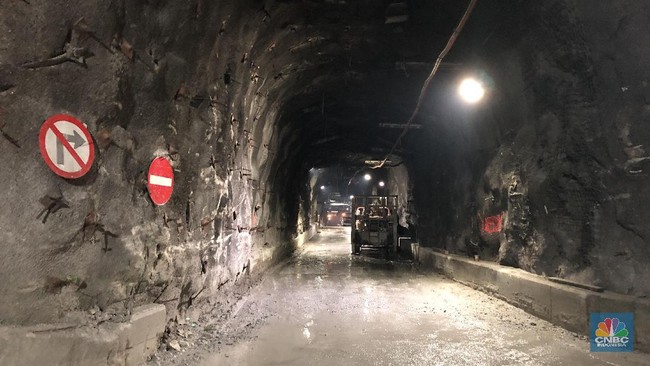
A copper mine owned and operated by China in Pakistan is facing a serious threat after a series of militant attacks disrupted the logistics routes leading to the mine site. The situation has raised concerns over the continuity of copper supplies, which are China’s largest import commodity from Pakistan.
As reported by Nikkei Asia on Friday (24/7/2026), at least seven attacks have occurred over the past three months in Balochistan province, south-western Pakistan. The attacks targeted roads, transport vehicles, mineral convoys and mining sites.
At least 13 people were reported killed in the series of attacks. In addition, dozens of vehicles were damaged or burned, whilst the main N-40 Quetta-Taftan Highway connecting the mining area to the Iranian border was also paralysed.
As a result of the disruption, logistics supplies to the Saindak mine, the only Chinese copper mine in Pakistan, have been affected. One of the increasingly scarce necessities is fuel oil needed to operate power plants at the mine site.
“Fuel oil for generating electricity at the Saindak project is running low because transport trucks cannot reach the site due to militant attacks,” said a Pakistani government official who declined to be named.
The Saindak mine is located in Chagai district, Balochistan province, which borders Iran and Afghanistan directly. The mine is owned by the Pakistani state company Saindak Metals Limited (SML), but since 2002 it has been operated by MCC Resources Development (MRDL), a subsidiary of the Metallurgical Corporation of China (MCC).
The mine’s management contract was even extended for 15 years in 2022. All copper production from the mine is exported to China.
United Nations data shows that China imported nearly US$1 billion (around Rp16.3 trillion) worth of copper from Pakistan in 2024. That figure is equivalent to roughly 35% of China’s total imports from Pakistan, including around 23,700 metric tonnes of copper produced at the Saindak mine.
Nevertheless, SML Chief Executive Raziq Sanjrani stressed that the mine’s operations are still running normally. According to him, the project has been operating for 25 years and there are no plans to halt production.
However, in a separate statement released this week, the company acknowledged that the security risk level in Chagai and the wider Balochistan region is high. Repeated attacks along the N-40 Highway have hampered the movement of logistics trucks, security convoys and the distribution of various supplies needed by the mine.
Sean Hagarty, chief executive of Region Alert, a US-based mining risk intelligence firm, said Baloch separatist groups are now pursuing an “economic blockade” strategy by seizing control of key distribution routes.
“What is happening at Saindak is the clearest evidence that this economic blockade is starting to have an impact. Anyone transporting goods or personnel along the same routes faces similar risks,” he said.
The Pakistani government said it has stepped up security around mining projects. Minister of State for Interior Talal Chaudhry said the government has received security complaints from the Saindak mine’s operators and deployed additional personnel to protect facilities, workers and logistics deliveries.