
China’s Central Bank Keeps Buying Gold: When Will Prices Return to US$5,500?
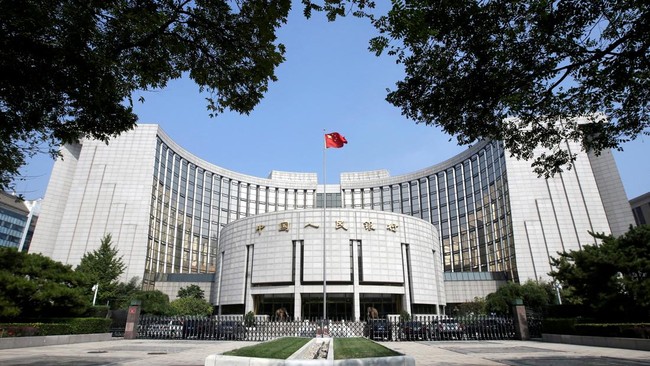
Jakarta, CNBC Indonesia – China is buying gold on an unprecedented scale. The People’s Bank of China (PBOC) added to its reserves for the 23rd consecutive month, while the country’s imports of the precious metal surged to a record high.
According to CNBC International on Monday (12 October 2026), data from the State Administration of Foreign Exchange showed that the PBOC bought around 23 tonnes of gold in September 2026. This was its largest monthly purchase in nearly three years and extended its longest buying streak since at least 2015.
The central bank is not alone: Chinese households and companies are also turning to gold as a hedge. Customs data show that China spent a record US$158.8 billion importing more than 1,000 tonnes of gold in the first eight months of 2026. The value has already exceeded total imports for 2025, which amounted to US$96.5 billion, or 886 tonnes.
Aakash Doshi, head of gold strategy at State Street Investment Management, said consumer gold imports in China reached a record between January and August this year. In his view, a surge in domestic gold premiums points to stronger seasonal demand ahead of winter.
The wave of buying comes as gold prices are undergoing a correction. Prices fell by more than 8% in September to around US$4,176 per troy ounce, after setting a record above US$5,500 last January. COMEX gold futures for December 2026 delivery were at US$4,217.40, up 0.03%.
Nevertheless, Doshi expects gold to strengthen to a range of US$4,750–5,500 per troy ounce by the end of the first quarter of 2027, supported by solid demand.
Political motives and few investment alternatives
Carsten Menke, an analyst at Julius Baer Group, believes the PBOC’s main motive is political. He points to the use of the US dollar as a geopolitical weapon and Beijing’s desire to reduce its dependence on US government bonds (US Treasuries) as a reserve asset.
The freezing of Russian central bank assets by Western countries after the 2022 invasion of Ukraine served as a warning that foreign exchange reserves held overseas could be restricted during geopolitical disputes. Gold held in a country’s own vaults, by contrast, is relatively safe from that risk.
As part of its efforts to diversify its foreign exchange reserves, China continues to sell its US Treasury holdings. US Treasury Department data show that China’s holdings fell to an 18-year low of US$618 billion in July.
Menke also said Beijing plans to deepen its domestic gold market, prompting the central bank to increase its stocks. He estimates that the PBOC had in fact bought around 190 tonnes of gold in the year to the end of August, including 110 tonnes that were not reported.
At the retail level, Chinese residents worried about the economy are flocking to buy jewellery, bullion and gold coins. Their investment options are increasingly limited. The property market, once the principal store of household wealth, remains mired in a prolonged slump.
The benchmark CSI 300 index was down around 8% year to date, in contrast with a 13% gain for the S&P 500. Deposit and bond yields have also fallen amid weak credit demand. The yield on China’s one-year government bonds has dropped to around 1.2%, well below the roughly 4.46% in the US.
Ole Hansen, head of commodity strategy at Saxo Bank, said this means the opportunity cost of holding gold in China is much lower than in many Western countries.
A brake on price falls
Demand from China is thought to have helped gold withstand pressure that could otherwise have driven prices lower. High US yields usually weigh on the appeal of gold, an asset that pays no income. In general, gold prices tend to fall when interest rates rise.
Ewa Manthey, a commodity strategist at ING Bank, said Chinese buying had become a structural source of support for gold prices. Central banks, she explained, buy for the long term and are far less sensitive to price movements than retail investors.
Menke likewise noted that gold prices remain above last summer’s levels, even though interest-rate expectations and bond yields have risen more sharply. The US central bank, the Federal Reserve (the Fed), has signalled that it may raise interest rates again in 2026.
Despite its aggressive buying, China’s gold reserves remain far below those of the US. According to the World Gold Council, China, the world’s fifth-largest gold holder, had 2,387 tonnes as of August, less than a third of US holdings.
Risks ahead
Hansen warned that several factors could dampen Chinese demand for gold. These include a recovery in confidence in property and share markets, a weaker yuan that would make gold more expensive domestically, and higher interest rates that could make deposits attractive again.
A more significant shift would occur only if central banks stopped diversifying their foreign exchange reserves and geopolitical tensions eased. Hansen said neither scenario appeared likely in the near future.
Source: jawawa.id (https://jawawa.id/newsitem/chinas-central-bank-keeps-buying-gold-when-will-prices-return-to-us-5-500-1791787873)
Originally published by CNBC Indonesia (https://www.cnbcindonesia.com/market/20261012122555-17-775306/bank-sentral-china-borong-emas-terus-kapan-harga-balik-ke-us--5500), translated from Indonesian