
China urges UN Security Council resolution on Middle East not to support military actions
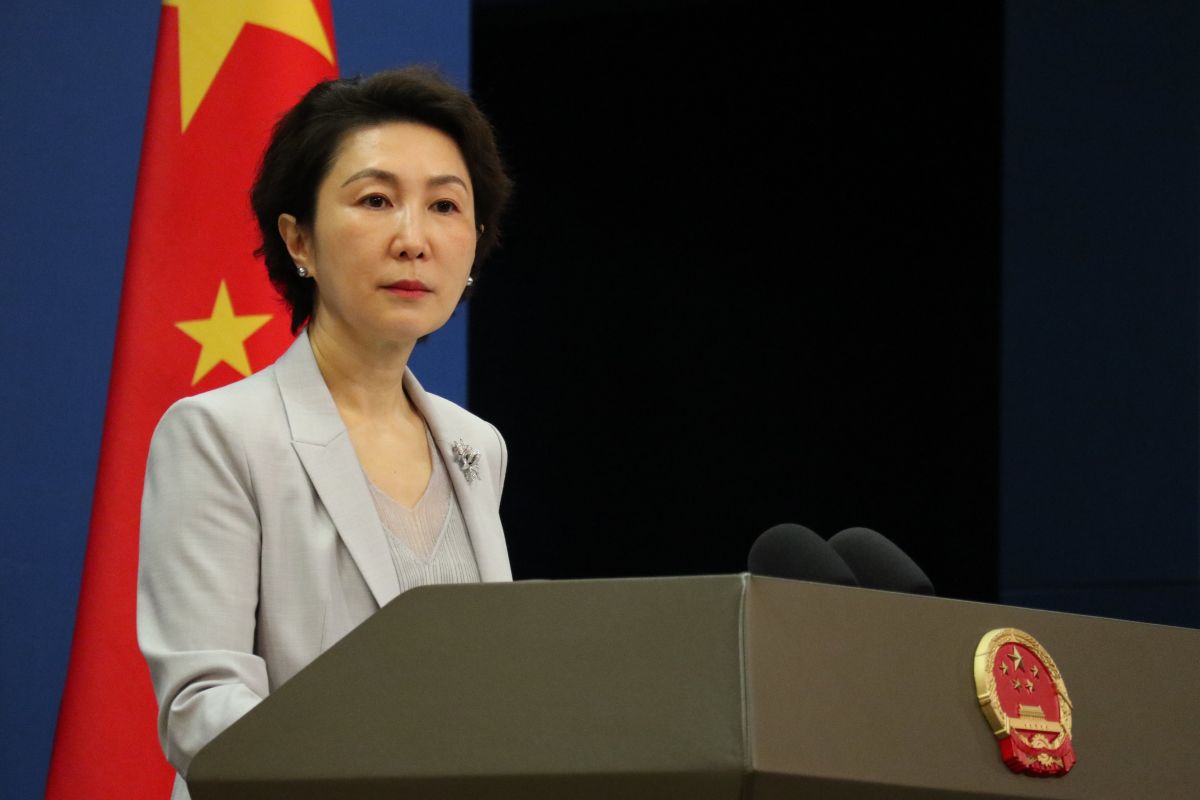
The Chinese government has requested that resolutions by the UN Security Council on the Middle East do not instead support military aggression carried out by the United States and Israel. “China believes that every action taken by the UN Security Council must be conducive to easing tensions, stopping conflicts, and continuing talks. Such actions must not be used to support illegal military movements and even more so to add fuel to the fire of conflict,” said spokesperson for the Chinese Foreign Ministry Mao Ning during a press conference in Beijing on Tuesday. Previously, it was reported that Russia, China, and France blocked a UN Security Council resolution that would allow the use of force to reopen the Strait of Hormuz. Bahrain’s Foreign Minister Abdullatif bin Rashid Al Zayani stated that the resolution would authorise member states to use “all necessary and proportionate defensive measures in the Strait of Hormuz and surrounding waters, including within the territorial waters of coastal states within or bordering the Strait of Hormuz”. The proposal submitted by Bahrain and supported by Gulf states has entered its fourth revision after weeks of closed negotiations. According to him, the effort is to secure the transit route and prevent attempts to close, block, or disrupt international navigation through the Strait of Hormuz. In addition, the resolution demands that Iran immediately cease all attacks on commercial and merchant ships in the strait. The official vote on the resolution is scheduled for Friday (3/4), but it has not yet been held, and it is uncertain whether its supporters can secure backing from Russia, China, and France, which hold veto rights. “As the conflict regarding Iran continues to widen, the primary priority is to actively promote peace talks to end the conflict,” added Mao Ning. As a permanent member of the UN Security Council and a major responsible country, China, Mao Ning revealed, is ready to play a constructive role in achieving a ceasefire, restoring peace, and realising sustainable stability in the region. According to media reports, diplomatic sources indicate that differences in views are not only among permanent members but also among the 10 non-permanent Security Council members. Previously, on 11 March 2026, the UN Security Council adopted a resolution proposed by Bahrain on behalf of the Gulf Cooperation Council (GCC), which demanded that Iran immediately stop attacks against them and established that such actions constitute violations of international law and serious threats to international security. The resolution condemned Iran’s attacks on Bahrain, Kuwait, Oman, Qatar, Saudi Arabia, the United Arab Emirates, and Jordan, and demanded that the attacks be immediately halted, supported by 13 countries while Russia and China abstained. That resolution also did not mention US and Israeli aggression, and did not call on the two countries to stop attacks against Iran. Iran’s Permanent Representative to the UN Amir Saeid Iravani criticised the document, stating that some Council members are attempting to reverse the roles and positions of victims and aggressors. On 28 February, the United States and Israel launched attacks on targets in Iran, including in Tehran, causing damage and civilian casualties. Iran then retaliated by attacking Israeli territory as well as US military facilities in the Middle East. This escalation has triggered a de facto blockade in the Strait of Hormuz, the main shipping route for oil and liquefied natural gas from the Gulf region to global markets, which is also pressuring energy exports and production and driving up prices in international markets.