
China to Expand Tiangong Space Station, Opening Significant Future Opportunities
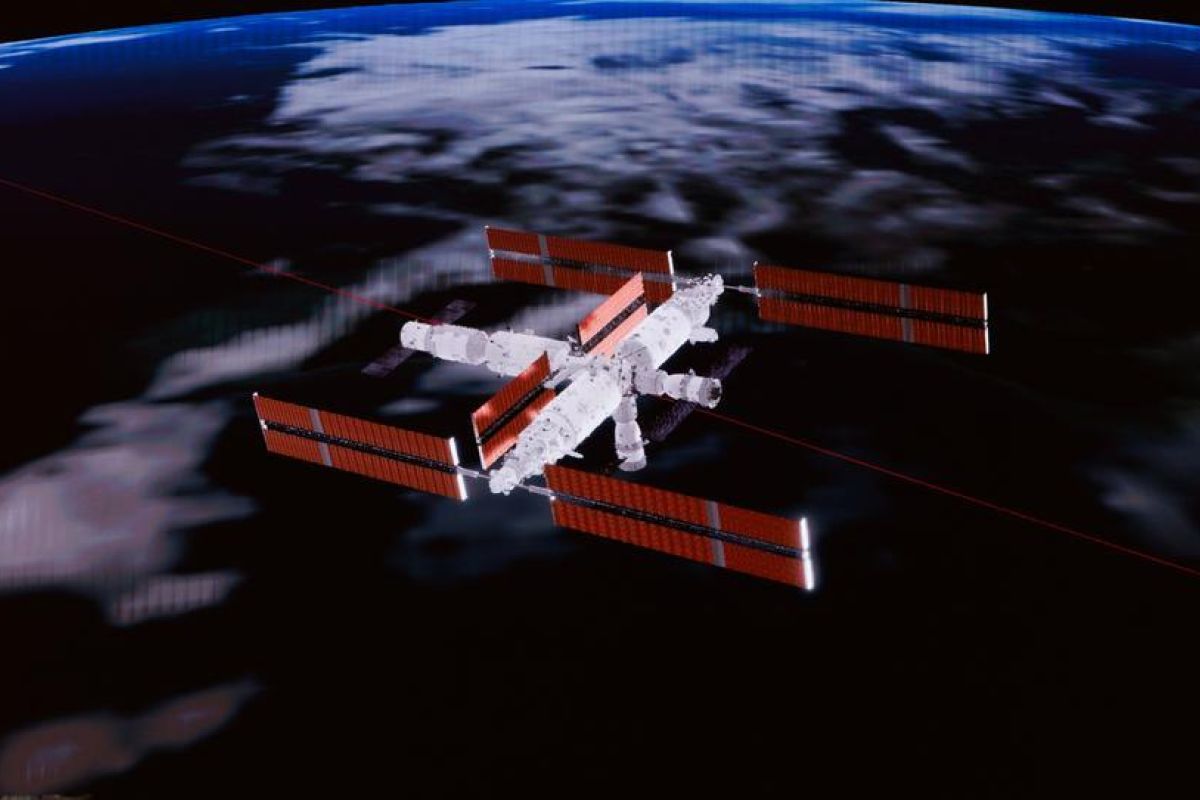
China’s Tiangong space station, currently in a T-shaped configuration, will be upgraded to a cross-shaped structure with the addition of a new module. The station presently consists of the Tianhe core module and the Wentian and Mengtian laboratory modules. The first phase of expansion will add a new 20-tonne multi-functional module, which will dock with the core module to form the cross configuration, according to a report by China Media Group (CMG) on Monday.
‘This expansion has indeed been part of the original plan,’ said Qian Hang, a researcher at the China Academy of Launch Vehicle Technology (CALT), a subsidiary of China Aerospace Science and Technology Corporation (CASC), as quoted in the report. The expansion will add more docking ports, allowing multiple spacecraft to dock simultaneously, additional hatches for extravehicular activity, and increased storage and experiment capacity.
According to Qian, demand for research is increasing. As more experiments are conducted in orbit, the capacity of equipment and laboratory space becomes limited, necessitating a physical expansion of the station. Secondly, crewed and cargo missions are expected to become more frequent. ‘If these missions intensify, we face the risk of queuing to use docking ports and a shortage of adequate emergency backup space,’ Qian explained.
Since commencing operations, the space station has been a busy orbital laboratory. To date, 267 scientific and application projects have been placed and implemented on Tiangong. In the past year alone, 86 new in-orbit experiments were added, with approximately 1,179 kilogrammes of scientific materials sent to space and 105 kilogrammes of experimental samples returned to Earth, generating over 150 terabits of scientific data, according to the CMG report.
The station is also preparing for long-term missions. Currently, it can accommodate three astronauts at a time, but future missions will involve larger crews and longer stays, requiring improved living quarters, exercise equipment, and emergency support systems. ‘Beyond experiments, the station will also handle spacecraft maintenance, equipment repairs, and other in-orbit servicing tasks. The current layout has limitations in terms of extravehicular operations and supply storage,’ Qian said. ‘But the expansion will move us towards a comprehensive space hub capable of handling a broader range of missions.’
International cooperation is another key driver. China has opened its space station to the world. As potential participation from other countries in crewed missions and joint research grows, the demand for enhanced station capabilities becomes inevitable. ‘By expanding the scale of our space station, we hope to further increase the scale of our space research, so that more research institutions can have the opportunity to conduct scientific research in orbit,’ said Yang Yuguang, chair of the Space Transportation Committee at the International Astronautical Federation (IAF).
Qian described the expansion as a ‘standardised design with unified interfaces across modules, allowing new parts to be integrated quickly without major modifications to existing facilities.’ Looking ahead, two additional laboratory modules could be docked with the new expansion module, further increasing the station’s capacity, said Pang Zhihao, a leading science communication expert in space exploration technology.
Yang Hong, chief designer of the space station system, said long-term plans will increase the station’s configuration to six modules, doubling its total mass from the current 90 tonnes to 180 tonnes. At that stage, various modules can be allocated to specific research fields, and crew capacity will be significantly increased.
The expansion is not just about size, but also capability. One particularly compelling example is the Xuntian Space Telescope, scheduled for launch in 2027. The telescope will fly in the same orbit as the station and dock when maintenance is required. It will not be attached to the station to maintain a safe distance and avoid disturbances from astronaut movement and equipment vibrations during normal operations, ensuring highly precise observations. When maintenance is needed, the telescope can dock with the station for servicing. This co-orbital design transforms the space station into a comprehensive orbital complex integrating crew habitation, scientific research, technology verification, and astronomical observation. ‘Through the expansion of Tiangong, we will have more research opportunities, and scientists will be able to work at a more comfortable pace. This is crucial for the entire Chinese space science endeavour,’ Yang Yuguang said.