
China Surges, US Accelerates Next-Generation Stealth Fighter Jet Development
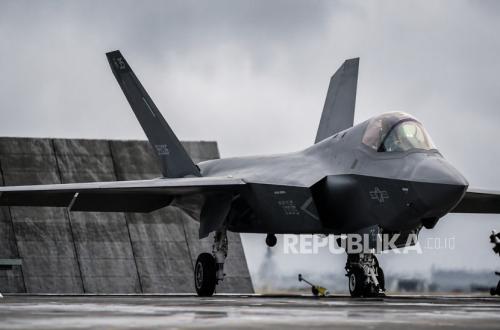
The United States is accelerating steps to determine the future of its carrier-based air power amidst China’s rapid military modernisation. The Pentagon is said to have selected the companies that will build the next-generation stealth fighter jet for the US Navy, the F/A-XX, with the winner potentially being announced in the coming weeks or even sooner.
Boeing and Northrop Grumman are competing to secure the strategic contract. The total value of the project has not been disclosed as many parts of the programme remain classified, but previous similar combat programmes indicate the contract could be worth tens of billions of US dollars throughout its development and production lifespan.
The decision has become increasingly urgent as China rapidly adds stealth fighters, expands its aircraft carrier fleet, and develops aircraft described by Beijing as sixth-generation. For Washington, a delay in the F/A-XX is no longer merely a matter of weapons procurement, but could determine whether American aircraft carriers remain capable of projecting power far into the Indo-Pacific region in the 2030s.
A US official told Reuters that further delays risk leaving the Navy without modern carrier-based fighter jets capable of operating effectively in the 2030s and beyond. Such a situation could potentially reduce Washington’s ability to operate in regions filled with enemy air defence systems, anti-ship missiles, long-range sensors, and advanced fighter aircraft.
“We continue to work to award the F/A-XX contract in the near future. There is no additional information at this time,” a Pentagon spokesperson said, as reported by Reuters on Tuesday, 8 September 2026. This statement reinforces reports that the selection process has entered its final stages.
China Changes the Calculus
The F/A-XX was designed at a time when the operating environment for American aircraft carriers has fundamentally changed. For decades, US carriers could operate relatively close to conflict zones, but the development of long-range missiles, air defence systems, drones, and modern sensors makes such an approach increasingly risky.
China is at the centre of this shift in calculation. Beijing has developed the J-20 and J-35A stealth jets, while the J-35 variant is also designed to operate from Chinese aircraft carriers.
The true capabilities of the J-35 and other Chinese fighter aircraft remain difficult to verify because Beijing reveals relatively little technical data. Analysts interviewed by Reuters previously warned that China’s military programme often acts as a “black box,” meaning the capabilities of its engines, sensors, stealth technology, and avionics are not fully known to the public.
At the same time, China has showcased several new tailless aircraft designs that Beijing and its state media have linked to next-generation technology. The US cannot assume that all of China’s claimed capabilities are mature, but the emergence of these aircraft is enough to increase pressure on the Pentagon to prevent the F/A-XX programme from facing further delays.
The competition is even more critical because China is not only building fighter jets. Beijing is also expanding its naval strength and currently operates three aircraft carriers—the Liaoning, Shandong, and Fujian—while in April 2026, the Chinese military hinted at the possibility of a fourth carrier, which could be its first nuclear-powered carrier.
If the capabilities of China’s carrier-based aircraft continue to increase, America’s historical advantage in maritime air operations could be further eroded. Therefore, the F/A-XX is essentially part of a broader race over who can control the airspace and sea in the Indo-Pacific region.