
China Supports US-Iran Memorandum of Understanding
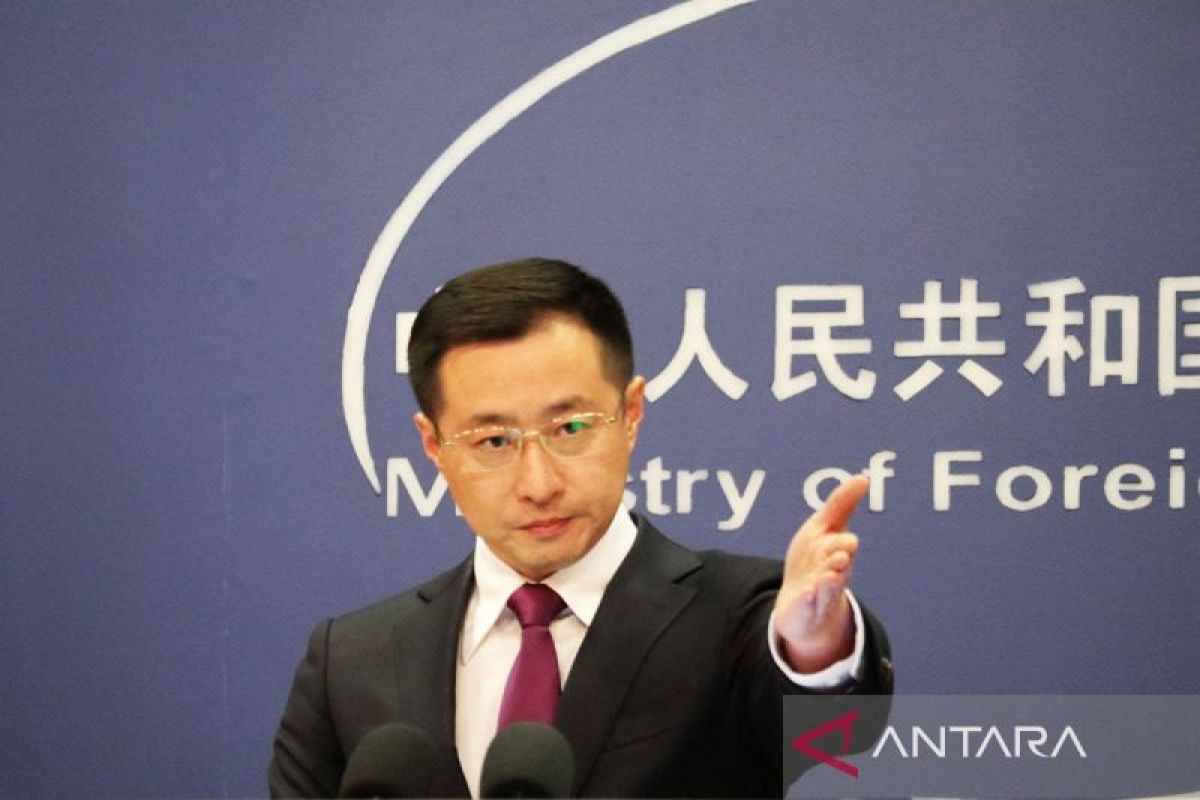
Beijing (ANTARA) - The Chinese government has expressed support for the memorandum of understanding reached between Iran and the United States, which could help ease conflict in the Middle East. “The signing of the memorandum of understanding for the first phase of negotiations between the United States and Iran has positive significance for easing tensions and consolidating the ceasefire momentum,” Foreign Ministry spokesman Lin Jian said at a press conference in Beijing on Thursday (18/6). On Wednesday evening (17/6), US President Donald Trump and Iranian President Masoud Pezeshkian digitally signed the “Islamabad Memorandum of Understanding” remotely, intended to pave the way for ending the war launched by Washington and Tel Aviv against Iran on 28 February. Pakistani Prime Minister Shahbaz Sharif, who acted as a mediator in the diplomatic process for the agreement, will also sign the MoU text. “China welcomes it and hopes that all relevant parties, including the US and Iran, will uphold the spirit of the agreement and implement it in good faith. Violence is not the solution,” Lin Jian stressed. Negotiations on the basis of equality, Lin Jian said, are the right choice, and he hopes the US and Iran will both approach the second phase of negotiations rationally, work in the same direction, and strive to achieve positive results. “Since the outbreak of the conflict, China has worked tirelessly to end the fighting and for peace. President Xi Jinping put forward four proposals on maintaining and promoting peace and stability in the Middle East and stressed that China supports countries in the region in building a common home based on good-neighbourly relations, development, security, and cooperation,” Lin Jian explained. He also mentioned that Foreign Minister Wang Yi held in-depth communication and coordination with senior officials, including foreign ministers of relevant countries, through more than 30 phone calls and meetings. In addition, China and Pakistan jointly issued a five-point initiative to restore peace and stability in the Gulf and Middle East regions. Going forward, Lin Jian said China acts on President Xi’s four proposals and will never stop working to promote peace and facilitate dialogue, as well as making sustained contributions to restoring peace, stability, and development in the Middle East as soon as possible. “As a comprehensive strategic partner of Iran, China is ready to consolidate and deepen political mutual trust with Iran, enhance mutually beneficial cooperation in various fields, and advance the China-Iran comprehensive strategic partnership,” Lin Jian stated. He also expressed hope that Israel, as a relevant party in the Middle East conflict, can follow the trend of peace and stability in the region. “At this critical stage, relevant parties including Israel need to follow the overwhelming trend of peace and stability in the region and do more to help the US and Iran implement the agreement and promote the second phase of negotiations, not the opposite,” Lin Jian said. The memorandum of understanding between the US and Iran contains 12 points of agreement, including: first, an immediate and permanent cessation of military operations in all locations, including Lebanon, and no threats or use of force against each other. Second, the US and Iran mutually respect each other’s sovereignty and territorial integrity and do not interfere in each other’s internal affairs. Third, the US and Iran commit to reaching a final agreement within a maximum of 60 days, which can be extended. Fourth, the US will lift its naval blockade within 30 days so that ship traffic returns to pre-war conditions. The US also pledges to withdraw troops from areas around Iran within 30 days of the final agreement. Fifth, Iran will endeavour to provide safe passage for commercial ships, free of charge for 60 days only, from the Persian Gulf to the Oman Sea and vice versa, and clear mines within 30 days. Discussions on Strait of Hormuz maritime services will be held with other Gulf countries in accordance with international law. Sixth, the US and global partners will provide at least 300 billion US dollars for Iran’s reconstruction and economic development, to be finalised in the Final Agreement within 60 days. Seventh, the US pledges to end all types of sanctions against Iran, including UN Security Council resolutions, IAEA Board of Governors resolutions, and all unilateral US sanctions, with a schedule to be agreed upon in the Final Agreement. Eighth, Iran will not acquire or develop nuclear weapons. Iran and the US also agree to halt the deployment of enriched nuclear material under IAEA supervision. The Final Agreement will determine the technical implementation. Ninth, the US and Iran agree to maintain the status quo, meaning Iran will maintain its current nuclear programme status, and the US will not impose new sanctions or deploy additional troops.