
China Suddenly Shifts Stance, Moving to Curb Advanced Technology
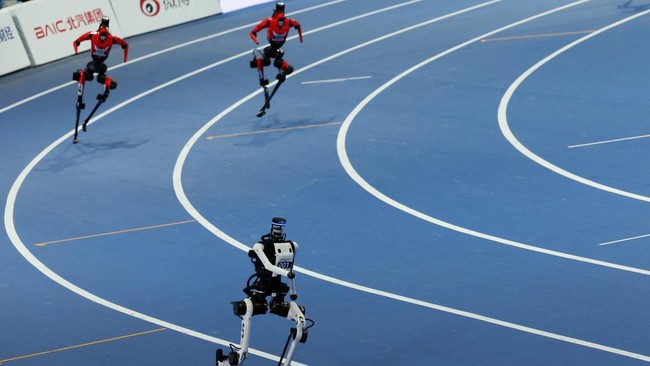
The massive euphoria surrounding China’s humanoid robotics industry is now being reined in. Under the leadership of President Xi Jinping, the government has suddenly ‘hit the brakes’ by tightening supervision over the wave of Initial Public Offerings (IPOs) from robotics companies.
This decisive move follows suspicions from local authorities that irrational valuation surges and company revenues are being propped up by government-mandated projects rather than pure commercial market demand.
Beijing’s drastic change in attitude was triggered by highly volatile stock movements from Unitree Robotics, a prominent manufacturer of humanoid and quadruped robots. The company’s shares skyrocketed more than fivefold during its debut on the Shanghai exchange a month ago, but have since plummeted by 55% from their peak.
Sources reveal that regulators have utilised informal ‘window guidance’ to slow the pace of IPO applications in the humanoid robotics sector. Some sources even suggest that IPOs in this sector have been practically frozen for the time being to dampen the market speculation bubble.
This strict policy demonstrates Beijing’s calculated strategy. They aim to cool down excessive investor euphoria without damaging the technological ecosystem that has already been established as a national priority.
Excessive Hype and ‘Patchwork’ Projects
Leo Wang, a venture capitalist at Qianchuang Capital, bluntly described this phenomenon as ‘campaign-style innovation’. He noted that when the central government provides the green light and full support, private capital and companies rush blindly into the sector.
As a result, the hype surrounding ‘embodied intelligence’ is considered far more intense than previous waves of investment in the internet or new energy sectors. Many robotics startups aggressively raised their valuations, even rejecting investor due diligence processes due to high demand.
However, behind these fantastic figures, regulators have begun to detect irregularities. Investigations show that a large portion of robotics companies’ revenue is derived not from independent buyers in the free market, but from projects backed by local governments—ranging from data training centres to joint ventures where local authorities contribute 80% to 90% of the initial capital.
Observers estimate that if revenue from these ‘government-aided’ projects were removed, the valuations of several robotics companies could collapse by as much as 60% to 70%.
Furthermore, the CEO of Mech-Mind Robotics, Shao Tianlan, expressed his frustration on social media, alleging that many high-value embodied AI companies are intentionally manipulating revenue through affiliated party transactions to facilitate their stock market listings, as reported by Reuters.
Shifting Towards Selective Rationality
Despite the increased oversight, executives and investors believe this move does not mean Beijing is withdrawing from its robotics ambitions. The Chinese government is now demanding tangible proof. Companies must demonstrate real-world deployment, clear order volumes, and products with genuine commercial value.
Market sentiment is reportedly shifting from ‘unbridled euphoria towards selective rationality.’ Amidst China’s recovering fundraising market—which reached US$148.9 billion throughout 2026—investors are beginning to adopt a more realistic stance.
‘What is their utility? Are these robots merely dancing? Are they actually working in factories?’ asked a senior Asian banker, voicing the market’s newfound caution. ‘Sales volumes have not yet truly matched the existing hype.’