
China Successfully Completes First Controlled Recovery of Long March-10B Rocket Stage
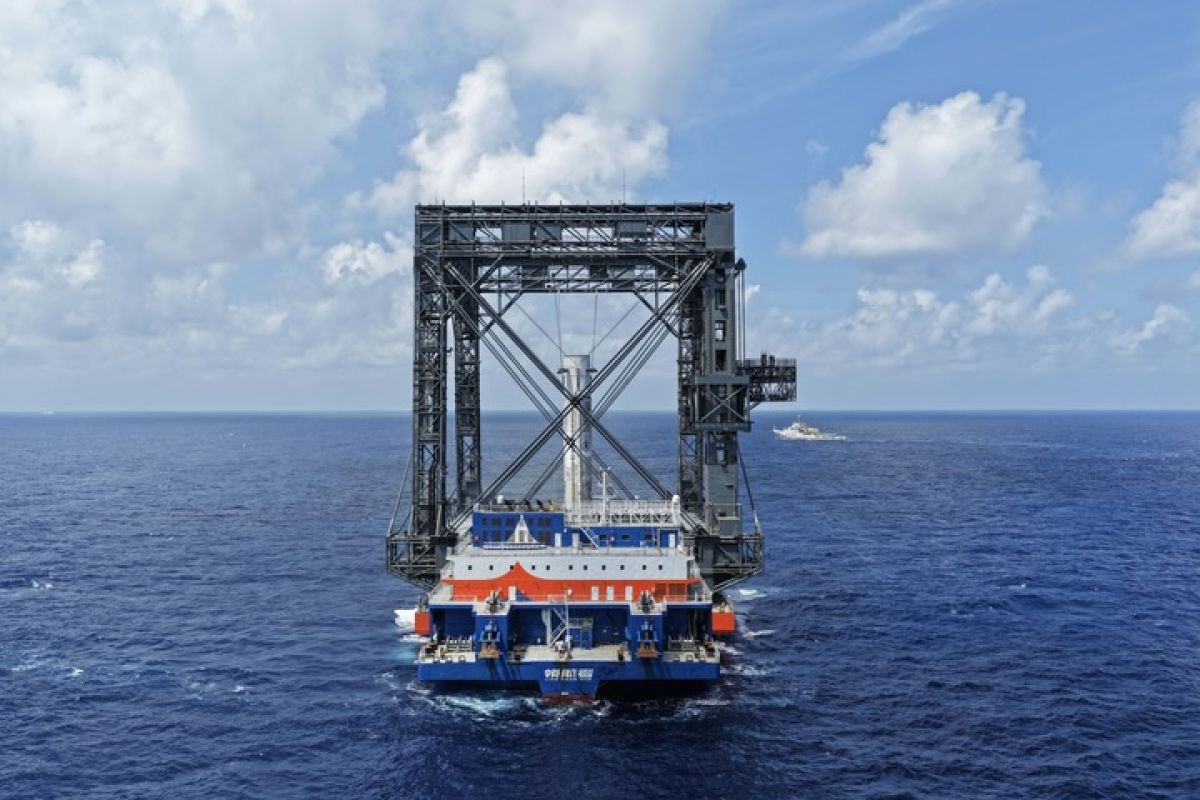
China successfully launched the Long March-10B carrier rocket from the Hainan commercial space launch site in Hainan Province on Friday (10/7). The achievement marks the first time the country has successfully recovered a carrier rocket’s first stage in a controlled manner. On its maiden flight, the Long March-10B delivered a payload to its designated orbit. After the rocket’s first and second stages separated, the first stage returned to Earth and was successfully captured above an offshore platform using a net-based capture system. Both the launch and the first-stage recovery process were successful. This mission represents China’s first success in conducting a controlled recovery of a carrier rocket’s first stage, marking an important breakthrough in reusable rocket technology for the country. After separating from the second stage, the Long March-10B’s first stage began an extreme six-minute return journey, which included a coasting phase, orientation adjustment, engine-powered braking, and aerodynamic deceleration. The first stage then performed a precision landing and was successfully captured by the world’s first high-strength, cross-shaped, supported net capture system. The capture was achieved through coordination with a hook mechanism installed on the first stage. Unlike conventional methods, the Long March-10B uses a unique sea-based net capture system, in which the rocket flies directly into a giant net deployed at sea and is caught. ‘The net-based capture system simplifies the first stage’s structure, reduces weight, and increases payload capacity. It also demonstrates high adaptability to landing deviations, effectively expanding the capture area through coordinated net operation,’ said Chen Muye from China Aerospace Science and Technology Corporation (CASC). To support this innovation, the China Academy of Launch Vehicle Technology (CALT) deployed the first sea-based platform for net-based rocket capture in November 2025. Measuring 144 metres by 50 metres and with a full-load displacement of 25,000 tonnes, the platform serves as a crucial foundation for the capture system. Xu Xuelei from CASC stated in an interview that the platform’s large tower structure is mounted on the deck using four large supports. The system is equipped with LiDAR devices at each corner to automatically track the rocket’s position and orientation, and utilises special cables to absorb the rocket’s kinetic and potential energy. The entire process is fully automated and unmanned, allowing the rocket to hang stably in the centre of the net. The Long March-10B is a reusable liquid-fuel commercial carrier rocket. It stands approximately 63 metres tall with a diameter of 5 metres, has a liftoff thrust of about 890 tonnes, and a liftoff mass of around 760 tonnes. In its reusable configuration, the rocket has a low Earth orbit (LEO) payload capacity of 16 tonnes. ‘Designed primarily for China’s commercial launch market, the Long March-10B has greater transport capacity and mission adaptability,’ Chen said. He explained that the rocket can meet various mission requirements, including deploying LEO satellite internet constellations and launching large commercial satellites, while significantly reducing launch costs due to its reusability. According to Chen, the maiden flight of the Long March-10B marks a breakthrough in low-cost, reusable heavy-lift rockets. This achievement aims to strengthen China’s competitiveness in the commercial space sector, accelerate routine launches using reusable rockets, and advance the next-generation manned rocket programme. The Long March-10B is also planned to support large-scale LEO constellations and medium Earth orbit (MEO) communications. Meanwhile, the Long March-10C is currently under intensive development. CASC positions it as a primary commercial vehicle with greater transport capacity to meet diverse market needs. ‘The Long March-10A, 10B, and 10C rockets will collectively form the backbone of China’s space transportation system,’ said Long Lehao, an expert from the Chinese Academy of Engineering. He added that these three rockets will increase the launch frequency of reusable rockets and expand the scope of human exploration into deep space.