
China Succeeds as the World's Factory, Yet Its People Remain Unconfident
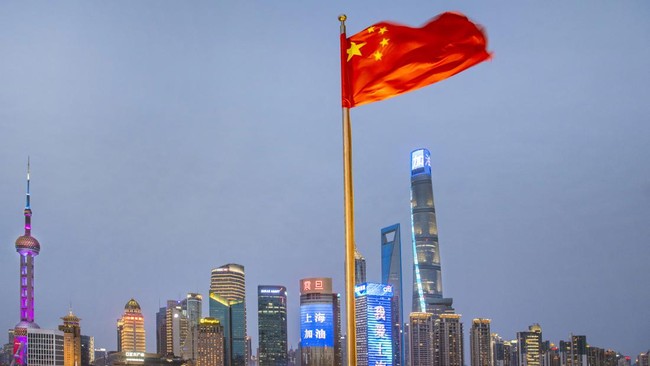
China has become one of the world’s largest industrial powers. Chinese manufactured goods not only excel in cheap products but are also beginning to dominate more sophisticated and high-value sectors. Citing The Economist, Chinese manufacturers have become serious competitors in various industries previously dominated by developed nations. China has overtaken German carmakers, moved faster than South Korean shipbuilders, and narrowed the gap with American chip designers. This success is causing concern among many countries. Several world leaders are now seeking to limit dependence on China, particularly in strategic industries. The European Union, for example, will hold a meeting at the end of June to discuss firmer steps. One option being considered is requiring European companies to diversify suppliers to avoid over-reliance on Chinese components. For the Chinese government, the surge in exports is a source of pride. China’s exports grew by more than 19% year-on-year in May. This trade performance helped the Chinese economy survive after the bursting of the property bubble in 2021. China’s dominance in global supply chains also gives the Bamboo Curtain country significant geopolitical influence in an increasingly competitive world. Chinese leaders believe that a nation’s strength depends heavily on technological advancement and manufacturing capability. If in the Mao Zedong era strength was linked to heavy industry and the military, his successors now hope that high-tech exports will make China increasingly difficult for the world to abandon. However, this high-tech industrial progress has not been fully felt by Chinese society. Consumer confidence has not recovered since the Covid-19 lockdowns and the pressure on the property sector. Even the stock market rally at the end of 2024 was insufficient to lift public optimism. In April, China’s retail sales rose only 0.2% compared to the same period the previous year, even before adjusting for inflation. Car sales also plunged by more than a fifth. This means that if viewed from overall economic health, not just industrial strength, China’s growth model is beginning to show weaknesses. There are several reasons why China’s industrial dominance does not automatically lead to a strong economic recovery. First, China’s current export success does not create as many jobs as it did in the past. Previously, the export boom attracted millions of migrant workers to factories in coastal areas. Now, China’s leading industries are less labour-intensive because they are increasingly technology-dense. Export prices are also rising faster than export volumes. Meanwhile, spending on electric vehicles generates fewer jobs per yuan compared to the same amount of spending on conventional cars or new home construction. The share of migrant workers employed in manufacturing fell from nearly 37% in 2010 to 28% last year. Many of them now work as food delivery couriers or in other gig economy sectors. In other words, they are more often on bicycle lanes than on factory assembly lines. Another problem is that China’s high-tech industry is heavily concentrated in just a few cities. This concentration is indeed one of China’s strengths because it allows suppliers to specialise more easily, human resources to gather, and new ideas to spread faster. However, on the other hand, this condition widens the gap between developed and lagging regions. China’s old growth model, which relied on property development, spread to almost all parts of the country, including areas that were actually less promising. Meanwhile, the new model based on high-tech industry is much more selective in choosing locations. As a result, the share of inland provinces in China’s industry fell from nearly 48% in 2013 to only 36% last year. The massive push into high-tech industry also creates fiscal problems. Ideally, new industries should broaden the tax base and increase local government revenues. But in China, the flow of funds often moves in the opposite direction. City and provincial governments compete to support local companies in future sectors through tax incentives and subsidies. This step actually weakens their financial position. Fiscal support also causes too many companies to enter popular industries, thereby squeezing the profits of more efficient firms. Last year, consultancy AlixPartners estimated that only 15 of 129 Chinese electric vehicle brands would be financially viable by 2030. At first glance, China’s export success should help overcome the weakness of the domestic economy. But the opposite is happening. Weak domestic consumer spending drives down prices, low interest rates, and a cheap currency. All these factors make Chinese products increasingly competitive in the global market. At the same time, strong exports help prop up economic growth. This allows Chinese policymakers to delay more difficult measures to restore consumer confidence, such as increasing social spending or re-stabilising the property market. As European leaders seek to reduce supply dependence on China, Chinese leaders should do something similar at home. The difference is that China needs to diversify not only its sources of supply but also its sources of economic demand so it is not overly reliant on exports and manufacturing.