
China Strongly Protests Japanese Military Ship Crossing Taiwan Strait
Beijing (ANTARA) - The Chinese government has expressed strong objections to the entry of a Japanese Maritime Self-Defence Force (SDF) vessel into the Taiwan Strait on Friday (17/4), which it deems a provocative step that exacerbates bilateral tensions.
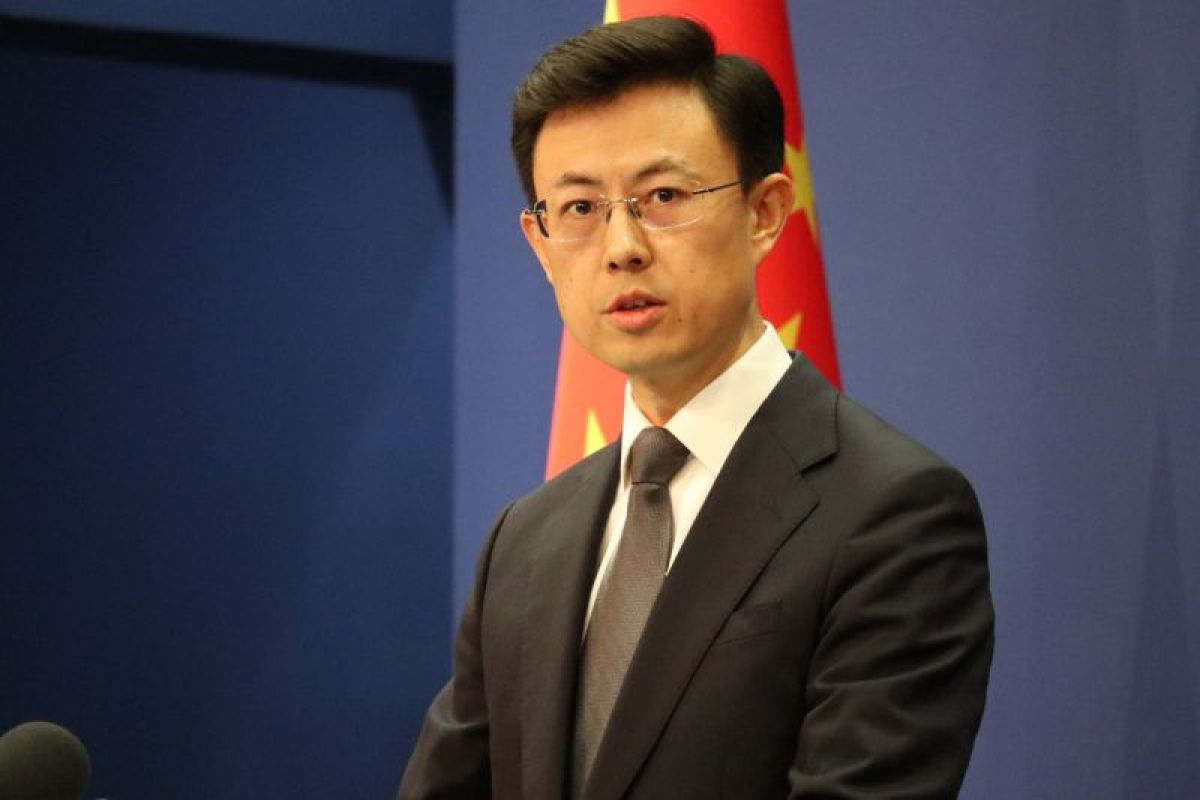
Chinese Foreign Ministry spokesperson Guo Jiakun stated that the Chinese military had handled the voyage in accordance with applicable laws and regulations. He accused Japan of worsening the situation by dispatching the vessel to demonstrate strength and deliberately provoke China.
“This action seriously undermines the political foundation of China-Japan relations and threatens China’s sovereignty and security. China firmly opposes it and has lodged a strong protest with Japan,” Guo said during a press conference in Beijing.
This voyage is the first since Sanae Takaichi assumed the role of Prime Minister of Japan last October. The move comes amid heated relations following Takaichi’s November 2025 statement regarding the possibility of a Taiwan crisis.
Although the Japanese government has not officially announced the voyage, Japanese media describe it as a signal that Tokyo needs to adopt a firmer stance against China’s increasingly aggressive posture.
Guo emphasised that the Taiwan issue concerns China’s sovereignty and territorial integrity and forms the political foundation of China-Japan relations. He called it a red line that must not be crossed and urged Japan to exercise caution in its words and actions and to cease what he described as deviant steps.
“This is a red line that must not be crossed. China urges Japan to immediately return to the right path, exercise caution in its words and actions, and stop taking steps that deviate further from the correct path,” he said.
According to Guo, in recent years, there have been various disturbances against Chinese representations in Japan, including serious incidents such as the break-in at the embassy by an active Self-Defence Force officer carrying a knife. He viewed these events as reflecting the growing influence of right-wing groups in Japan and the weakening of objective and rational voices.
He also warned that the emergence of neo-militarism in Japan could threaten regional peace and stability.
“We once again urge the Japanese side to reflect on and correct its policies and behaviour, conduct a thorough investigation, and bear full responsibility for the incident,” Guo stressed.
Separately, Chinese Defence Ministry spokesperson Zhang Xiaogang said his side had taken firm measures against the Japanese vessel’s voyage.
According to him, the Japanese destroyer crossed the Taiwan Strait, and the Eastern Theater Command of the People’s Liberation Army Navy deployed sea and air forces to monitor and track the route.
“Japan’s action is a deliberate provocation, a repeated mistake, and raises questions about its true intentions,” he said.
Zhang added that the Japanese vessel’s voyage sends the wrong signal to “Taiwan independence” separatist forces, potentially inciting public anger in China and strengthening resolve to counter what he called dangerous provocations.
He affirmed that the Chinese military will remain on high alert to address any form of external interference and safeguard national sovereignty and territorial integrity.
Previously, Japan had tended to refrain from sending vessels through the Taiwan Strait to avoid provoking Beijing. However, in September 2024, the destroyer Sazanami became the first to transit, followed by two others in February and June 2025.
Japanese media reported that the vessel is scheduled to participate in the annual Philippines-US joint military exercise, Balikatan, running from Monday (20/4) to 8 May.
China-Japan relations have been tense since Takaichi’s statement on 7 November 2025, which suggested that China’s use of military force against Taiwan could pose a threat to Japan’s survival.
That statement was interpreted as implying possible involvement of Japan’s Self-Defence Forces to support Taiwan in the event of a blockade or military pressure from China.
In response, China took several retaliatory measures, including suspending imports of Japanese seafood products, halting high-level meetings, advising its citizens against travelling or studying in Japan, and stopping the distribution of Japanese films.
Tensions also escalated after two Chinese Navy J-15 fighter jets locked their radars on Japanese Air Self-Defence Force F-15 aircraft in the southeastern waters of Okinawa on 6 December 2025, prompting protests from Japan.