
China Strengthens, US-India Tensions Mount, Quad's Future at Risk
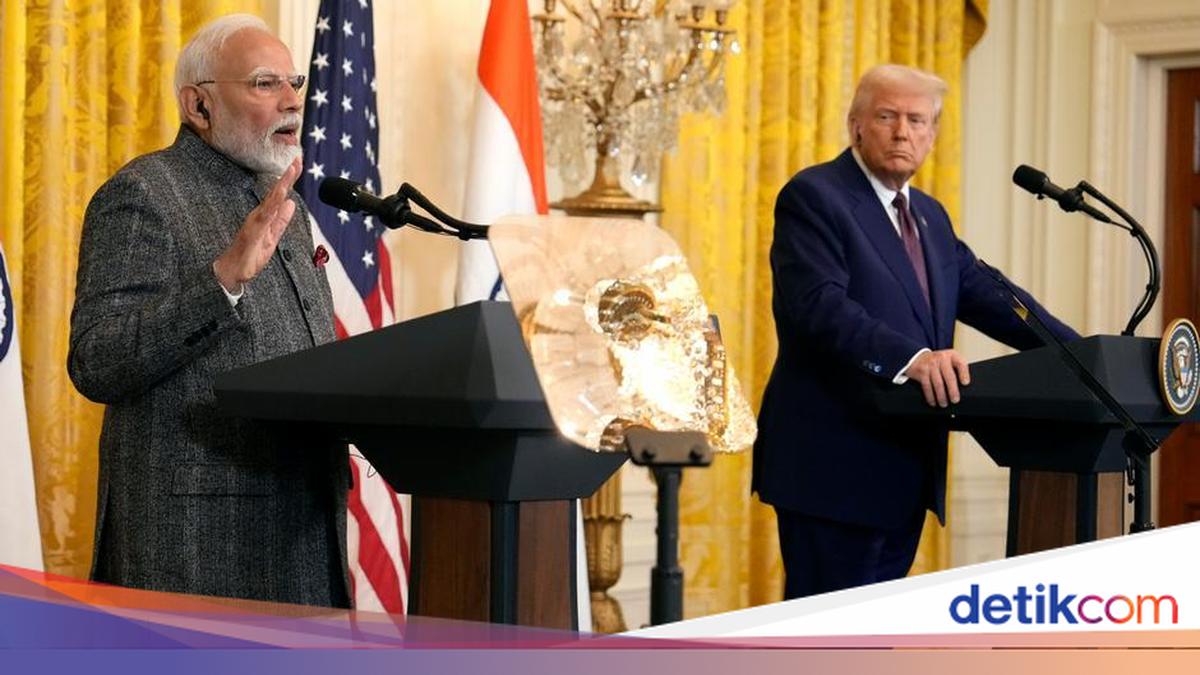
This meeting took place as China continues to test geopolitical and security boundaries in the region. However, an issue not on the official agenda but looming over the meeting was how to keep the alliance alive and relevant amid an increasingly challenging geopolitical landscape and a more aggressive China. The Quad, uniting four nations in pursuit of a Free and Open Indo-Pacific (FOIP), has not held a leaders’ summit since 2024, when then-President Joe Biden hosted the member leaders in Wilmington, Delaware. India was due to host the next annual summit in the second half of 2025, but the plan never materialised amid tensions between India and the new administration of President Donald Trump. Trump imposed additional tariffs and duties on Indian imports to the US, worsening relations with Prime Minister Narendra Modi. The US president also angered New Delhi after claiming to have mediated a border dispute resolution between India and Pakistan last May. Trump further criticised India for purchasing military equipment from Russia. A year later, Foreign Minister Marco Rubio led a US delegation to India tasked with easing diplomatic tensions. With Trump seemingly more focused on conflicts in the Middle East and possibly Cuba, Rubio’s mission was expected to face challenges. ‘The US, Japan, and Australia already have a significant and effective trilateral security partnership. However, the Quad’s main aim is to incorporate India as an additional force to expand the alliance’s influence and reach,’ said James Brown, a professor of international relations at Temple University’s Tokyo campus. ‘Unfortunately, the current US administration does not seem to understand or appreciate the importance of India’s presence as an ally, which has deeply disappointed Modi,’ he told DW. Japan and Australia are working to keep the four-nation alliance intact and functional. Brown believes the Quad may benefit from the US being represented by Rubio rather than Trump at the India meeting. In a Foreign Policy article, Derek Grossman, a professor at the University of Southern California, warned that if Trump refuses to attend the next Quad leaders’ meeting, likely to be held in Australia by late 2026, ‘the Quad would degrade to geopolitical irrelevance, possibly marking the end of the group.’ In such a scenario, analysts believe China would be the biggest beneficiary. ‘Beijing has consistently viewed the Quad with suspicion, often portraying it as an effort to contain China,’ said Joseph Kristanto, a maritime security analyst at Singapore’s S. Rajaratnam School of International Studies. ‘A weakened or fractured Quad would reinforce narratives of declining US commitment, disunited allies, and limited minilateral security cooperation in the Indo-Pacific,’ Kristanto told DW. More broadly, uncertainty over the Quad could unsettle smaller regional nations seeking stable power balances without having to choose sides. However, he dismissed the notion that the alliance is on the brink of collapse. ‘I do not see the latest tensions within the Quad as a sign of collapsing shared interests. Rather, it highlights the growing challenges in managing a partnership between four nations with differing strategic cultures, priorities, and expectations,’ Kristanto said. This is aided by the fact that the Quad, established in 2007 largely due to then-Japanese Prime Minister Shinzo Abe’s push, is not a treaty alliance with binding commitments for members. The Quad was not designed with the rigid discipline of an institution like NATO, so its informal and flexible structure provides a unique resilience. The Quad has previously weathered periods of vacuum and political uncertainty similar to the current situation, including when Australia under former Prime Minister Kevin Rudd distanced itself from the alliance due to concerns over business interests with China. However, experts believe US-India relations must be repaired for the alliance to endure. ‘Despite deepening defence cooperation and increasingly aligned strategic interests in the Indo-Pacific, Washington and New Delhi still view this partnership from different perspectives,’ Kristanto said. ‘The US sees India as a key strategic partner expected to play a larger role in maintaining regional balance. Meanwhile, India remains committed to strategic autonomy and is cautious about arrangements resembling formal alliances or bloc politics.’ Differences in views on Russia, trade, and political alignment expectations further complicate the relationship. However, Kristanto said it is underpinned by strong structural factors, particularly shared concerns about China and long-term Indo-Pacific security. Is the Quad heading towards strategic stalemate? Kristanto assessed that the most serious challenge for the Quad is stagnation. ‘The Quad’s greatest risk is gradual strategic decline, marked by fewer high-level meetings, waning momentum, weakened coordination, and a slow loss of political relevance,’ he told DW. If it appears Washington’s focus is shifting, analysts interviewed by DW believe discussions on adding new members could regain traction. South Korea, New Zealand, and Vietnam are seen as potential partners in a ‘Quad-plus’ framework. For now, the main focus is on p