
China Shock 2.0: Turning Trade Diversion into Indonesia's Industrialisation Engine
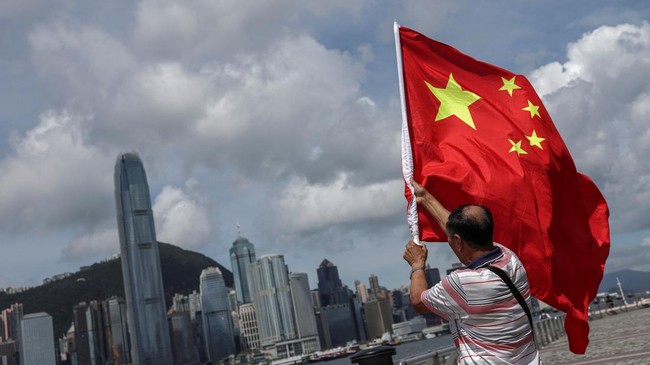
The trade war was intended to contain China. However, a paradox has emerged. As the United States raises tariff walls and Europe becomes increasingly defensive against Chinese products, the engine of the Dragon’s exports has not weakened, but rather gained momentum.
Trade data released on 8 September 2026 shows that China’s exports in August surged by 25 per cent year-on-year, while imports increased by 28.2 per cent. The monthly trade surplus reached US$119.09 billion. In the first eight months of 2026, the surplus has breached US$805.51 billion, or approximately Rp14,500 trillion, and is poised to exceed US$1 trillion this year, following a record of around US$1.2 trillion in 2025.
However, the most important story is not the size of the surplus. Far more strategic is the change in the composition and direction of China’s trade. Exports of high-tech products grew by 42.9 per cent in August. The export value of semiconductors even surged by about 130 per cent, driven by the explosion in demand for artificial intelligence infrastructure and global data centres. Automobiles, electric vehicles, batteries, machinery, and electronic devices are increasingly complementing China’s old identity as an exporter of consumer goods. China is moving from being merely the ‘factory of the world’ to a technology-intensive factory of the world. This shift carries significant consequences for Indonesia.
Trade War Paradox
Conventional trade theory provides simple logic: tariffs increase the price of imports, reduce exporter competitiveness, and subsequently decrease exports. However, global trade operates more complexly. China’s exports to the United States in August actually grew by about 34 per cent year-on-year, generating a bilateral surplus of approximately US$29.2 billion. At the same time, China is becoming increasingly aggressive in diversifying its markets towards Southeast Asia, Latin America, Africa, and various regions of the Global South.
When a country’s doors are narrowed, production capacity does not simply vanish. Goods seek other markets, companies redirect export destinations, investments shift, and supply chains seek new routes. This is trade diversion. This issue becomes increasingly critical because the scale of China’s industrial capacity is immense. As America and Europe strengthen their trade defences, a portion of that pressure could potentially be diverted to countries with large markets and relatively lower trade barriers. ASEAN is at the forefront of this change.
China-ASEAN trade reached approximately 4.34 trillion yuan in the first half of 2026 alone, growing by 18.2 per cent. Interestingly, about two-thirds of this consists of trade in goods such as components, spare parts, and production inputs. This means the relationship between the two is no longer merely that of buyer and seller. China and ASEAN are becoming increasingly integrated into a single production network. For Indonesia, this integration offers both opportunities and risks.
The Arrival of China Shock 2.0
China has become one of Indonesia’s most important economic partners. It is a primary market for certain Indonesian commodities and manufactured products, as well as the largest source of imports. In January 2026 alone, Indonesia’s imports from China reached approximately US$7.91 billion, accounting for 37.31 per cent of Indonesia’s total imports.
However, the structure of these imports must be read clearly. A large portion does not consist solely of consumer goods, but rather machinery, electrical equipment, components, and production inputs that support Indonesian industrialisation. Therefore, an increase in imports from China does not automatically constitute a threat.
The threat arises when imported goods replace production capacity that could actually be built competitively domestically, while foreign investment fails to create technology transfer and linkages with local industries. This is where the risk of ‘China Shock 2.0’ becomes relevant. The first China Shock in the early 2000s was characterised by a wave of low-cost manufactured products. The second wave is different. Competition is moving towards electric vehicles, batteries, solar panels, industrial machinery, electronics, robotics, semiconductors, and various increasingly technology-intensive products.
Consequently, Indonesia faces a more serious problem than just cheap goods: the gap in productivity and technology. If not anticipated, trade diversion could suppress domestic manufacturing and accelerate premature deindustrialisation. Conversely, if managed correctly, the same wave could serve as a catalyst for the next generation of industrialisation.
Large Surplus, Large Imbalance
The US$806 billion surplus also needs to be viewed from the perspective of global imbalances. An extraordinarily large external surplus does not only demonstrate competitiveness but can reflect an imbalance between the capacity to produce and the capacity to absorb production domestically. China’s domestic demand still faces pressure; consumption is not yet strong enough, and the property sector has not fully recovered. Exports have thus become a vital valve to absorb industrial capacity and maintain growth. This is where the export-led growth model faces its geopolitical limits.
An export-oriented strategy is rational for a single country. However, when an economy as large as China generates a surplus of more than US$1 trillion, the consequences are no longer merely domestic. The surplus of one country is arithmetically correlated with the deficit of another. Pressure on trading partner industries increases, and political resistance strengthens. The symptoms are already visible. At the G20 finance ministers’ meeting in early September, 19 members supported the need for action against non-market policies and trade distortions, while China took a different position. Therefore, the issue is no longer as simple as Trump versus Xi. The world is entering a more structural battle regarding who bears the cost of global rebalancing.