
China sends aid to combat Ebola outbreak in Africa
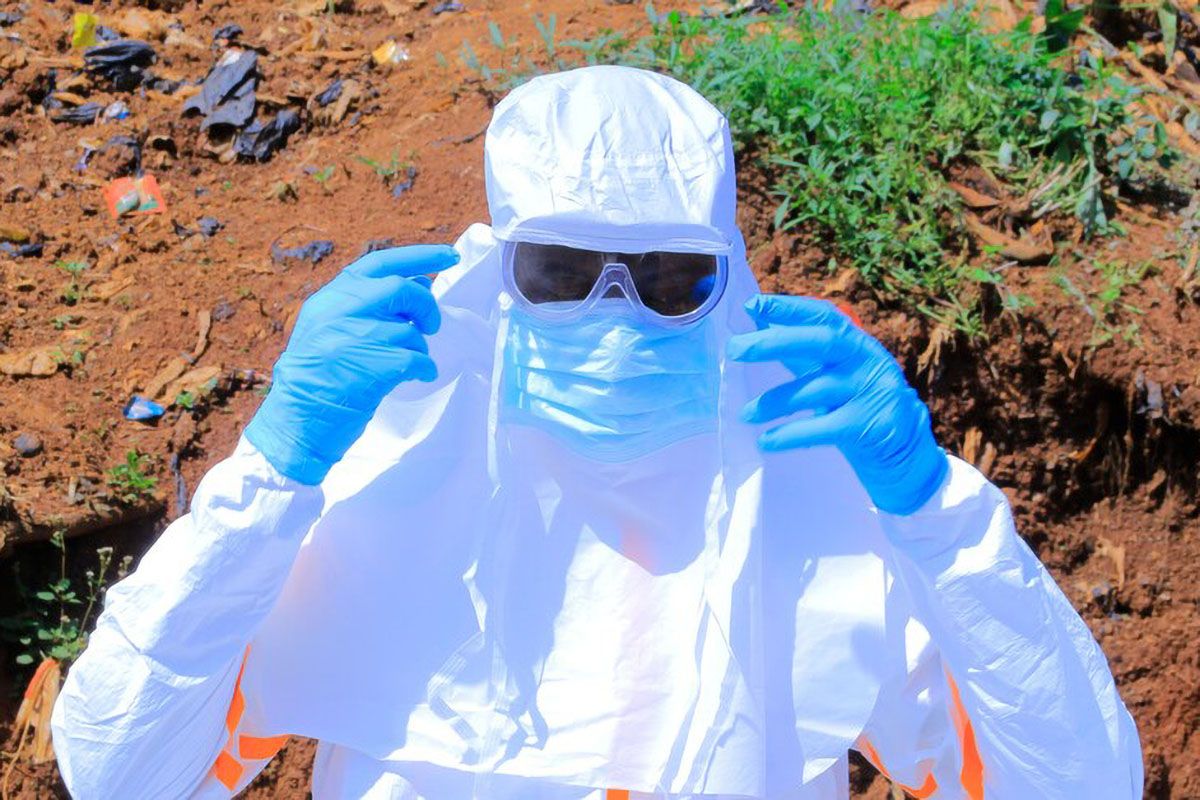
Beijing — The Chinese government has announced it is providing support to the Democratic Republic of Congo (DRC) and working with the African Union to address the Ebola outbreak in West Africa.
“The Chinese government has decided to provide emergency humanitarian assistance to the DRC, and in particular to send medical expert teams for medical services and assistance,” said Chinese Foreign Ministry Spokesperson Lin Jian at a press conference in Beijing on Monday (1 June).
In addition, China is also providing assistance to the African Union Commission and is involved in cooperation with them on Ebola prevention and control, Lin Jian added.
The Ebola outbreak in the Democratic Republic of Congo (DRC) is described as being at a highly concerning level according to Médecins Sans Frontières (Doctors Without Borders).
According to Doctors Without Borders Operations Director Alan Gonzalez, the spread of Ebola has occurred at an unprecedented pace, and field staff are unable to keep up with it.
Meanwhile, World Health Organization (WHO) Director-General Tedros Adhanom Ghebreyesus revealed that suspected new Ebola cases are being discovered daily, but slow testing processes are hindering timely diagnosis results.
Testing capacity must be urgently increased so that the situation can be at least partially controlled, Tedros said.
“We are concerned about the new Ebola outbreak in the DRC. When leading a high-level meeting of the UN Security Council in New York, Foreign Minister Wang Yi stated that China will always rush to help when major public health crises occur,” Lin Jian added.
Citing Wang Yi, Lin Jian noted that in 2015, China provided substantial support to three West African nations fighting Ebola, and China is now ready to actively assist the countries affected by the latest outbreak, including the DRC.
“Chinese support is also being provided to the Africa Centres for Disease Control and Prevention in this regard, to strengthen the capacity of African countries to combat the outbreak,” Lin Jian said.
Supporting African countries’ response to Ebola, according to Lin Jian, is a concrete example of building a China-Africa community that is always ready to face all challenges with a shared future for a new era, and is also an important part of the ten partnership actions of the Beijing 2024 FOCAC Summit.
“China has sent 45 medical teams, with a total of over 900 members, to 44 African countries. Currently, Chinese medical teams are in the field fighting the disease shoulder to shoulder with the African people,” Lin Jian said.
Lin Jian added that China is calling on the international community to take more concrete action to help the DRC and other African countries defeat the outbreak as quickly as possible.
The WHO has itself declared the Ebola outbreak in the Democratic Republic of Congo and Uganda as a public health emergency of international concern.
The international organisation stated that more than 900 suspected Ebola cases have been reported in the Democratic Republic of Congo, including 223 suspected deaths from the disease.
Congo’s health authorities stated that new suspected cases continue to be discovered, with a cumulative total of over 1,000 cases recorded since the Ebola outbreak was announced on 15 May.
A previous Ebola outbreak in the DRC ended in October 2025.
The spread of Ebola in the DRC and Congo is said to be worsening because the United States has withdrawn funding from the WHO, disbanded the US International Development Agency (USAID), made cuts to the US Centers for Disease Control and Prevention, and is in the process of reducing total health assistance provided to the DRC and Uganda, countries that are at the centre of the epidemic.
All these steps have weakened the global health system that is critical for an effective response to outbreaks like this.
US officials are said to have learned about the outbreak nine days after the WHO, nearly a month after the first death.
The delay in confirming the outbreak was partly due to samples being transported to the national laboratory in Kinshasa, Congo, at the wrong temperature. This task would previously have been managed by USAID.
This situation is very different, for example, from the 2014 Ebola outbreak, when USAID managed the establishment of clinics, imported ambulances, traced people with suspected cases, and provided staff for isolation facilities.