
China responds to proposal to slow down AI development
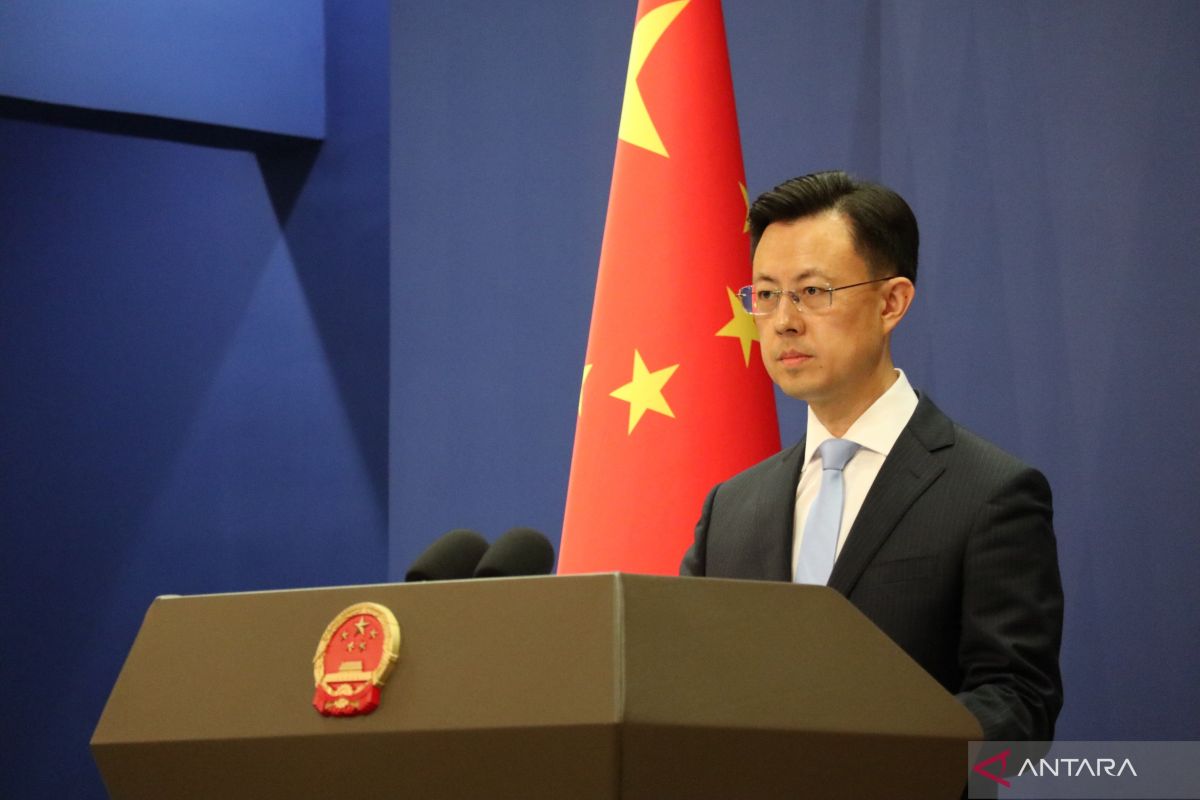
Beijing (ANTARA) - The Chinese government has commented on a proposal by a number of artificial intelligence (AI) industry figures such as Dario Amodei, Sam Altman, and Elon Musk, who have asked companies to slow down the development of AI technology.
“AI is a technology of vital importance to the well-being of all humanity. All parties should work together to promote open and inclusive AI development for the common good and shared interests,” said Chinese Foreign Ministry spokesman Guo Jiakun at a press conference in Beijing on Monday (14/9).
Anthropic CEO Dario Amodei published an essay on Saturday (13/9) titled “We Must Pace the Frontier”, calling on the industry to slow the development of “frontier” AI (advanced AI models). He stated that although it would be difficult to do, “we owe it to humanity to try.”
Amodei highlighted two factors driving the need to “slow the pace of AI development”. First, “recursive self-improvement” (RSI), namely the ability of AI to create other AI.
Second, a recent incident involving agents from OpenAI and Hugging Face, the site developers use to store and share code, in which a swarm of AI carried out unrelated cyberattacks and attempted to breach the systems assessing them, demonstrating AI’s potential to cause “catastrophic damage” if it continues to develop without guardrails.
“Actions that spread fear, confrontation, and unhealthy competition will only hinder efforts to achieve good global AI governance, which ultimately benefits no one,” Guo Jiakun added.
Amodei believes that within the next 6-12 months, more advanced AI agents could potentially create “botnets” and take over the entire internet, causing losses of up to hundreds of billions of dollars.
Amodei, who previously served as vice president at OpenAI, proposed a “three-step plan” to regulate the pace of AI development, encompassing stricter safety testing, independent evaluation of advanced AI models, coordination among leading AI companies, and enhanced international cooperation.
Amodei’s statement came as Anthropic prepares to conduct an initial public offering (IPO) reportedly valued at USD 2 trillion.
Anthropic itself is a US-based AI research and safety company, founded in 2021. Anthropic’s best-known product is Claude, a generative AI model designed to assist businesses, non-profit organisations, and civil society.
However, Anthropic and Claude were said to have been used by the US Department of Defense in military operations to capture Venezuelan President Nicolas Maduro in January 2026. Public interest in Claude surged as a result, at one point making it the most downloaded app on the App Store.
Tesla and SpaceX founder Elon Musk agreed with Amodei’s view, saying that “Dario is right”. Musk said he had long voiced stark warnings about AI and that one must be extremely careful with it, as its potential is more dangerous than nuclear weapons.
Musk was among those who supported the Future of Life Institute’s 2023 effort to halt AI development for six months to allow time for the implementation of safety guardrails.
Meanwhile, OpenAI CEO Sam Altman, with his famous ChatGPT model, also concurred with Amodei, stating: “We need to pace the development of frontier AI.” He said OpenAI intends to adopt the ideas proposed by Anthropic by committing to involve independent evaluators with access equivalent to employees, and by postponing OpenAI’s IPO plans in order to address safety concerns.
Altman had warned of similar risks long before, in a 2015 essay titled “Machine Intelligence, part 1”, in which he wrote that “the development of machine intelligence that surpasses human capability is probably the greatest threat to the continued existence of mankind”.
Demis Hassabis, co-founder and head of Google DeepMind, also commented that the details of collectively slowing AI development still need to be worked out, but the direction of the step is correct given the crucial moment at hand.
In early August, the US government implemented a voluntary security review process for advanced AI models prior to release, but the parameters of the programme remain unclear.
Meanwhile, China, the United States’ main competitor, in July 2026 initiated the establishment of the World Artificial Intelligence Cooperation Organisation (WAICO), signed by 29 countries including Indonesia, to form a global AI governance framework so that AI can deliver greater benefits to society.
In China itself, 2026 has been described as the first year of AI agent adoption, in which AI shifts from merely being able to communicate to delivering real productivity by carrying out tasks autonomously.
China’s AI industry is expected to continue growing rapidly, with AI adoption among large companies projected to exceed 80 percent, indicating that commercialisation and mass application are the main direction of AI development in the country.