
China releases railway science and technology innovation plan for 2026–2030
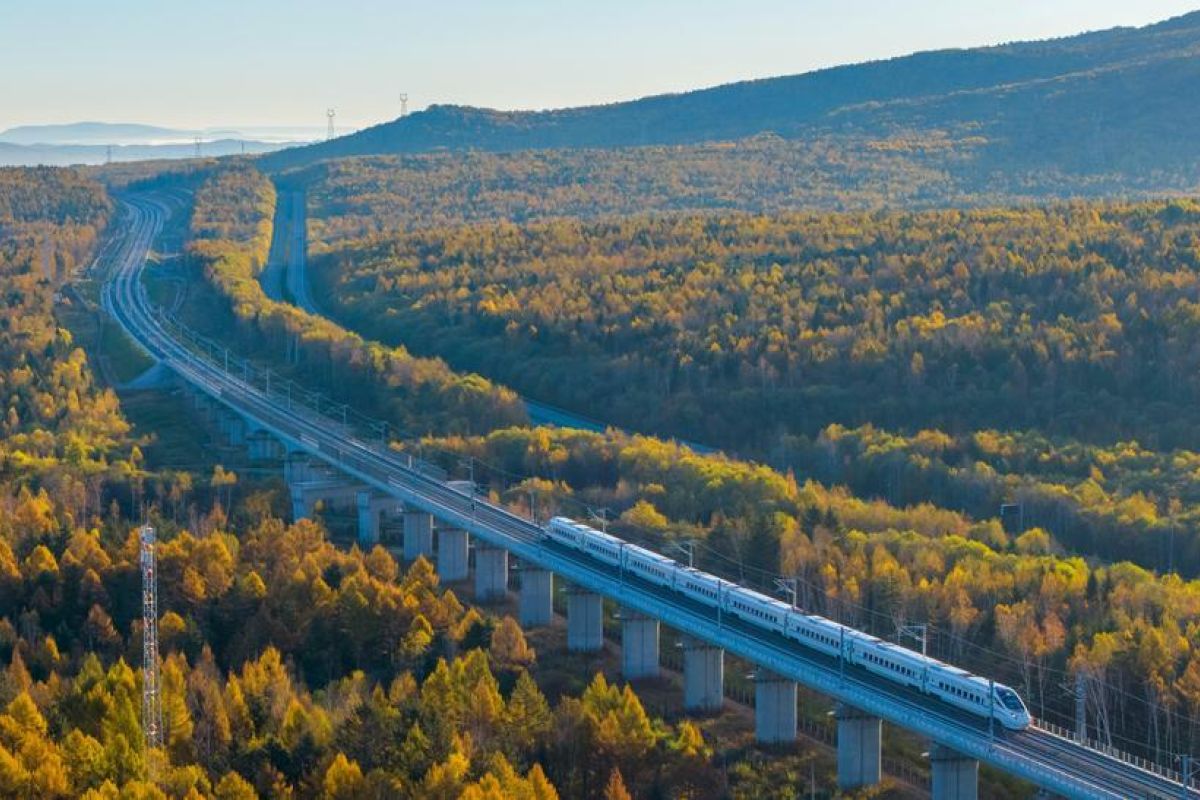
Beijing (ANTARA) – China, which has the world’s largest high-speed rail network, has launched a railway science and technology innovation plan as part of its 15th Five-Year Plan for 2026–2030.
The plan sets out key tasks in basic research and frontier technologies, engineering construction, technical equipment, transport services, digital and smart railways, safety, and green, low-carbon development.
Recently released by China’s National Railway Administration (NRA), the plan proposes that an innovation system capable of leading railway modernisation should be largely established by 2030.
From 2026 to 2030, China plans to build around 30 new railway-industry science and technology innovation bases under the NRA, make breakthroughs in at least 100 key core technologies, and produce at least 500 significant scientific and technological achievements.
China also plans to develop at least 20 typical application scenarios or pilot projects in various fields, including an operating system for high-speed trains travelling at 400 kilometres per hour.
For technical equipment, the plan proposes advancing research into 600 km/h high-speed maglev technology in a gradual and orderly manner, alongside testing and verification of key technologies for domestic production.
In transport services, the plan will promote upgrades to the official 12306 ticketing platform, expanding it from a ticket-purchasing service into a smart provider covering the entire journey. The aim is to deliver integrated, multimodal travel solutions that precisely meet passengers’ personalised, differentiated and diverse needs.
According to the plan, China will accelerate the development of large-scale models, datasets and computing-power infrastructure for the railway industry, and establish at least 20 high-quality industry datasets and more than 20 typical artificial intelligence (AI) application scenarios.
On green, low-carbon development, the plan calls for pilot operations of low-emission, fuel-efficient diesel locomotives and railway vehicles powered by various energy sources, including batteries and hydrogen. It also calls for the creation and refinement of a carbon-management system, and for helping railway-sector carbon emissions reach their peak by 2030.