
China Rejects Overcapacity Accusations, Hits Back at US and EU Protectionism
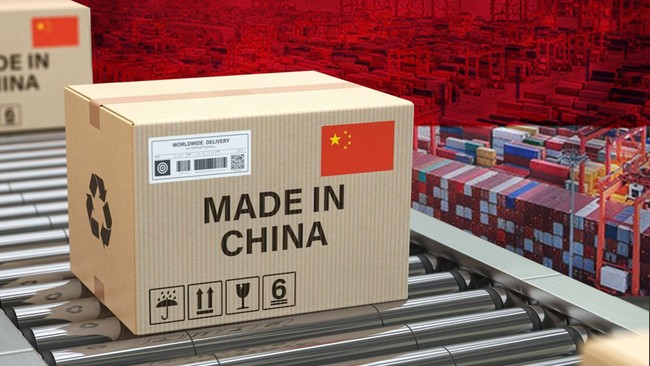
The Chinese government has officially denied accusations from Western nations that it is suffering from industrial overcapacity and flooding the global market with cheap products. In a new white paper, Beijing labelled the claims a pretext to justify protectionist policies against Chinese goods. The policy document asserts that the issue of overcapacity has been politicised by countries worried about losing their competitive edge. China argues that production capacity should be viewed objectively through market mechanisms, not used as a tool to restrict international trade. “Protectionism will only disrupt the global trade order, undermine the stability of global supply chains, and create long-term risks for global economic growth,” the government stated. Beijing also noted that neither the World Trade Organization (WTO) nor the International Monetary Fund (IMF) has an official definition of overcapacity, accusing certain countries of using self-made standards for geopolitical purposes.
In the document, China also retaliated against criticism of its industrial subsidies. It argued that subsidies do not automatically cause overcapacity, pointing out that many developed nations provide massive support to their own industries. It cited the United States’ Inflation Reduction Act (IRA), which allocates approximately US$750 billion in various subsidies from 2022 to 2031, and the European Union’s preparation of around €1.44 trillion in subsidies for the 2021-2030 period. Beijing insisted that major countries should ensure their subsidy policies comply with WTO rules and are not used to hinder the development of other nations.
China further rejected the notion that its trade surplus is evidence of overcapacity, noting that industrialised nations like the United States, Germany, Japan, and the United Kingdom have historically enjoyed long periods of trade surpluses. It highlighted that the EU also records large surpluses in the automotive, pharmaceutical, and cosmetics sectors. China attributed its export growth to increased innovation, manufacturing efficiency, and strong global demand for electric vehicles, solar panels, and batteries. The government claimed it does not intentionally pursue a trade surplus, noting that China has been the world’s second-largest importer for 17 consecutive years and offers zero-tariff treatment to dozens of developing countries.
Beijing also rejected the ‘China Shock 2.0’ narrative, which has been used in the West to describe a flood of Chinese manufactured goods. Instead, China characterised its industrial development as a ‘China Opportunity 2.0’, presenting new global opportunities through technological innovation, green energy transition, and investment in developing countries. It claimed that industries such as electric vehicles, lithium batteries, artificial intelligence (AI), and renewable energy have grown due to heavy research investment and fierce domestic market competition, not merely government subsidies. The document concluded by urging all countries to uphold the free trade system, strengthen the WTO, reject protectionism, and maintain smooth global supply chains through international cooperation.