
China reaffirms commitment to keeping promises through concrete action
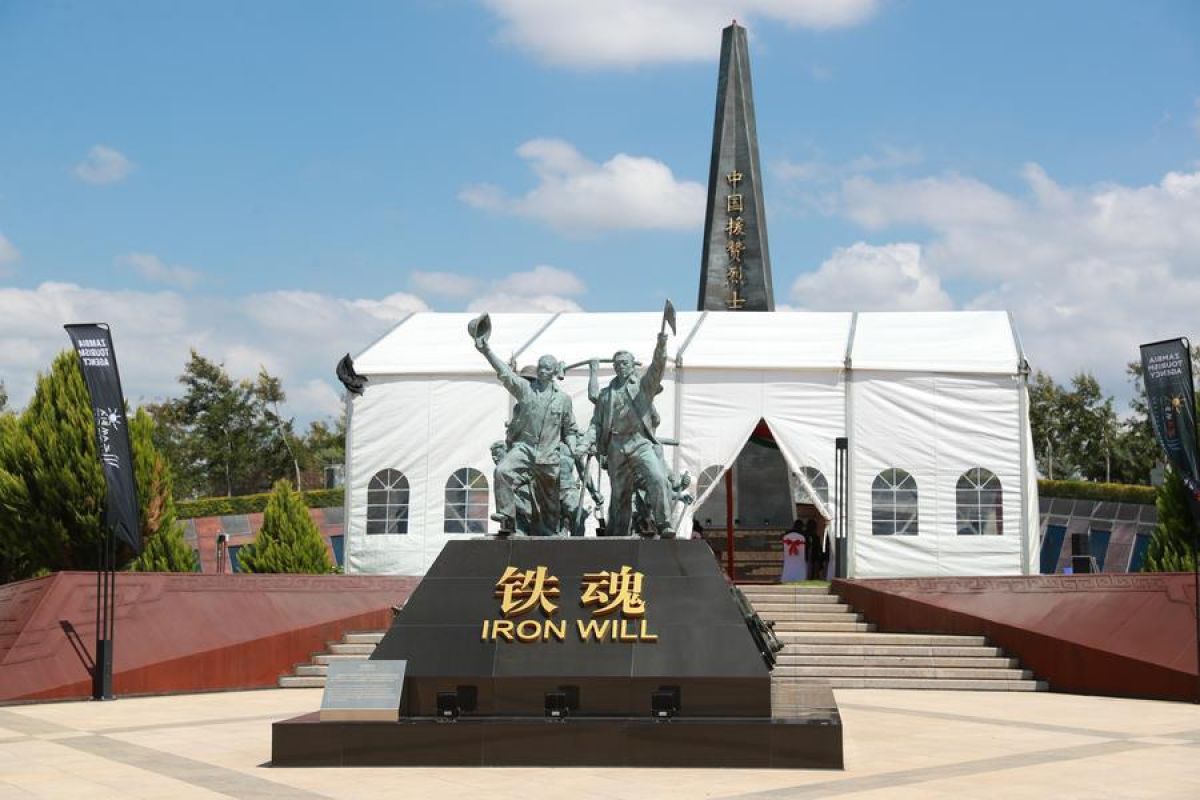
The story of ‘APEC blue’ reflects a noble value passed down through generations of Chinese society: promises must be kept through action. This philosophy also guides China’s efforts to build stronger relations with the world. On a cool autumn day in Beijing, a clear blue sky stretched over the Chinese capital as world leaders gathered for the 2014 APEC Economic Leaders’ Meeting. The clear blue sky over Beijing later became known as ‘APEC blue’, although some viewed the phenomenon as a fleeting moment seen only during the high-level conference period. At the welcoming banquet, President Xi Jinping directly dismissed such doubts, expressing his hope and determination that ‘with persistent efforts, APEC blue will endure’. More than a decade later, the promise made by Xi has been realised through concrete action. The results are visible in the air. Between 2013 and 2025, the average PM2.5 concentration in Beijing fell by 69.8 percent. The United Nations Environment Programme praised the city’s achievement in improving air quality as the ‘Beijing Miracle’. ‘He who has credibility will connect the world,’ Xi once said, quoting from ‘Guanzi’, a collection of ancient Chinese writings, to underline the importance of aligning words and deeds. Every autumn, the lights of the National Exhibition and Convention Center in Shanghai illuminate a global gathering, where products, technologies and ideas converge in the dynamic metropolis. At the first China International Import Expo in 2018, Xi made a clear promise: ‘The CIIE, which will be held annually, will deliver good performance, beneficial results and sustained success in the years to come.’ Eight years on, the CIIE has grown into a major global platform for trade, investment and cultural exchange, connecting businesses, innovators and consumers from around the world. The expo, the world’s first national-level exhibition themed on imports, is a tangible reflection of Xi’s commitment to China’s high-level openness. Beyond the CIIE, that commitment has been realised through various concrete steps, from the launch of island-wide special customs operations at the Hainan Free Trade Port to the expansion of visa-free entry and transit policies. In a world facing rising uncertainty and fragmentation, such actions send a clear message: China will continue to open its doors wider to the world. Xi’s commitment to keeping promises is also reflected in long-term partnerships built on shared development. More than half a century ago, Chinese engineers travelled to East Africa to help build the Tanzania-Zambia railway, a flagship project stretching across the region. Two years later, in talks with then Zambian President Edgar Lungu, Xi reaffirmed that China would work with Zambia and Tanzania in operating the railway to ‘promote development and prosperity in the region along the line’. In September 2024, Xi joined Tanzanian President Samia Suluhu Hassan and Zambian President Hakainde Hichilema in witnessing the signing of a memorandum of understanding in Beijing for the railway revitalisation project. In November 2025, a groundbreaking ceremony was held in Zambia. Once revitalised, the railway is expected to significantly boost regional connectivity, with annual cargo capacity rising to at least 2.4 million tonnes and delivery times cut by nearly two-thirds. ‘China helped us build this railway in the past, and now it is helping us make it better and more modern. China always keeps its promises,’ said Solomon Mwakasanga, 74, a resident who began working in the railway service in 1970 as a clerk and retired in 2005 as a senior station master. Across Africa, China’s efforts are turning promises into progress while supporting the continent’s modernisation drive. From the full implementation of zero-tariff policies for all 53 African countries with diplomatic relations with China to the development of ‘small and beautiful’ livelihood projects such as Luban Workshops and Juncao technology, China-Africa cooperation is increasingly focused on delivering tangible benefits. Paul Frimpong, executive director of the Africa-China Center for Policy and Advisory, a Ghana-based think tank, said ‘China will always remain Africa’s most reliable partner on the continent’s journey towards modernisation.’ Promises kept in times of crisis carry particular weight. When the COVID-19 pandemic swept the world, Xi affirmed China’s strong determination to strengthen international cooperation as a responsible major country. China became the first country to propose COVID-19 vaccines as a global public good and worked with developing countries to produce vaccines locally, while mobilising resources to help bridge the global ‘immunity gap’.