
China 'Punishes' Japan, Sanctions Hit Companies and Research Institutes
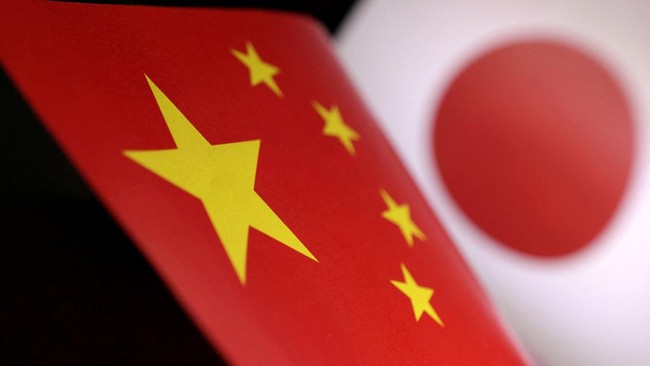
China has intensified its pressure on Japan by expanding export restrictions to include dozens of strategic Japanese companies and research institutes. Beijing’s latest move targets drone manufacturers, nuclear companies, the defence industry, and several Japanese government-owned research institutions.
In a statement on Monday (2 29/6/2026), China’s Ministry of Commerce asserted that Japan has shown no change in attitude since the previous wave of sanctions in February. Furthermore, Beijing assessed that Tokyo is actually “accelerating” its steps towards what it describes as “new-style militarism,” including the deployment of offensive weapons and overseas missile launches.
China has urged Japan to “turn back from the wrong path,” while maintaining that these restrictions will not disrupt normal trade relations or affect Japanese companies that comply with the regulations.
Under the latest policy, China has added 20 entities to its export control list, including the Japan National Institute for Defence Studies and several research centres for land, sea, and air defence systems. Several units belonging to Mitsubishi Electric and Mitsubishi Heavy Industries are also affected.
With the inclusion of these entities, all Chinese exporters and third parties are prohibited from supplying Chinese dual-use goods to the sanctioned entities, and all ongoing transactions must be halted.
Separately, Beijing has added another 20 entities to an export monitoring list that requires stricter licensing processes. This list includes Mitsui E&S, drone manufacturer Terra Drone Corporation, nuclear fuel processing companies, and several units of OKI Electric Industry.
China emphasised that exports related to the Japanese military or those with the potential to strengthen the nation’s defence capabilities will not receive approval.
This policy is a continuation of a restriction campaign that began in January, when China banned the export of various dual-use goods to Japan, including rare earth metals, permanent magnets, and various critical minerals essential for the defence and high-tech industries.
A month later, Beijing imposed further restrictions on dozens of Japanese companies, including subsidiaries of Mitsubishi Heavy Industries, IHI Corp., Kawasaki Heavy Industries, Subaru, TDK, and FUJI Aerospace Technology.
China’s pressure on Japan escalated after Japanese Prime Minister Sanae Takaichi stated last November that a hypothetical Chinese attack on Taiwan could trigger a military response from Tokyo. This statement drew sharp condemnation from Beijing and further strained bilateral relations.
Market response to the latest policy has been mixed. Shares in Mitsubishi Electric fell by approximately 1.4%, while Howa Machinery corrected by 4.6%. Conversely, Mitsubishi Heavy Industries shares strengthened by 4.9%, and Terra Drone rose by about 1.7%.
Although Japan has invested heavily in rare earth metal refining and processing facilities since 2010 to reduce its dependence on China, the industry’s supply chain remains highly reliant on China and Vietnam.
Koki Akimoto, an economist at the Daiwa Institute of Research, estimates that a one-year halt on rare earth imports from China, accompanied by component supply disruptions, could slash Japan’s real Gross Domestic Product (GDP) by approximately 1.3%, equivalent to 7 trillion yen.