
China provides climate forecasts to support post-landslide disaster management in Nepal
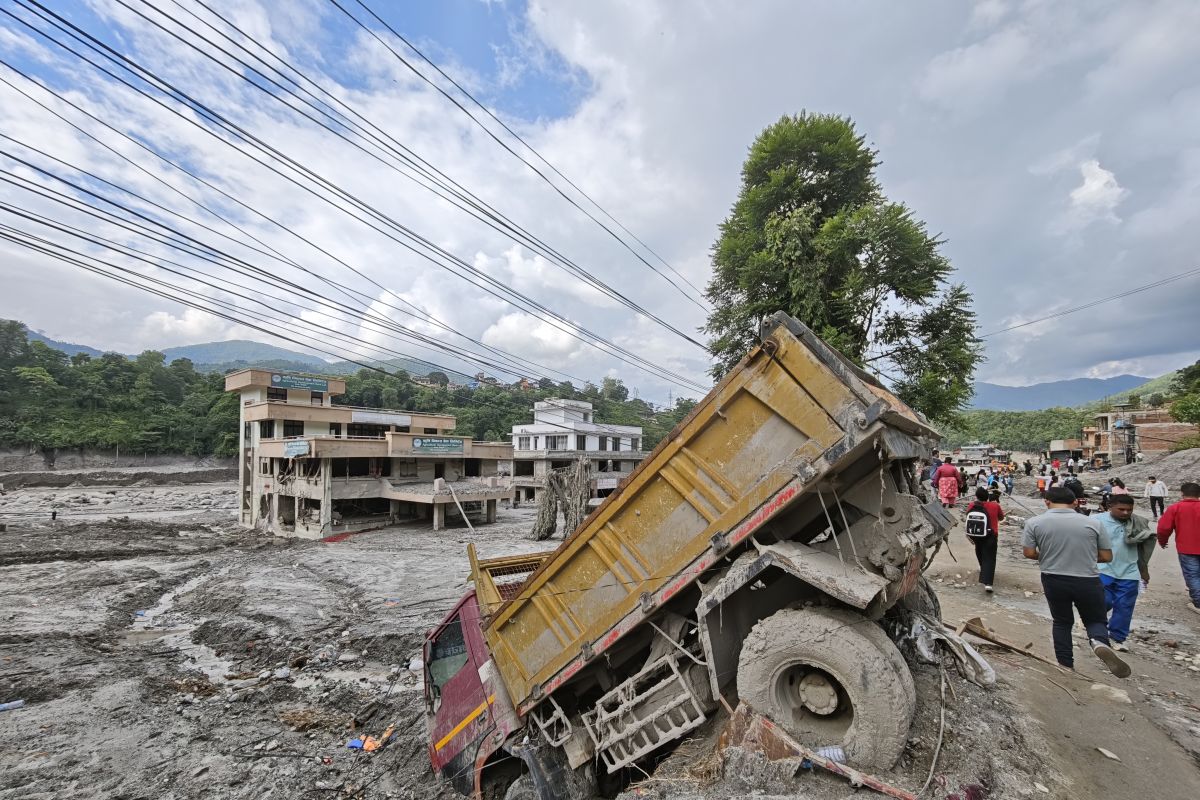
Beijing (ANTARA) - China’s National Climate Centre is providing regular climate monitoring and forecasting products to Nepal to support rescue efforts and the distribution of aid following devastating landslides at the Gyirong-Rasuwa border crossing, the China Meteorological Administration (CMA) announced on Thursday (10/9).
In the wake of the disaster, the National Climate Centre activated its emergency response and began providing climate services via the MAZU (Multi-hazard, Alert, Zero-gap, and Universal) cloud version, a Chinese-developed AI-based early meteorological warning system tailored for Nepal.
The centre is also compiling periodic analyses of climate conditions in the affected areas and surrounding regions, alongside long-term forecasts for the coming weeks.
Under the coordination of the CMA, the National Climate Centre is providing two main categories of products to Nepal: climate monitoring and climate forecasting.
For climate monitoring, the centre is releasing five types of routine products covering conditions such as temperature, precipitation, and soil drought. The centre is also monitoring 10 key climate indicators, including the El Niño-Southern Oscillation (ENSO) and the Madden-Julian Oscillation (MJO).
ENSO is a natural climate cycle that affects weather conditions worldwide, encompassing both the warm El Niño and cold La Niña phases. Unlike the stationary nature of ENSO, the MJO is a phenomenon involving the eastward movement of disturbances in clouds, rainfall, wind, and atmospheric pressure across tropical regions, returning to its starting point within an average of 30 to 60 days.
For climate prediction, the centre utilises Fengshun, an AI-based climate forecasting model, to provide daily temperature and rainfall forecasts for Nepal up to 60 days in advance, along with projections of climate phenomena including ENSO and MJO.
The National Climate Centre is also collaborating with the Third Pole Regional Climate Centre Network. Since 28 August, it has been providing periodic climate projections for the next 15 to 30 days for Nepal in response to the country’s needs, while providing additional meteorological information related to rescue efforts and post-disaster aid distribution.
This meteorological support is part of a broader China-Nepal cooperation following the disaster on 26 August, which was triggered by a glacier fracture on Mount Langtang Lirung, Nepal, at an altitude of approximately 5,200 metres. The glacier collapse triggered ice and rock slides that descended rapidly to around 4,000 metres, eroding mountain slopes and evolving into a massive debris flow.
According to the CMA, both parties held weather consultations via video link shortly after the event. The CMA is providing various meteorological products to Nepal through MAZU, including multi-source satellite data and products from the Fengyun-3 and Fengyun-4 meteorological satellite series.
MAZU, which literally means “Sea Goddess” in Minnan Chinese culture, is the world’s first national-level action plan in response to the United Nations’ “Early Warnings for All” initiative. Since 2024, meteorological agencies in more than 40 countries have been accessing MAZU via the cloud.
Source: jawawa.id (https://jawawa.id/newsitem/china-provides-climate-forecasts-to-support-post-landslide-disaster-management-in-nepal-1789088352)
Originally published by Antara (Indonesian) (https://www.antaranews.com/berita/5735851/china-sediakan-prakiraan-iklim-untuk-dukung-penanganan-pascabencana-tanah-longsor-di-nepal), translated from Indonesian