
China Protests US Ban on Humanoid Robot Imports
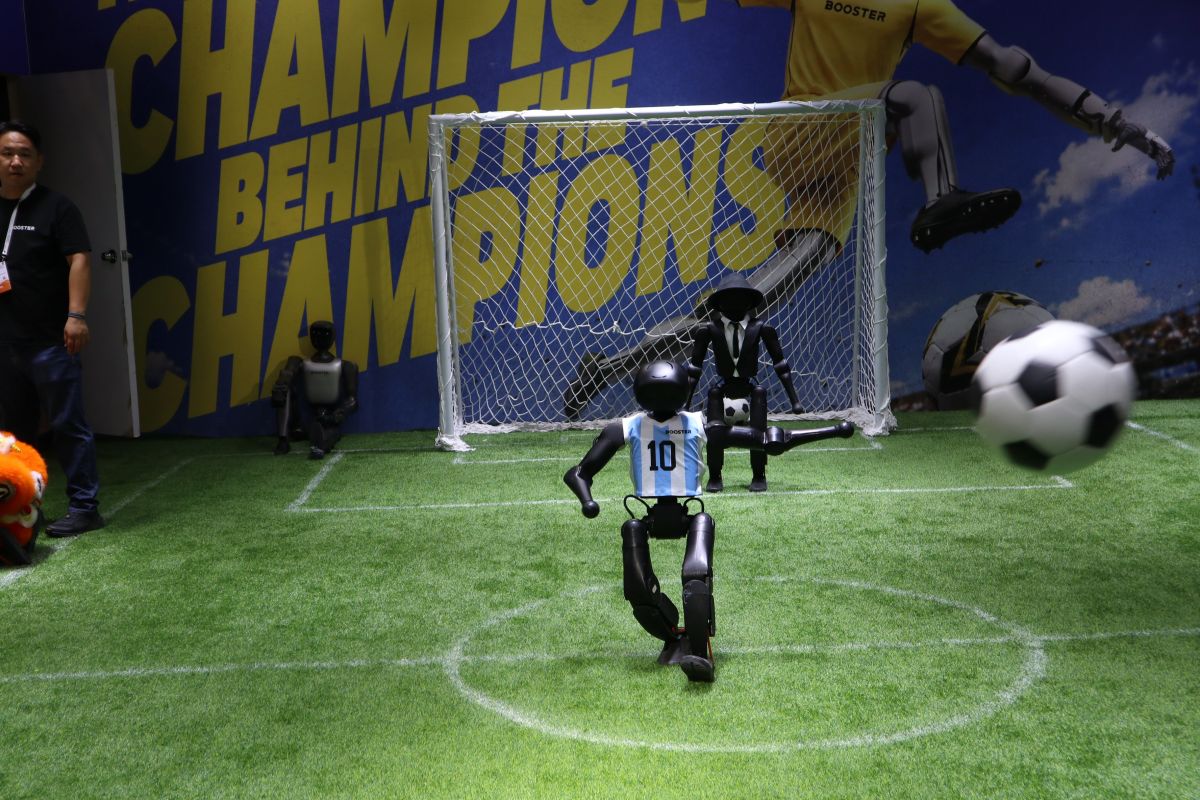
Beijing (ANTARA) - China’s Ministry of Foreign Affairs has protested the United States’ decision to ban the import of advanced robotic devices, including humanoid and quadrupedal robots, as well as power inverters. “China firmly opposes the US overstretching the concept of national security and targeting Chinese companies. Protectionism will not make the US more competitive and will only harm the interests of American companies and consumers,” said Foreign Ministry Spokesperson Mao Ning at a press conference in Beijing on Wednesday. The US Federal Communications Commission (FCC) announced on Tuesday that advanced robotic devices, defined as mobile robots such as humanoid and quadrupedal robots, and inverters manufactured abroad have been added to its restricted list. The move was taken because these foreign-made robots and inverters, regardless of their country of origin, are deemed to “pose an unacceptable risk to the national security of the United States or the safety and security of US persons.” “We will continue to do what is necessary to firmly defend the legitimate and lawful rights and interests of Chinese companies,” Mao added. US national security agencies stated there are unacceptable risks, including the possibility that the devices could create supply chain vulnerabilities that could potentially disrupt US economic and national security. The devices are also considered to pose cybersecurity risks that threaten critical US infrastructure. Inverters are said to present additional vulnerabilities as their use in the US power grid increases, because foreign companies could use or disable them to collect and exfiltrate data without authorisation, facilitate remote access and surveillance by foreign government actors, or exploit the devices for cyberattacks. Inverters are widely used in energy systems such as solar panels, battery storage, or the power grid. Meanwhile, advanced robotic devices that can connect to networks are considered to create broad vulnerabilities and various attack paths that can be used to manipulate data. The devices are also deemed capable of collecting data that could be exploited by malicious actors to surveil US citizens, enhance the capabilities of foreign intelligence agencies, or remotely take control of the robots. There is a conditional exception for advanced robotic devices and power inverters that have received “Conditional Approval” from the US Department of Defense or, specifically for power inverters, from the Department of Homeland Security, after those agencies conclude the device or group of devices does not pose an unacceptable risk. The decision is not retroactive, meaning users who already purchased the restricted devices before the announcement can continue to use them, and retailers can continue to sell, import, or market products that were previously approved through the FCC equipment authorisation process. By being placed on the “Restricted List,” the products cannot obtain FCC equipment authorisation. Most electronic devices must receive FCC equipment authorisation before they can be imported, marketed, or sold in the US. Restricted equipment is prohibited from obtaining new equipment authorisation, thereby preventing new such devices from entering the US market. In recent months, the FCC has taken similar actions against Uncrewed Aircraft Systems, critical components of Uncrewed Aircraft Systems, and consumer routers. Although the FCC did not name the source countries for the advanced robotic devices and inverters, China is a major producer of both products. One of the leading robotics companies in China is Unitree, which controls nearly a fifth of the global market share. The Hangzhou-based company was recently added to a Pentagon list of firms allegedly supported by the Chinese military. Unitree also has a partnership with US chip company Nvidia to use Nvidia’s cutting-edge Blackwell chips to power the brains of Unitree robots. Nvidia has stated that data from these robots will remain in the US, and Unitree’s largest customers are US academic and research institutions. China is the world’s largest producer of inverters, led by Sungrow Power Supply and Huawei. Huawei itself has been subject to various heavy sanctions by the US.