
China Prepares to Launch 200,000 Satellites, Ready to Compete with Starlink?
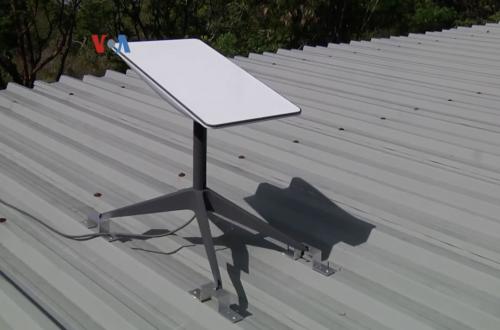
REPUBLIKA.CO.ID, TOKYO – China has submitted plans to launch around 200,000 satellites as an effort to compete with the satellite internet service Starlink, operated by the US company SpaceX.
According to the International Telecommunication Union (ITU), the United Nations specialised agency for information and communication technologies, China has applied for that massive satellite launch, allocating radio frequency bands and satellite orbits.
This indicates that Asia’s economic powerhouse aims to build a version of the Starlink-like service, the ITU added.
The Starlink system, operated by the company led by Elon Musk, connects low-Earth orbit satellites with portable user devices and offers faster internet services than other satellite providers. Starlink is also used by Ukraine in its fight against the Russian invasion.
ITU data shows that a Chinese research institution in Hebei Province applied in December to place 193,400 satellites into orbit. Last year, several communication companies in Beijing and Shanghai also requested permission to launch at least 10,000 satellites.
The ITU allocates satellite orbits based on a first-come, first-served basis. Meanwhile, the Starlink service is known to use around 10,000 satellites.
A Chinese space authority official told Kyodo News that radio frequencies and satellite orbits are limited. Beijing views them as strategic assets that cannot be ignored, so applications for their use must be submitted promptly.
According to the five-year economic development plan until 2030, China will promote the development of satellite communication networks.
Research conducted by Beijing on the workings of the Starlink service in Taiwan and surrounding areas also reflects their concerns about the system’s surveillance and intelligence-gathering capabilities, which are seen as potentially aiding the US in defending Taiwan.
China regards Taiwan as its territory and continues efforts to control the area, including through military deployment if necessary.
Nevertheless, several observers say China’s plan to launch that many satellites is not technically feasible.
Professor Kazuto Suzuki, an academic at the University of Tokyo’s Graduate School of Public Policy, said China’s plan is “unrealistic”. Professor Suzuki believes it is more about showcasing China’s ability to achieve what the US can do.
In addition, China is also attempting to land humans on the Moon in 2030 as part of President Xi Jinping’s government’s efforts to position the Bamboo Curtain country as a superpower in space.
Xinhua News Agency, on Friday (24/4/2026), reported that Beijing plans to launch a Mars exploration mission in 2028 and bring samples from Mars back to Earth in 2031.