
China Prepares Early Warning System for Hazardous Asteroids to Anticipate Cosmic Threats
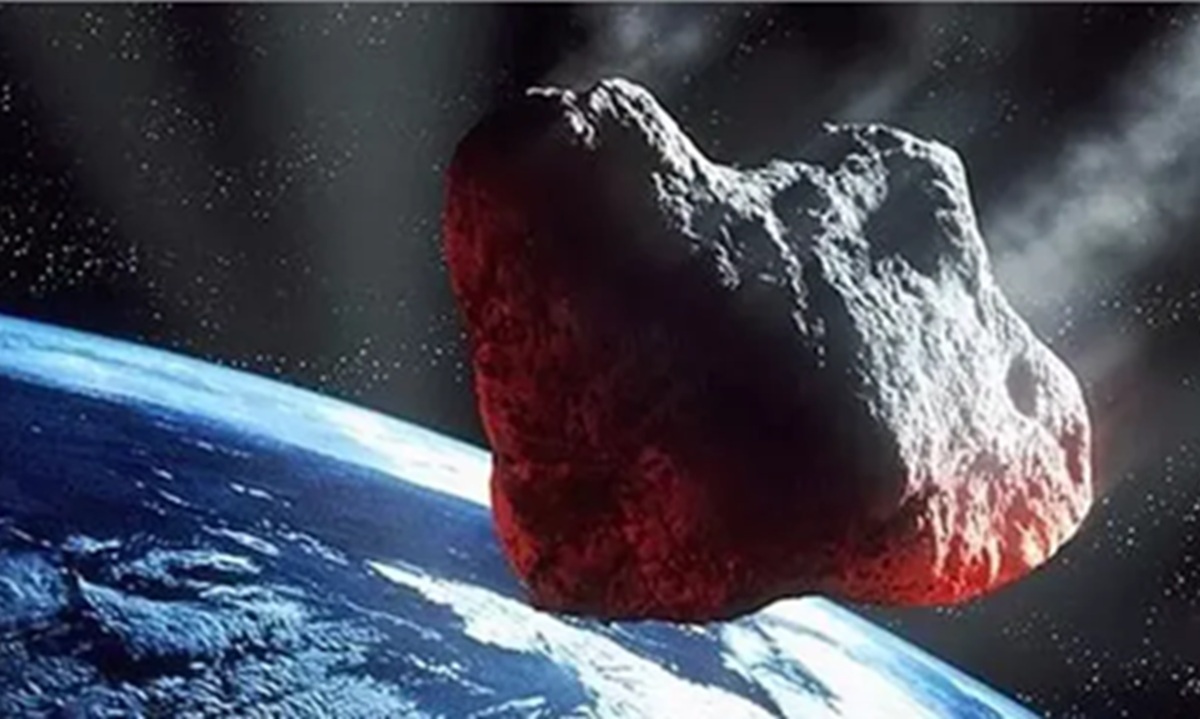
China’s National Space Administration (CNSA) has announced ambitious plans to build an integrated asteroid early warning network that combines ground-based and space-based infrastructure. The announcement was made to coincide with International Asteroid Day, commemorated annually on 30 June. The move signals China’s seriousness in maturing its planetary defence strategy to protect Earth from potential celestial impacts.
The core of this defence system is the integration of monitoring from two directions. Li Mingtao, Chief Scientist at the CNSA’s Asteroid Monitoring and Early Warning Research Centre, explained that the agency is currently assessing the feasibility of the defence system. On the Earth’s surface, China will deploy a number of large-aperture optical telescopes at selected strategic locations. Meanwhile, in space, a constellation of orbital telescopes will be launched to monitor the skies without atmospheric interference or day-and-night disruptions.
This combination is deliberately designed to eliminate the ‘blind spots’ of traditional monitoring. One of its main focuses is detecting threats coming from the direction of the sun. For illustration, the meteor that exploded over Chelyabinsk, Russia, in 2013 failed to be detected by ground-based radar because its position was obscured by the sun’s glare, and it was only noticed once it had entered the Earth’s atmosphere.
‘To date, no asteroid has been definitively identified as being on a collision course with Earth in the near future, but concerns about the risk of such an impact are not unfounded. Many near-Earth asteroids remain undetected,’ Li Mingtao said, as quoted by state media Xinhua.
Based on data up to June 2026, the global astronomical community has discovered and catalogued more than 40,000 near-Earth asteroids. Approximately 95 per cent of asteroids measuring at least one kilometre, which could trigger a global catastrophe, have been successfully mapped. Nevertheless, a major challenge lies with smaller objects. Only about 45 per cent of asteroids measuring 140 metres have been detected, even though an object of that size is sufficiently destructive to devastate a small country upon impact.
In addition to detection, CNSA scientists have also begun designing risk algorithms and scenarios for diverting the trajectory of hazardous space rocks. Several orbit deflection methods being studied include kinetic impact technology, gravity tractors, laser ablation, and continuous thrust techniques.
‘Kinetic impact is the most feasible and straightforward approach, but its effectiveness is relatively difficult to assess. Continuous trajectory diversion offers more precise results, but the main challenge is that the applied force is very weak. That is why early detection is crucial, because more time gives us more options to avoid a collision,’ Li explained.
Through this 24-hour monitoring project, China seeks to make a tangible contribution to global security and promote international collaboration in safeguarding the future of human civilisation from threats emanating from the vacuum of space.
Source: jawawa.id (https://jawawa.id/newsitem/china-prepares-early-warning-system-for-hazardous-asteroids-to-anticipate-cosmic-threats-1783666256)
Originally published by Media Indonesia (https://mediaindonesia.com/teknologi/909437/antisipasi-ancaman-kosmik-tiongkok-siapkan-sistem-peringatan-dini-asteroid-berbahaya), translated from Indonesian