
China Opens Giant 'Water Highway': Smooth Shipping at the Expense of River Inhabitants
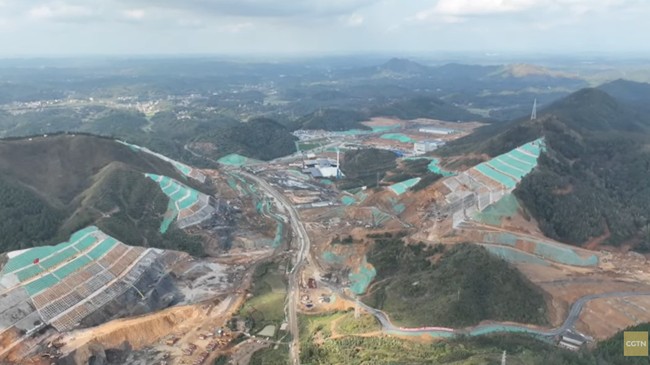
China officially opened the Pinglu Canal on Wednesday (16/9/2026), a massive canal project projected to transform trade routes between China’s southwest region and Southeast Asia.
The 134.2-kilometre canal connects the Xijiang River shipping network with the Beibu Gulf in Guangxi and can accommodate vessels weighing up to 5,000 tonnes. Pinglu is the first major canal built by China since the founding of the People’s Republic of China in 1949.
The project, involving an investment of approximately RMB 72.7 billion (over US$10 billion or around Rp 177.1 trillion), has been under construction since August 2022.
According to Think China, the primary objective is to provide a shorter route for goods from southwest China to the sea, avoiding the need to detour east through Guangdong. With the Pinglu Canal, journeys through waterways to the Beibu Gulf can be shortened by more than 560 kilometres.
The Chinese government estimates this efficiency could save logistics costs by more than RMB 5 billion per year, while other estimates cited by CGTN suggest around RMB 5.2 billion or US$775 million per year.
China-ASEAN Closer Ties
The economic impact of the Pinglu Canal extends beyond Guangxi. The canal serves as a component of the New International Land-Sea Trade Corridor, a logistics network connecting western China with ports in the Beibu Gulf and subsequently towards Southeast Asia.
Before the canal’s construction, goods from China’s southwest had to travel further east through Guangdong before reaching the sea. The Pinglu Canal reduces the shipping distance by approximately 560 kilometres and is expected to save logistics costs by more than 5.2 billion yuan annually due to reduced travel time and fuel consumption.
This efficiency is further supported by the low cost of water transport. Analysis cited by ThinkChina estimates that water transport costs are only about 50%-60% of rail and 12%-15% of road transport, meaning shippers’ logistics costs could potentially drop by around 18%-30%.
For Indonesia, the Pinglu Canal could open more efficient trade routes with western China. Chinese manufactured goods could reach ASEAN markets faster, while agricultural products, minerals, and other commodities from Southeast Asia stand to gain more direct access to China’s inland regions. However, these benefits are not yet automatic, as direct shipping connectivity from Qinzhou to several Indonesian cities remains limited.
On the other hand, this logistical efficiency comes with environmental consequences. While reducing distance and fuel consumption may lower transport emissions, the canal’s construction is altering the landscape and ecosystems along its corridor. This is where the economic benefits of Pinglu begin to clash with another question: how high is the ecological price to be paid?
Behind the Economic Benefits, Ecology and River ‘Inhabitants’ are Under Pressure
The construction of the Pinglu Canal brings significant ecological consequences. The journal Global Ecology and Conservation identified six main risks, ranging from heavy metal exposure, habitat fragmentation, eutrophication, and decline in fish habitat quality, to organic pollution and the shrinking of wetlands.
Researchers then simulated various combinations of ecological pressures along the canal. Under conditions where all pressures are at a high level, the probability of waste discharge in the high category increases by 8.6 percentage points, accompanied by changes in water levels and sedimentation. The greatest pressure was observed in wetlands and drinking water protection areas.
In other pressure combinations, the impact is more pronounced on biological habitats. The probability of fish habitats and wetlands being in a low-quality condition increased by 38.6 and 42.2 percentage points, respectively. This means that changes in water flow, sedimentation, oil spills, and declining habitat quality have the potential to increase pressure on aquatic life.
The impact could ripple through the ecosystem. Habitat fragmentation can sever migration routes and fish breeding areas, while eutrophication can trigger algal blooms and reduce oxygen levels in the water. Pollution and the shrinking of wetlands can also degrade habitat quality and the natural functions of the ecosystem.
Another study found that canal construction increases landscape fragmentation. The number of landscape patches increased from 14 to 25, while the average area of each patch decreased from approximately 12,772 hectares to 7,107 hectares. This indicates that previously contiguous areas are becoming increasingly fragmented, although the impact on the largest patches is still considered relatively limited.
Even Crabs are Affected
The impact of the Pinglu Canal construction is also visible in small fauna in the estuary areas. The journal Effects of Pinglu Canal Construction on Camouflage in Two Sesarmid Crab Species found that habitat changes due to bank hardening, increased water turbidity, and loss of vegetation have reduced the camouflage abilities of two crab species.
In one type of crab, Chiromantes haematocheir, the level of colour difference between the body and the environment increased from 12.91 to 16.27 after the habitat was modified by the canal. The higher this figure, the worse the crab’s ability to blend into its environment and the easier it is for predators to detect it.
The problem is that both species have limited adaptive capabilities. They cannot quickly change their body colour or use surrounding materials to disguise themselves, making it harder to adjust to the rapidly changing habitat.
Is the Damage Worth the Economic Value Add?
The economic benefits of the Pingable Canal are relatively easy to calculate. The canal is expected to be able to cut logistics costs by about 5.2 billion yuan per year through shorter routes and cheaper transport. However, the ecological costs have the potential to persist much longer.
Source: jawawa.id (https://jawawa.id/newsitem/china-opens-giant-water-highway-smooth-shipping-at-the-expense-of-river-inhabitants-1789567154)
Originally published by CNBC Indonesia (https://www.cnbcindonesia.com/research/20260916104509-128-768294/china-buka-tol-air-raksasa-kapal-lancar-penghuni-sungai-jadi-korban), translated from Indonesian