
China Makes Diamonds 'As Cheap as Cabbage', Prices Starting from Rp2 Million
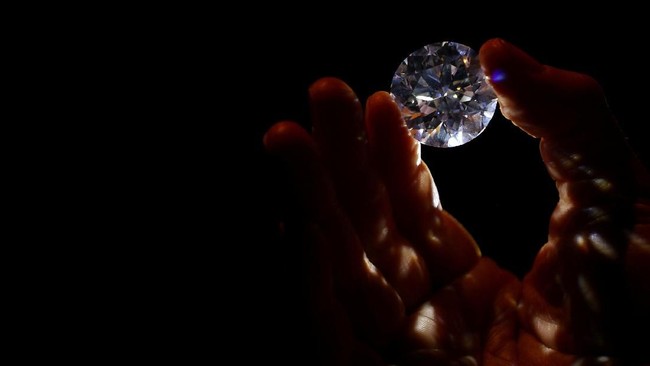
Diamonds have long been synonymous with luxury jewellery and exorbitant prices. However, a region in China has successfully produced diamonds on an industrial scale, causing prices to plummet so drastically that local media have described them as being “as cheap as cabbage.”
That region is Zhecheng County in Henan Province. Previously better known for its agricultural sector, chilli production, and cattle farming, the area has now transformed into one of China’s largest production centres for lab-grown diamonds.
According to reports, Zhecheng currently contributes approximately 60% of China’s lab-grown diamond production. The country itself has become a major player in the global synthetic diamond industry.
In 2023, China produced more than 70% of the world’s synthetic diamonds, with nearly half of the national production originating from Zhecheng. Reports indicate that Zhecheng’s contribution increased to around 60% last year.
This large-scale production has exerted downward pressure on the price of lab-grown diamonds. Chinese media have even characterised diamonds from Zhecheng as commodities that are now “as cheap as cabbage.”
Prices for lab-grown diamonds are only a fraction of those for natural diamonds and, in some cases, can be dozens of times cheaper. One-carat lab-grown diamonds are frequently sold online for approximately 1,000 to 2,000 yuan, which is roughly Rp2.3 million to Rp4.7 million. Prices may still vary depending on quality and other factors.
Despite being created in a laboratory, lab-grown diamonds possess the same chemical composition and physical properties as natural diamonds. The difference lies in the formation process.
While natural diamonds form deep beneath the earth’s surface through a process spanning billions of years, lab-grown diamonds are produced under human-controlled conditions. China primarily utilises High Pressure, High Temperature (HPHT) technology for production.
In Zhecheng, graphite is placed under extreme pressure and temperature until diamond crystals form. This process requires only about seven to 15 days.
Advancements in technology and mass production have widened the price gap between lab-grown and natural diamonds. Reports from 2022 indicated that lab-grown diamonds produced in Henan were priced at approximately one-third the cost of natural diamonds.
The Zhecheng lab-grown diamond industry did not emerge overnight. Its development is closely linked to Henan’s history in developing synthetic diamonds and superhard materials.
China successfully produced its first synthetic diamond in 1963. Henan subsequently developed a six-sided press machine that accelerated production, becoming a foundation for the region’s superhard materials industry.
In the early 1980s, engineer Feng Jinchang returned to his hometown in Zhecheng and established the Shaoyuan Diamond Factory. This venture served as the precursor to the expansion of the diamond industry in Zhecheng. Feng also assisted in training technicians who later established their own businesses.
Over the following decades, Zhecheng built an industrial cluster connecting raw material suppliers to manufacturing companies. The regional industry now encompasses single-crystal diamond synthesis, micro-powder processing, diamond-based products, and jewellery, with an increasingly integrated supply chain.
Zhecheng is now also expanding the use of lab-grown diamonds into the industrial sector. Single crystals and diamond micro-powders can be utilised in cutting and polishing processes.
Local companies have also begun exploring their use in the semiconductor industry. Diamonds possess high thermal conductivity, making them potential candidates for heat management in electronic devices.
The Zhecheng lab-grown diamond industry also recorded a major achievement in 2025. Henan Liliang Diamond Co., Ltd. introduced a lab-grown rough diamond weighing 156.47 carats at the 15th China Henan International Investment and Trade Fair.
According to reports, the company stated that the diamond has received certification from the International Gemological Institute (IGI) and is the largest known lab-grown rough single-crystal diamond in the world.