
China launches three new EVs per day, CATL warns of mass battery failures
China (ANTARA) - Increasingly short development cycles for electric vehicles (EVs) and price competition in China are contributing to battery quality problems in the domestic market, as warned by Robin Zeng, Chairman of Contemporary Amperex Technology Co., Limited (CATL).
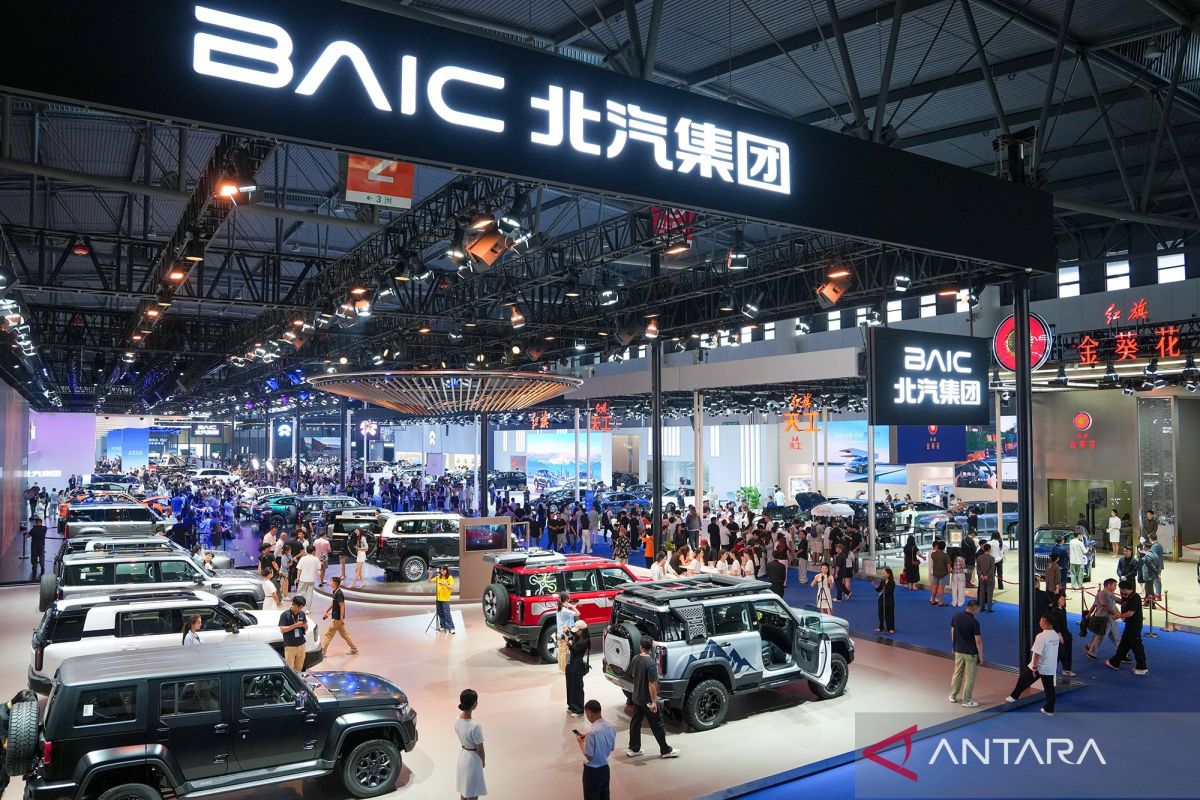
In his keynote speech at the 2026 World Power Battery Conference in Yibin, Sichuan Province, quoted by Carnewschina on Friday (4 September) local time, Zeng said more than 600 new vehicle models had been launched in China throughout 2026. That figure equates to roughly three new vehicle launches every day.
Zeng said the cutting back of testing and validation time to keep up with that pace has contributed to a number of EV battery products experiencing mass failures at the production or batch level. Zeng did not name the vehicle brands or battery suppliers affected.
The warning comes amid ongoing price pressure in China’s EV market.
The trend illustrates the cost pressures faced by vehicle manufacturers and suppliers, but does not in itself prove a causal relationship with battery failures.
China has previously also experienced a number of battery quality cases involving vehicle manufacturers and battery suppliers.
In December 2025, Geely’s subsidiary, Viridi E-Mobility Technology, sued battery manufacturer Sunwoda. Viridi claimed there were quality defects in battery cells supplied between June 2021 and December 2023 and sought compensation of 2.31 billion yuan (around Rp6 trillion).
In another case, reporting in July said battery problems involving cells made by CALB affected around 213,000 GAC Aion vehicles. Complaints included battery swelling, power loss, and other failures.
The case became known as the “banana battery” controversy because some affected cells were reported to have deformed into a curved shape. CALB subsequently announced quality reforms and inspection measures.
Zeng argued that the defect tolerance based on parts per million (PPM) commonly used today is not sufficient for large-volume EV battery production.
At a defect rate of 1 PPM, every one billion cells produced could allow up to 1,000 defective cells into the production process. In contrast, CATL said the company sets a target of producing individual cells with a defect rate of no more than one cell per billion cells (1 PPB), or a defect rate target 1,000 times lower.
The 1 PPB figure is an internal target for engineering and production control, not an independently audited vehicle failure rate.
The broader principle is that battery cell quality depends on controlling the many variables in the production process that can give rise to hidden defects.
CATL said the company uses automated inspection and process control to identify defects during cell production.
The warning was delivered as Chinese battery makers account for more than 70 per cent of global EV battery installation volume. SNE Research recorded global battery installations reaching 608 GWh in the first half of 2026, with Chinese suppliers occupying seven of the top ten positions.
At such a production scale, even a small defect rate can mean a sizeable absolute number of defective cells entering the production process and potentially ending up in vehicle fleets.
However, defective cells in the production process do not always result in field failures, as additional inspection, battery management systems, and controls at the battery pack level can prevent or mitigate the impact of certain types of failures.
Source: jawawa.id (https://jawawa.id/newsitem/china-launches-three-new-evs-per-day-catl-warns-of-mass-battery-failures-1788745913)
Originally published by Antara (Indonesian) (https://otomotif.antaranews.com/berita/5729087/china-rilis-3-ev-baru-per-hari-catl-ingatkan-kegagalan-baterai-massal), translated from Indonesian