
China Launches Enterprise Going Global Programme to Strengthen ASEAN Expansion
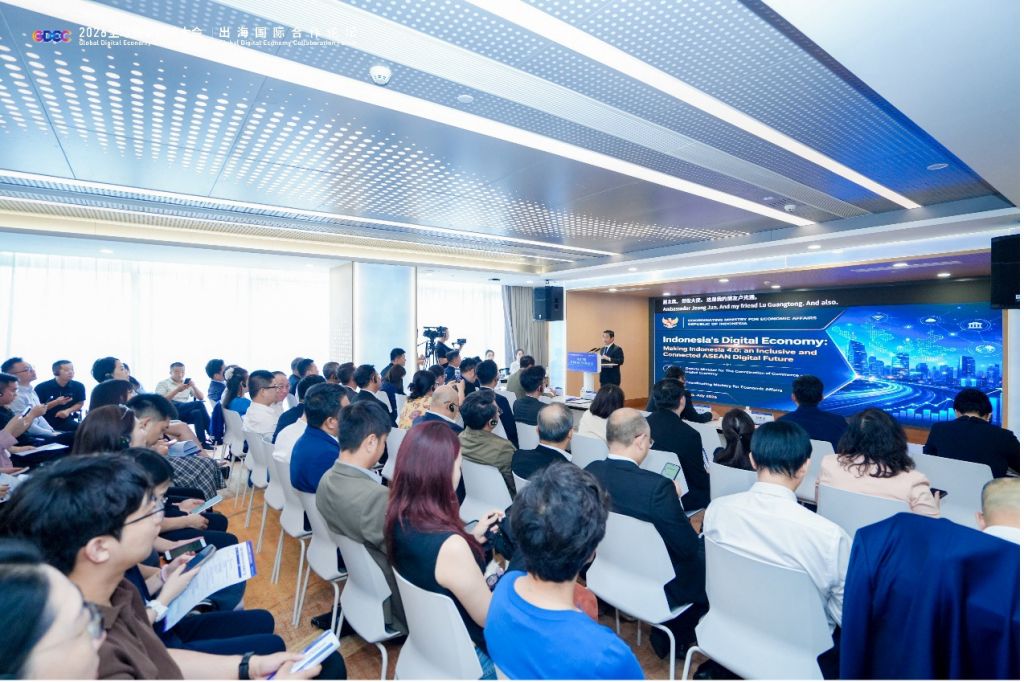
China has officially launched the Enterprise Going Global Partnership Programme, an integrated service platform designed to help Chinese companies expand investment and deepen market penetration across the ASEAN region.
The programme was introduced during the China–ASEAN Digital Economy Cooperation Development Closed-door Meeting, part of the Global Digital Economy Conference 2026 series, held in Daxing District, Beijing, on 3 July.
Themed “Connecting ASEAN through Digital Intelligence, Creating a Shared Future,” the forum brought together representatives of governments, international organisations, the business community and universities from China and ASEAN countries to discuss strengthening digital economy cooperation and technological innovation.
According to a press statement received on Saturday, 11 July 2026, the Indonesian delegation was led by Deputy Coordinating Minister for Economic Affairs Ali Murtopo Simbolon, who attended as the forum’s keynote speaker.
Beyond Indonesia, the meeting was also attended by representatives of the Vietnamese Embassy in China, the Global Digital Economy Cities Alliance, and a number of companies from the digital technology, new energy, smart industrial park and cross-border services sectors.
The Enterprise Going Global Partnership Programme, launched by the China–ASEAN Industry Cooperation Development Promotion Association (CAICPDA), is designed as an integrated service system for companies, covering everything from market research and investment to project implementation and long-term operations in the ASEAN region.
The services provided include legal support, taxation, financing, brand promotion, cross-border compliance, and professional consulting to help companies carry out sustainable business expansion.
The programme’s launch comes amid increasingly close economic ties between China and ASEAN, as well as growing cooperation opportunities following the implementation of the Regional Comprehensive Economic Partnership (RCEP).
The forum also produced a number of strategic agreements, including the signing of a cooperation pact between the Global Digital Economy Cities Alliance and CAICPDA.
Regional Digital Economic Integration
At the same event, a memorandum of understanding on the establishment of the Beijing Indonesia Innovation Centre was signed, and the innovation centre was officially launched. The centre is being developed through collaboration between the Beijing Digital Economy Enterprise Overseas Innovation Service Base, CAICPDA, the University of Science and Technology Beijing, President University Indonesia, and Jababeka Group, with the support of the Coordinating Ministry for Economic Affairs of the Republic of Indonesia.
The Beijing Indonesia Innovation Centre will focus on artificial intelligence (AI) development, cross-border e-commerce, financial technology, smart cities, technology development, market expansion, and human resource capacity building.
The initiative is expected to strengthen connectivity in investment, technology, talent and markets between Indonesia and China.
In the main discussion session, the Indonesian and Vietnamese delegations outlined their national digital economy policy directions and cooperation opportunities in the new energy, digital agriculture, smart industrial park and digital logistics sectors.
Meanwhile, several companies, including Mingyang Smart Energy, Jababeka Group of Indonesia, WHA Industrial Park of Vietnam, and Banpu Group of Thailand, presented their flagship projects in green energy and smart industrial parks.
The forum also featured dedicated business matching sessions for Indonesia, Vietnam and Thailand to accelerate the realisation of investments and concrete cooperation projects across the ASEAN region.
Going forward, Beijing’s Daxing District, together with CAICPDA, the Global Digital Economy Cities Alliance, governments, companies and universities in ASEAN countries, has committed to expanding the implementation of the Enterprise Going Global Partnership Programme to strengthen regional digital economic integration.